
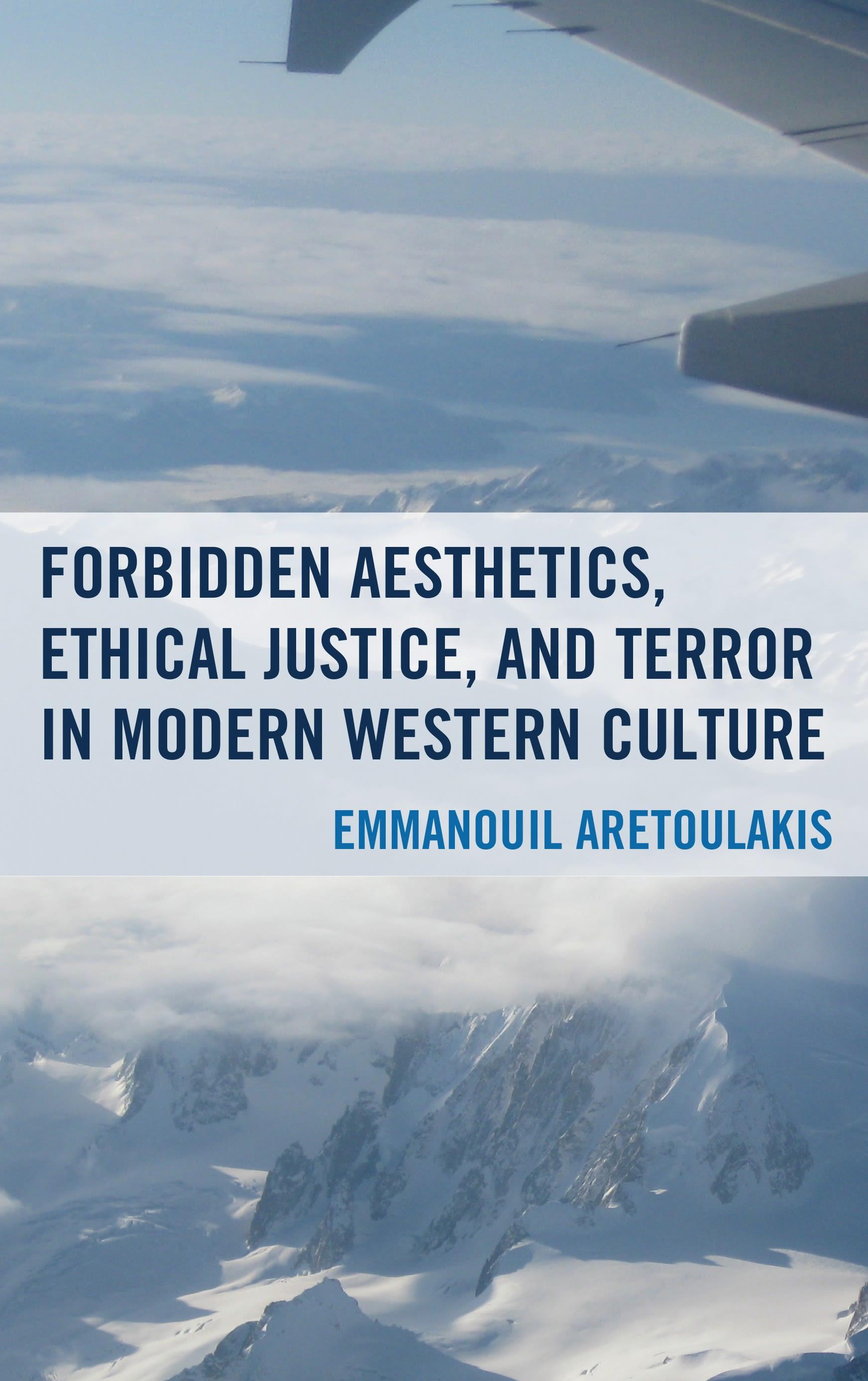
Forbidden Aesthetics, Ethical Justice, and Terror in Modern Western Culture explores the potential links between terror and aesthetics in modern Western society, specifically the affinity between terrorism and the possibility of an aesthetic appreciation of terrorist phenomena or events. But can we actually have an aesthetic appreciation of terror or terrorism? And if we can, is it ethical or legitimate?
Emmanouil Aretoulakis proposes that Western spectators and subjects from the eighteenth century onwards have always felt, unconsciously or not, a certain kind of fascination or even exhilaration before scenes of tragedy and natural or manmade disaster. Owing to their immorality, such “forbidden” feelings go unacknowledged. It would definitely be callous as well as politically incorrect to acknowledge the existence of aesthetics in witnessing or representing human misery. Still, as Aretoulakis insists, our aesthetic faculties or even our appreciation of the beautiful are already inherent in how we view, appraise, and pass judgment upon phenomena of terrorism and disaster. Paradoxically, such a “forbidden aesthetics” is ethical despite its utter immorality.
Emmanouil Aretoulakis proposes that Western spectators and subjects from the eighteenth century onwards have always felt, unconsciously or not, a certain kind of fascination or even exhilaration before scenes of tragedy and natural or manmade disaster. Owing to their immorality, such “forbidden” feelings go unacknowledged. It would definitely be callous as well as politically incorrect to acknowledge the existence of aesthetics in witnessing or representing human misery. Still, as Aretoulakis insists, our aesthetic faculties or even our appreciation of the beautiful are already inherent in how we view, appraise, and pass judgment upon phenomena of terrorism and disaster. Paradoxically, such a “forbidden aesthetics” is ethical despite its utter immorality.
Zahle einfach mit Karte, Klarna, Apple Pay oder Google Pay. Nicht zufrieden? Du hast immer ein 14-tägiges Widerrufsrecht. Lies mehr in unseren AGB. Hast du Fragen, schreib uns eine E-Mail an hello@memmo.org.
Memmo macht das Lernen einfacher – wo auch immer du bist. Bei uns findest du deine Kursbücher und smarte Lerntools an einem Ort: Zusammenfassungen, Quizzes, Podcasts und Lernkarten. Und Ted, dein Lernbuddy, beantwortet alles, was du wissen möchtest. Über 50.000 Studierende lernen bereits hier – gemacht, damit du schneller lernst und weniger Stress hast.