
Historical ethnomusicology is increasingly acknowledged as a significant emerging subfield of ethnomusicology due to the fact that historical research requires a different set of theories and methods than studies of contemporary practices and many historiographic techniques are rapidly transforming as a result of new technologies. In 2005, Bruno Nettl observed that “the term ‘historical ethnomusicology’ has begun to appear in programs of conferences and in publications” (Nettl 2005, 274), and as recently as 2012 scholars similarly noted “an increasing concern with the writing of musical histories in ethnomusicology” (Ruskin and Rice 2012, 318). Relevant positions recently advanced by other authors include that historical musicologists are “all ethnomusicologists now” and that “all ethnomusicology is historical” (Stobart, 2008), yet we sense that such arguments—while useful, and theoretically correct—may ultimately distract from careful consideration of the kinds of contemporary theories and rigorous methods uniquely suited to historical inquiry in the field of music.
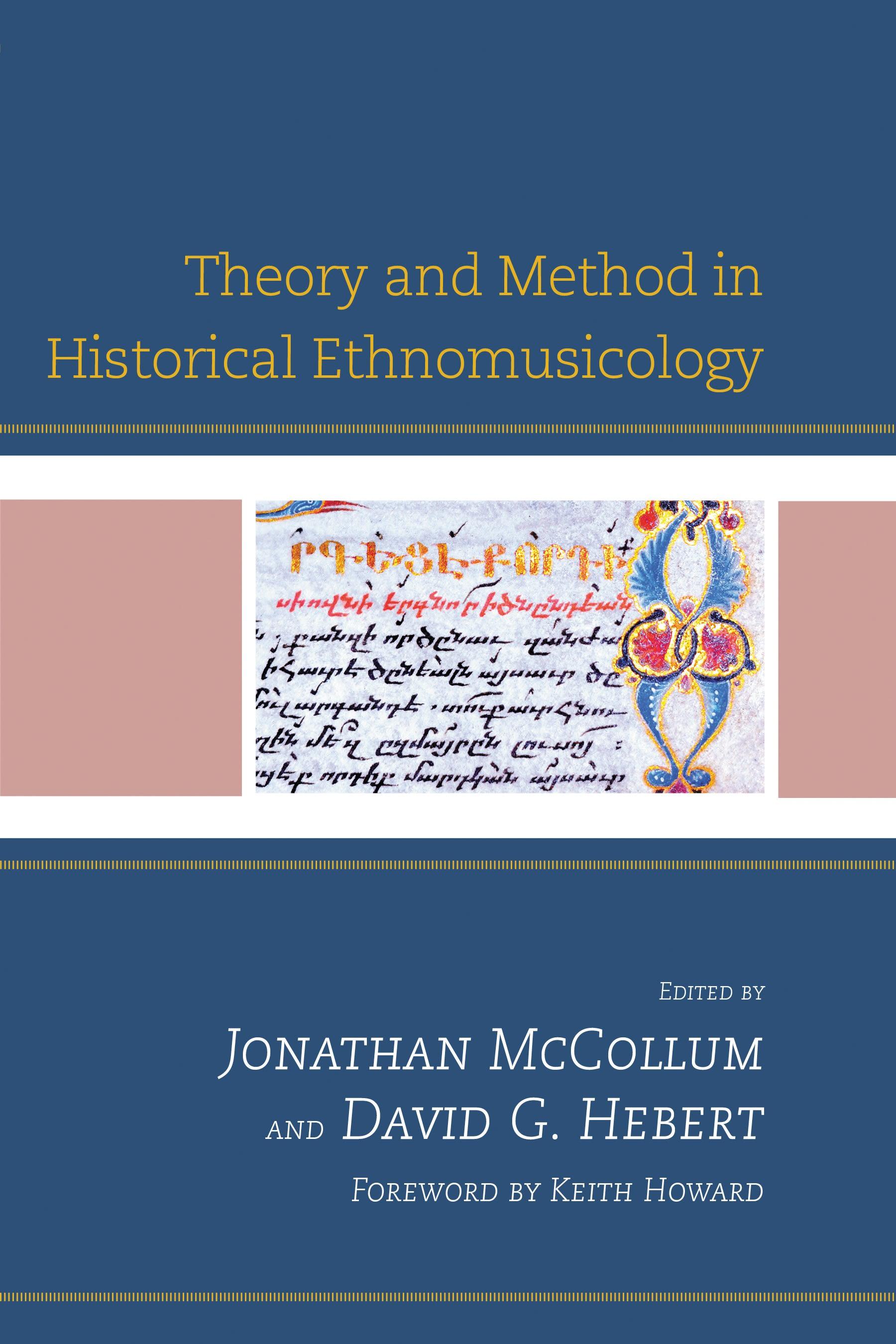
In Theory and Method in Historical Ethnomusicology, editors Jonathan McCollum and David Hebert, along with contributors Judah Cohen, Chris Goertzen, Keith Howard, Ann Lucas, Daniel Neuman, and Diane Thram systematically demonstrate various ways that new approaches to historiography––and the related application of new technologies––impact the work of ethnomusicologists who seek to meaningfully represent music traditions across barriers of both time and space. Contributors specializing in historical musics of Armenia, Iran, India, Japan, southern Africa, American Jews, and southern fiddling traditions of the United States describe the opening of new theoretical approaches and methodologies for research on global music history. In the Foreword, Keith Howard offers his perspective on historical ethnomusicology and the importance of reconsidering theories and methods applicable to this field for the enhancement of musical understandings in the present and future.
In Theory and Method in Historical Ethnomusicology, editors Jonathan McCollum and David Hebert, along with contributors Judah Cohen, Chris Goertzen, Keith Howard, Ann Lucas, Daniel Neuman, and Diane Thram systematically demonstrate various ways that new approaches to historiography––and the related application of new technologies––impact the work of ethnomusicologists who seek to meaningfully represent music traditions across barriers of both time and space. Contributors specializing in historical musics of Armenia, Iran, India, Japan, southern Africa, American Jews, and southern fiddling traditions of the United States describe the opening of new theoretical approaches and methodologies for research on global music history. In the Foreword, Keith Howard offers his perspective on historical ethnomusicology and the importance of reconsidering theories and methods applicable to this field for the enhancement of musical understandings in the present and future.
Zahle einfach mit Karte, Klarna, Apple Pay oder Google Pay. Nicht zufrieden? Du hast immer ein 14-tägiges Widerrufsrecht. Lies mehr in unseren AGB. Hast du Fragen, schreib uns eine E-Mail an hello@memmo.org.
Memmo macht das Lernen einfacher – wo auch immer du bist. Bei uns findest du deine Kursbücher und smarte Lerntools an einem Ort: Zusammenfassungen, Quizzes, Podcasts und Lernkarten. Und Ted, dein Lernbuddy, beantwortet alles, was du wissen möchtest. Über 50.000 Studierende lernen bereits hier – gemacht, damit du schneller lernst und weniger Stress hast.