
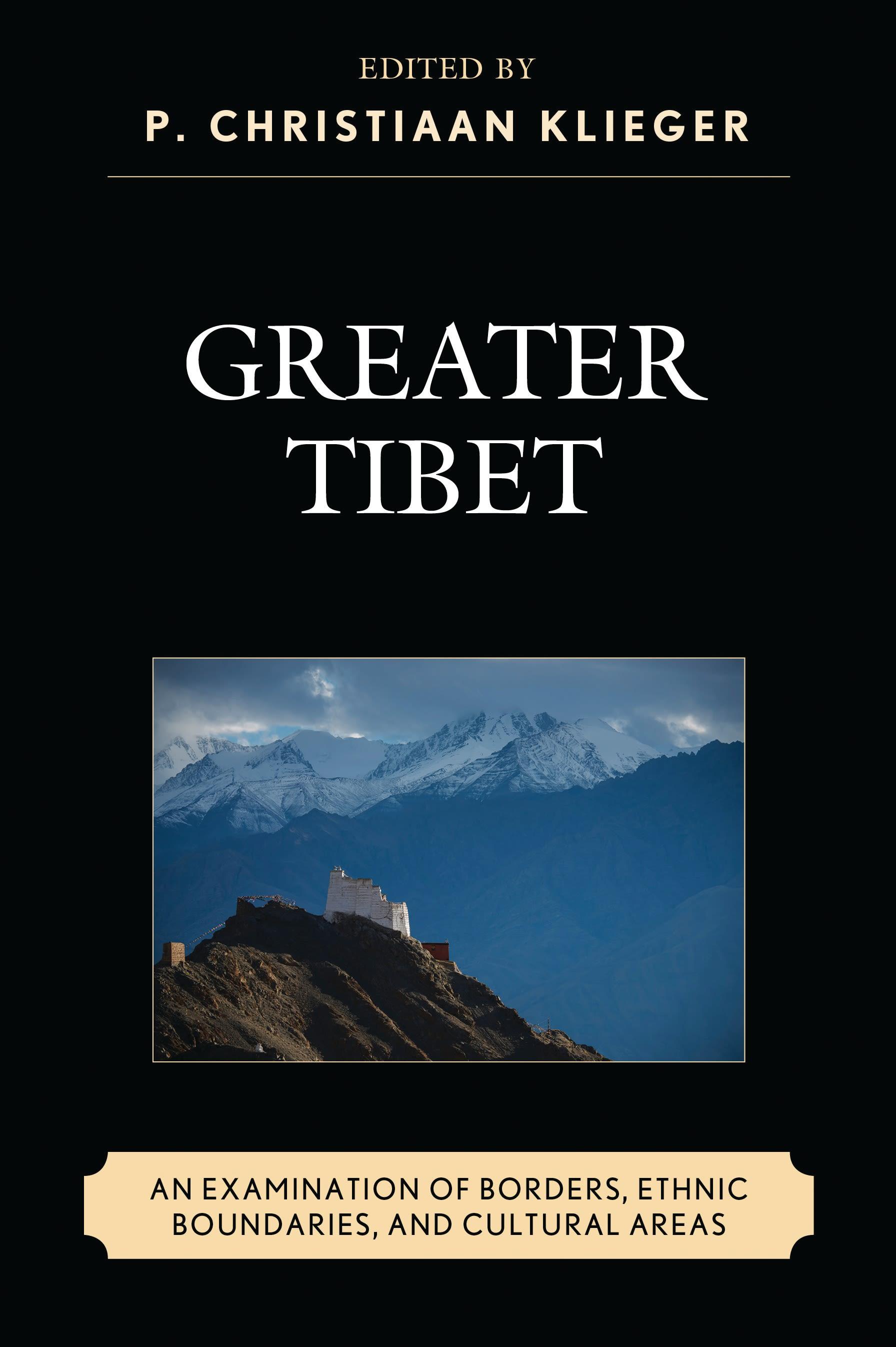
The concept of Greater Tibet has surfaced in the political and academic worlds in recent years. It is based in the inadequacies of other definitions of what constitutes the historical and modern worlds in which Tibetan people, ideas, and culture occupy. This collection of papers is inspired by a panel on Greater Tibet held at the XIIIth meeting of the International Association of Tibet Studies in Ulaan Baatar in 2013. Participants included leading Tibet scholars, experts in international law, and Tibetan officials.
Greater Tibet is inclusive of all peoples who generally speak languages from the Tibetan branch of the Tibeto-Burman family, have a concept of mutual origination, and share some common historical narratives. It includes a wide area, including peoples from the Central Asian Republics, Pakistan, India, Nepal Bhutan, Bangladesh, Myanmar, People’s Republic of China, Mongolia, Russia, and Tibetan people in diaspora abroad. It may even include practitioners of Tibetan Buddhism who are not of Tibetan origin, and Tibetan peoples who do not practice Buddhism. Most of this area corresponds to the broad expansion of Tibetan culture and political control in the 7th–9th centuries AD, and is thus many times larger than the current Tibet Autonomous Region in China—the Tibetan “culture area.”
As a conceptual framework, Greater Tibet stands in contrast to Scott’s concept of Zomia for roughly the same region, a term which defines an area of highland Asia and Southeast Asia characterized by disdain for rule from distant centers, failed state formation, anarchist, and “libertarian” individual proclivities.
Greater Tibet is inclusive of all peoples who generally speak languages from the Tibetan branch of the Tibeto-Burman family, have a concept of mutual origination, and share some common historical narratives. It includes a wide area, including peoples from the Central Asian Republics, Pakistan, India, Nepal Bhutan, Bangladesh, Myanmar, People’s Republic of China, Mongolia, Russia, and Tibetan people in diaspora abroad. It may even include practitioners of Tibetan Buddhism who are not of Tibetan origin, and Tibetan peoples who do not practice Buddhism. Most of this area corresponds to the broad expansion of Tibetan culture and political control in the 7th–9th centuries AD, and is thus many times larger than the current Tibet Autonomous Region in China—the Tibetan “culture area.”
As a conceptual framework, Greater Tibet stands in contrast to Scott’s concept of Zomia for roughly the same region, a term which defines an area of highland Asia and Southeast Asia characterized by disdain for rule from distant centers, failed state formation, anarchist, and “libertarian” individual proclivities.
Seiten: 178
Kategorie: Samhällsvetenskap
e-ISBN: 9781498506458
Versandgewicht: 1.2 kg
Versand in: 1-2 Tage
Zahle einfach mit Karte, Klarna, Apple Pay oder Google Pay. Nicht zufrieden? Du hast immer ein 14-tägiges Widerrufsrecht. Lies mehr in unseren AGB. Hast du Fragen, schreib uns eine E-Mail an hello@memmo.org.
Memmo macht das Lernen einfacher – wo auch immer du bist. Bei uns findest du deine Kursbücher und smarte Lerntools an einem Ort: Zusammenfassungen, Quizzes, Podcasts und Lernkarten. Und Ted, dein Lernbuddy, beantwortet alles, was du wissen möchtest. Über 50.000 Studierende lernen bereits hier – gemacht, damit du schneller lernst und weniger Stress hast.