
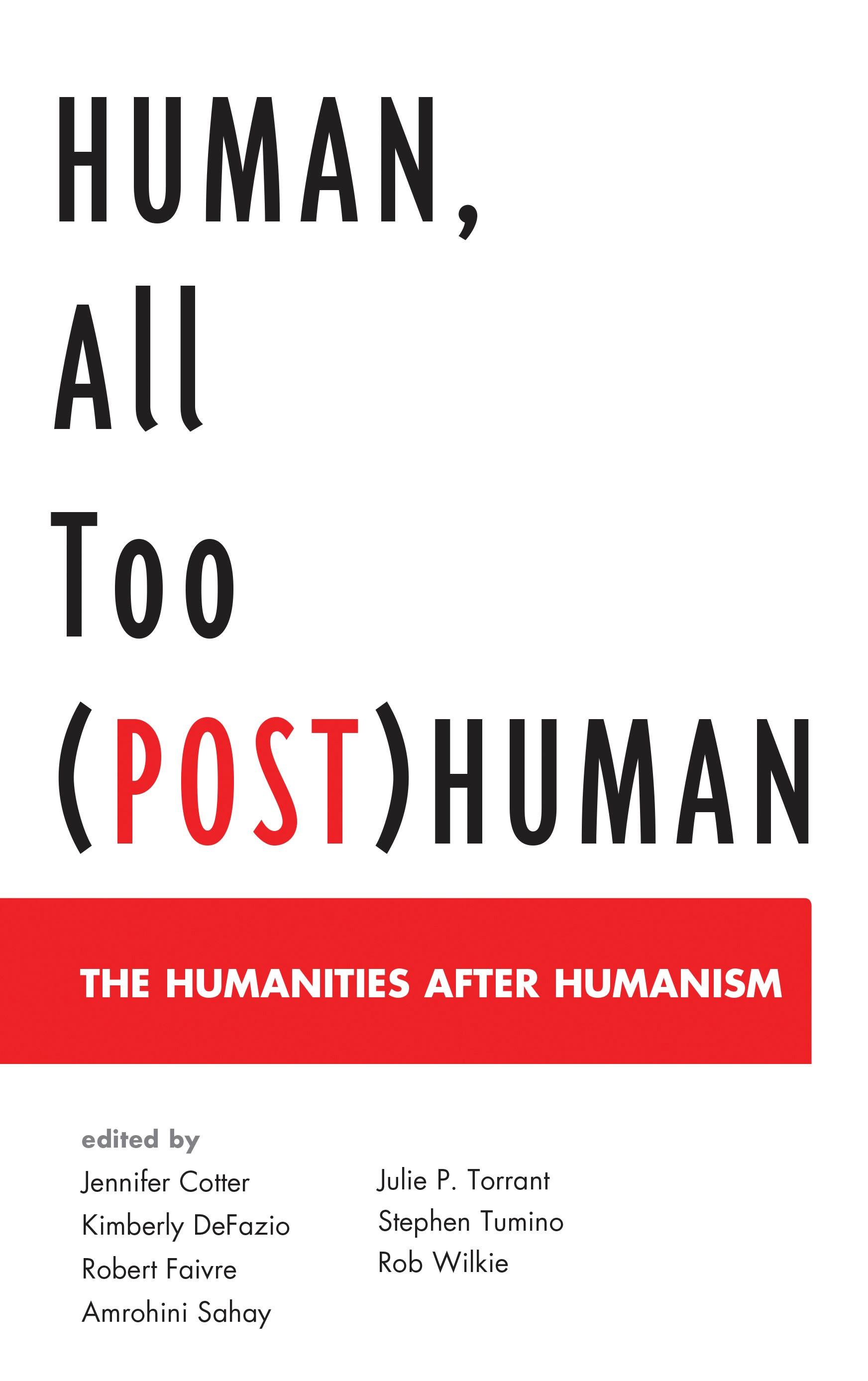
The contemporary has marked itself off from modernity by questioning its humanism that centers the world around the human as the moral subject of free will and self-determination, the bearer of universal essence that is the basis of human rights. Modernism normalizes humanism through language as referential, a set of interrelated signs that correspond to the empirical reality outside it. Humanist modernity, in other words, is seen in the contemporary as a regime that, by separating the human from the non-human and insisting on language as correspondence, not only fails to engage the emerging forms of social relations in which the boundaries of human and machine are fading but is also indifferent to the difference between the “other”’s life and other lives. Human, All Too (Post)Human: The Humanities after Humanism argues that the Nietzschean tendencies that provide the philosophical boundaries of post-humanism do not undo humanism but reform it, constructing a parallel discourse that saves humanism from itself.
Grounded in materialist analysis of social life, Human, All Too (Post)Human argues that humanism and post-humanism are cultural discourses that normalize different stages of capitalism—analog and digital capitalism. They are different orders of property relations. The question, the writers argue, is not humanism or post-humanism, namely cultural representations, but the material relations of production that are centered on wage labor. Language, free will, or human rights are not the issues since “Right can never be higher than the economic structure of society and its cultural development conditioned thereby.” The question that shapes all questions, in Human, All Too (Post)Human is freedom from (wage) labor.
Grounded in materialist analysis of social life, Human, All Too (Post)Human argues that humanism and post-humanism are cultural discourses that normalize different stages of capitalism—analog and digital capitalism. They are different orders of property relations. The question, the writers argue, is not humanism or post-humanism, namely cultural representations, but the material relations of production that are centered on wage labor. Language, free will, or human rights are not the issues since “Right can never be higher than the economic structure of society and its cultural development conditioned thereby.” The question that shapes all questions, in Human, All Too (Post)Human is freedom from (wage) labor.
Seiten: 276
Kategorie: Kultur-, Genus- & Postkoloniala studier
e-ISBN: 9781498505741
Versandgewicht: 1.2 kg
Versand in: 1-2 Tage
Zahle einfach mit Karte, Klarna, Apple Pay oder Google Pay. Nicht zufrieden? Du hast immer ein 14-tägiges Widerrufsrecht. Lies mehr in unseren AGB. Hast du Fragen, schreib uns eine E-Mail an hello@memmo.org.
Memmo macht das Lernen einfacher – wo auch immer du bist. Bei uns findest du deine Kursbücher und smarte Lerntools an einem Ort: Zusammenfassungen, Quizzes, Podcasts und Lernkarten. Und Ted, dein Lernbuddy, beantwortet alles, was du wissen möchtest. Über 50.000 Studierende lernen bereits hier – gemacht, damit du schneller lernst und weniger Stress hast.