
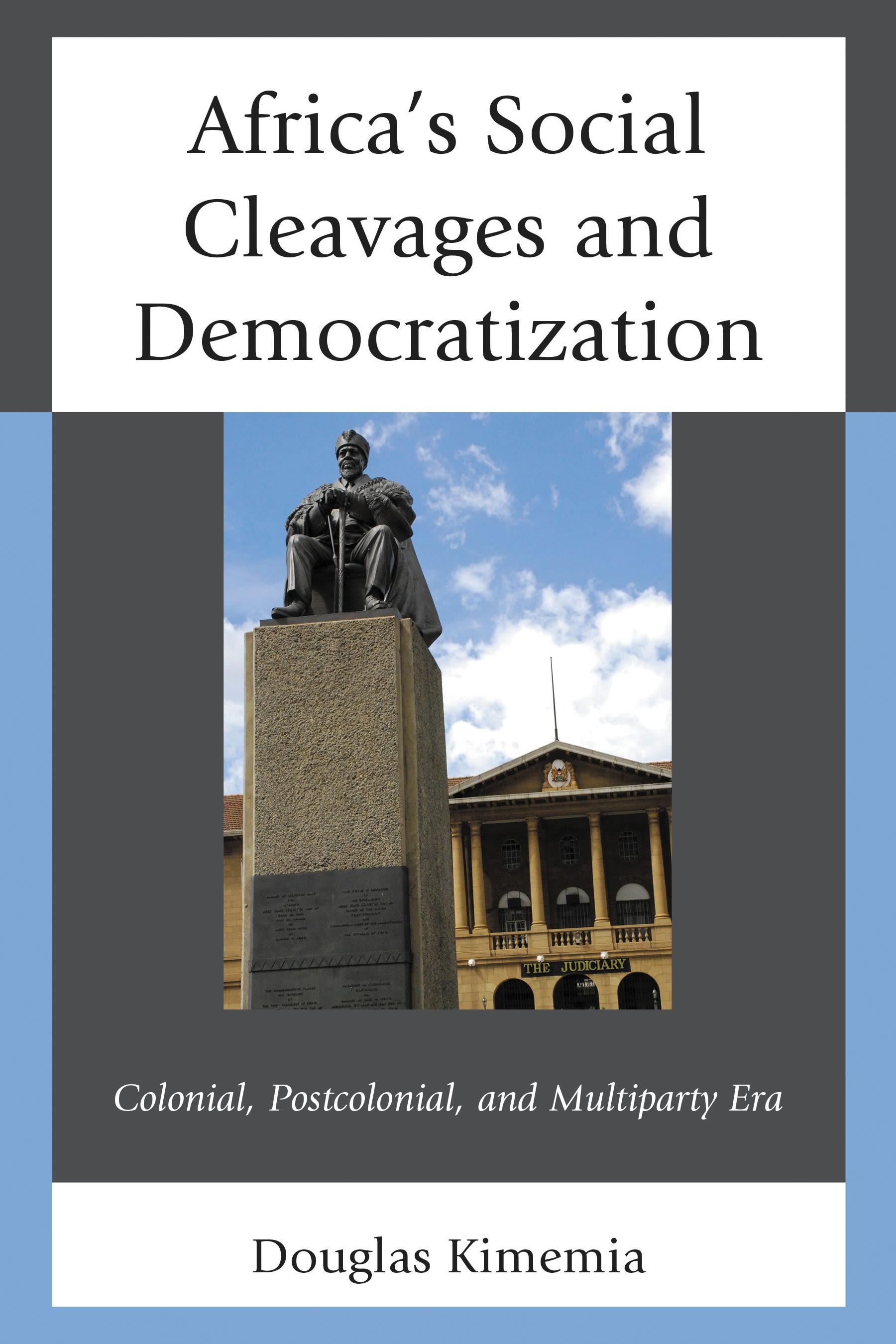
Africa’s Social Cleavages and Democratization offers a comparative approach to African countries by providing an in-depth analysis of the impact of ethnicity and religion on both multiparty and post-multiparty eras. By applying different theoretical frameworks, Douglas Kimemia explores and analyzes how social cleavages have affected the growth of democracy in Africa.
It is crucial to assess the relationship between democratic development and the impact of social cleavages, because multiparty politics have increased political competition, participation, transparency, and civic engagement in Africa. However, social divisions have significantly slowed the maturing of democracy, as these social cleavages have become polarizing factors, which are used by political elites for their own self-interest. As a result, politics of identity caused by competition of natural resources have led to increased conflicts and political instability in Africa. The social cleavages have also led to polarized party systems and caused adverse effects on democracy due to the highly polarized societies and political competition.
Despite the many positive impacts, multiparty politics have increased the consciousness of ethnic and religious identities, leading to unhealthy political competition as evidenced by highly fragmented societies prone to conflicts and violence. Kimemia comprehensively examines different governing, electoral, and party systems in order to determine the different incentives and how social divisions shape them. This analysis helps to distinguish more permanent political structures from the merely epiphenomenal within the African political scene.
It is crucial to assess the relationship between democratic development and the impact of social cleavages, because multiparty politics have increased political competition, participation, transparency, and civic engagement in Africa. However, social divisions have significantly slowed the maturing of democracy, as these social cleavages have become polarizing factors, which are used by political elites for their own self-interest. As a result, politics of identity caused by competition of natural resources have led to increased conflicts and political instability in Africa. The social cleavages have also led to polarized party systems and caused adverse effects on democracy due to the highly polarized societies and political competition.
Despite the many positive impacts, multiparty politics have increased the consciousness of ethnic and religious identities, leading to unhealthy political competition as evidenced by highly fragmented societies prone to conflicts and violence. Kimemia comprehensively examines different governing, electoral, and party systems in order to determine the different incentives and how social divisions shape them. This analysis helps to distinguish more permanent political structures from the merely epiphenomenal within the African political scene.
Seiten: 396
Kategorie: Statsvetenskap & Politik
e-ISBN: 9781498500203
Versandgewicht: 1.2 kg
Versand in: 1-2 Tage
Zahle einfach mit Karte, Klarna, Apple Pay oder Google Pay. Nicht zufrieden? Du hast immer ein 14-tägiges Widerrufsrecht. Lies mehr in unseren AGB. Hast du Fragen, schreib uns eine E-Mail an hello@memmo.org.
Memmo macht das Lernen einfacher – wo auch immer du bist. Bei uns findest du deine Kursbücher und smarte Lerntools an einem Ort: Zusammenfassungen, Quizzes, Podcasts und Lernkarten. Und Ted, dein Lernbuddy, beantwortet alles, was du wissen möchtest. Über 50.000 Studierende lernen bereits hier – gemacht, damit du schneller lernst und weniger Stress hast.