
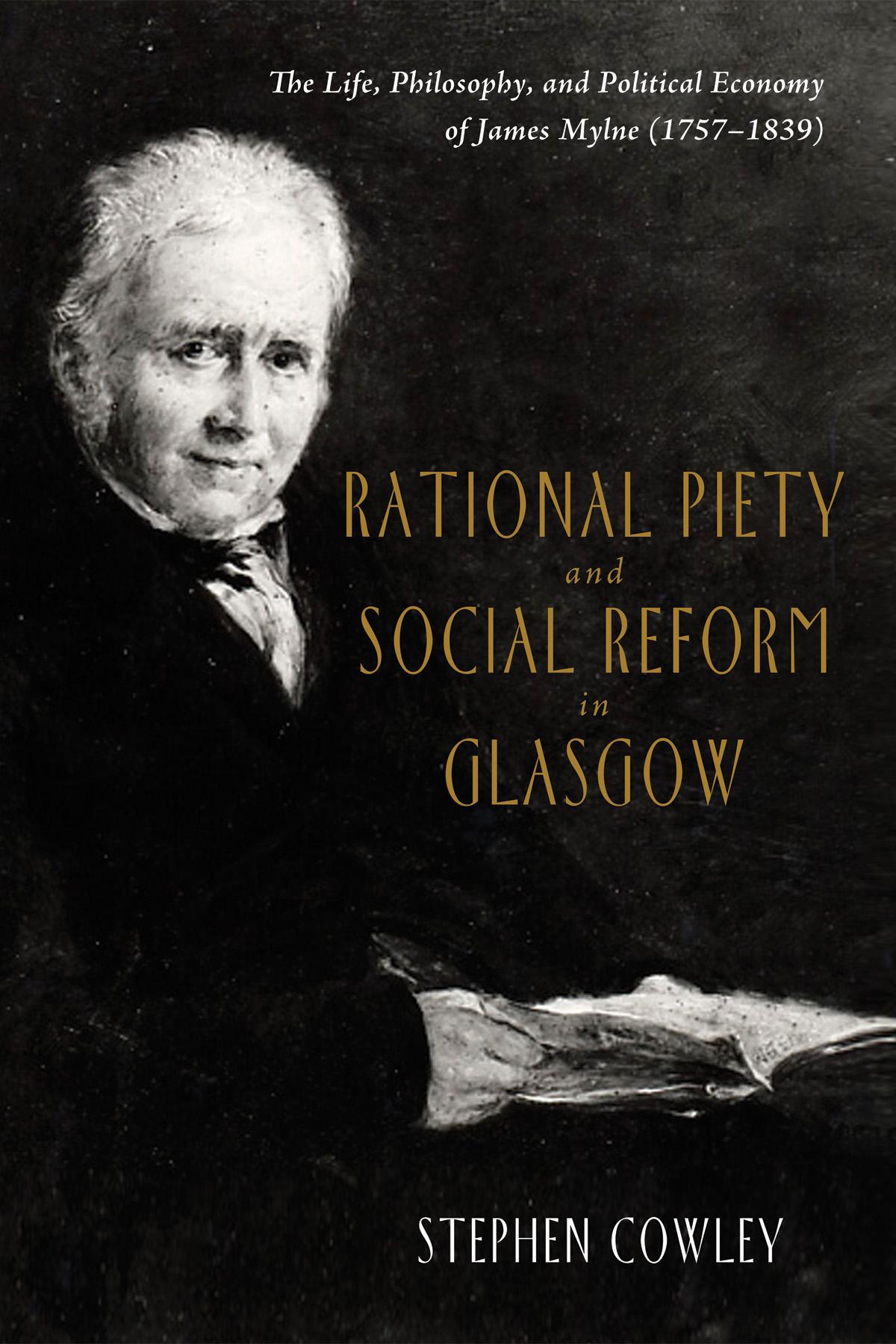
James Mylne (1757-1839) taught moral philosophy and political economy in Glasgow from 1797 to the mid-1830s. Rational Piety and Social Reform in Glasgow offers readers Mylne's biography, a summary of his lectures on moral philosophy and political economy, several interpretative essays, and a collation of his introductory lecture.
Mylne's moral philosophy lectures cover the intellectual and active powers of man and offer an account of his duties to God, neighbor, and self. He diverges from the "moral sense" and "common sense" traditions associated with Francis Hutcheson and Thomas Reid in Glasgow. He reinstates reason as the guiding principle of conscience and argues for utility as the predominant criterion of morality.
Mylne was also active among the Whig "friends of Mr. Fox" and in the Glasgow Reform Association, for his theory of the sovereignty of reason drove his view of political reform and the concept of value in his lectures on political economy. In a criticism of Adam Smith, Mylne interprets use-value as prior to exchange value, founding it in lawful desires identifiable by a merchant community. Mylne's political opinions and activity among local political reformers and literary societies exemplify the Glasgow Whig tradition.
Zahle einfach mit Karte, Klarna, Apple Pay oder Google Pay. Nicht zufrieden? Du hast immer ein 14-tägiges Widerrufsrecht. Lies mehr in unseren AGB. Hast du Fragen, schreib uns eine E-Mail an hello@memmo.org.
Memmo macht das Lernen einfacher – wo auch immer du bist. Bei uns findest du deine Kursbücher und smarte Lerntools an einem Ort: Zusammenfassungen, Quizzes, Podcasts und Lernkarten. Und Ted, dein Lernbuddy, beantwortet alles, was du wissen möchtest. Über 50.000 Studierende lernen bereits hier – gemacht, damit du schneller lernst und weniger Stress hast.
Das könnte dir auch gefallen
Buch kaufen0