
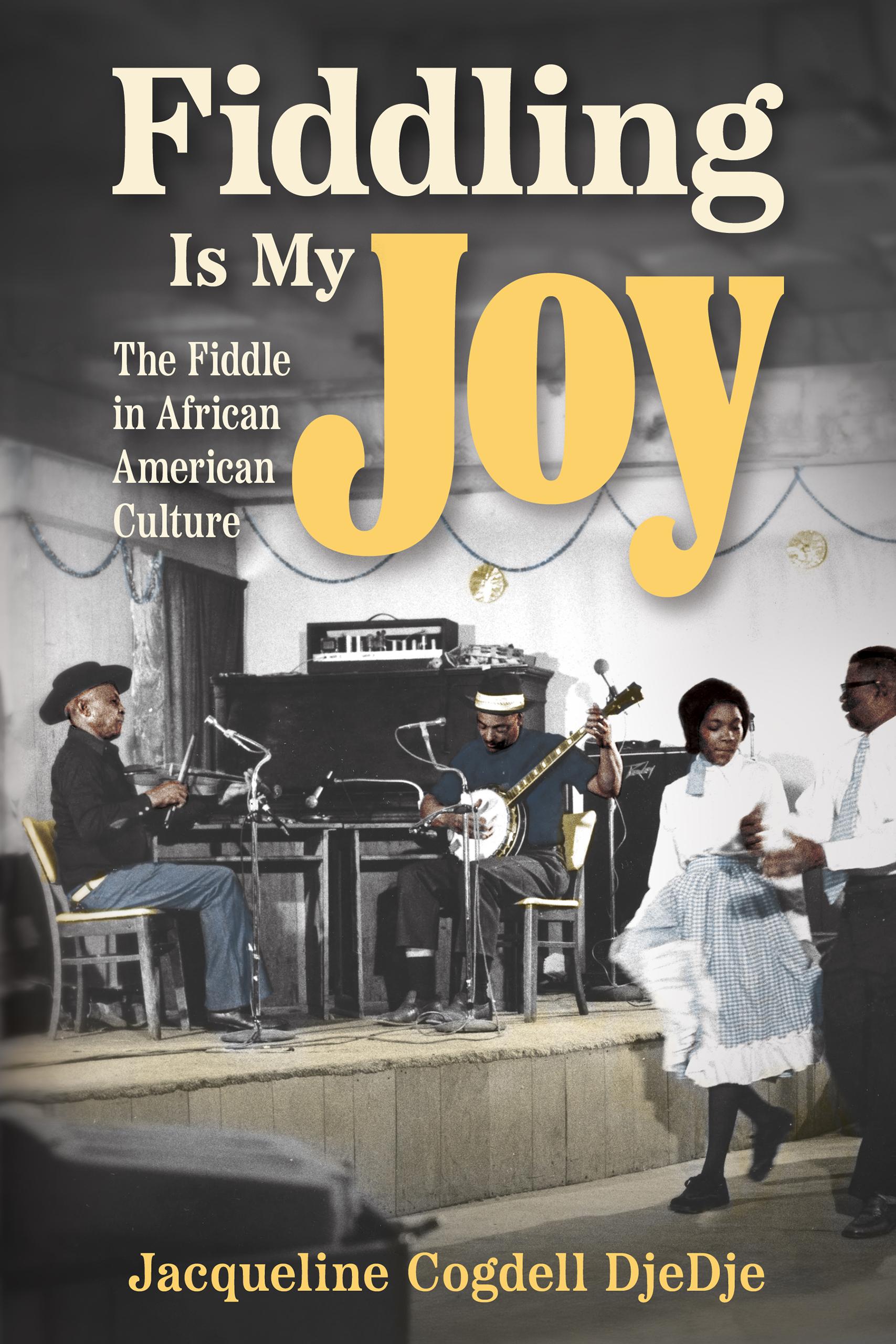
In Fiddling Is My Joy, Jacqueline Cogdell DjeDje examines the history of fiddling among African Americans from the seventeenth to the mid-twentieth century. Although music historians acknowledge a prominent African American fiddle tradition during the era of slavery, only recently have researchers begun to closely examine the history and social implications of these musical practices. Research on African music reveals a highly developed tradition in West Africa, which dates to the eleventh or twelfth century and continues today. From these West African roots, fiddling was prominent in many African American communities between the seventeenth and nineteenth centuries, and the fiddle became an important instrument in early twentieth-century blues, jazz, and jug bands. While less common in late twentieth-century African American jazz and popular music groups, the fiddle remained integral to the musicking of some Black musicians in the rural South.
Featured in Fiddling Is My Joy is access to a comprehensive online eScholarship Companion that contains maps, photographs, audiovisual examples, and other materials to expand the work of this enlightening and significant study. To understand the immense history of fiddling, DjeDje uses geography to weave together a common thread by profiling the lives and contributions of Black fiddlers in various parts of the rural South and Midwest, including the mountains and along the Atlantic and Gulf coasts. In addition to exploring the extent that musical characteristics and aesthetics identified with African and European cultures were maintained or reinterpreted in Black fiddling, she also investigates how the sharing of musical ideas between Black and white fiddlers affected the development of both traditions. Most importantly, she considers the contradiction in representation. Historical evidence suggests that the fiddle may be one of the oldest uninterrupted instrumental traditions in African American culture, yet most people in the United States, including African Americans, do not identify it with Black music.
Featured in Fiddling Is My Joy is access to a comprehensive online eScholarship Companion that contains maps, photographs, audiovisual examples, and other materials to expand the work of this enlightening and significant study. To understand the immense history of fiddling, DjeDje uses geography to weave together a common thread by profiling the lives and contributions of Black fiddlers in various parts of the rural South and Midwest, including the mountains and along the Atlantic and Gulf coasts. In addition to exploring the extent that musical characteristics and aesthetics identified with African and European cultures were maintained or reinterpreted in Black fiddling, she also investigates how the sharing of musical ideas between Black and white fiddlers affected the development of both traditions. Most importantly, she considers the contradiction in representation. Historical evidence suggests that the fiddle may be one of the oldest uninterrupted instrumental traditions in African American culture, yet most people in the United States, including African Americans, do not identify it with Black music.
Zahle einfach mit Karte, Klarna, Apple Pay oder Google Pay. Nicht zufrieden? Du hast immer ein 14-tägiges Widerrufsrecht. Lies mehr in unseren AGB. Hast du Fragen, schreib uns eine E-Mail an hello@memmo.org.
Memmo macht das Lernen einfacher – wo auch immer du bist. Bei uns findest du deine Kursbücher und smarte Lerntools an einem Ort: Zusammenfassungen, Quizzes, Podcasts und Lernkarten. Und Ted, dein Lernbuddy, beantwortet alles, was du wissen möchtest. Über 50.000 Studierende lernen bereits hier – gemacht, damit du schneller lernst und weniger Stress hast.
Das könnte dir auch gefallen
Buch kaufen0