
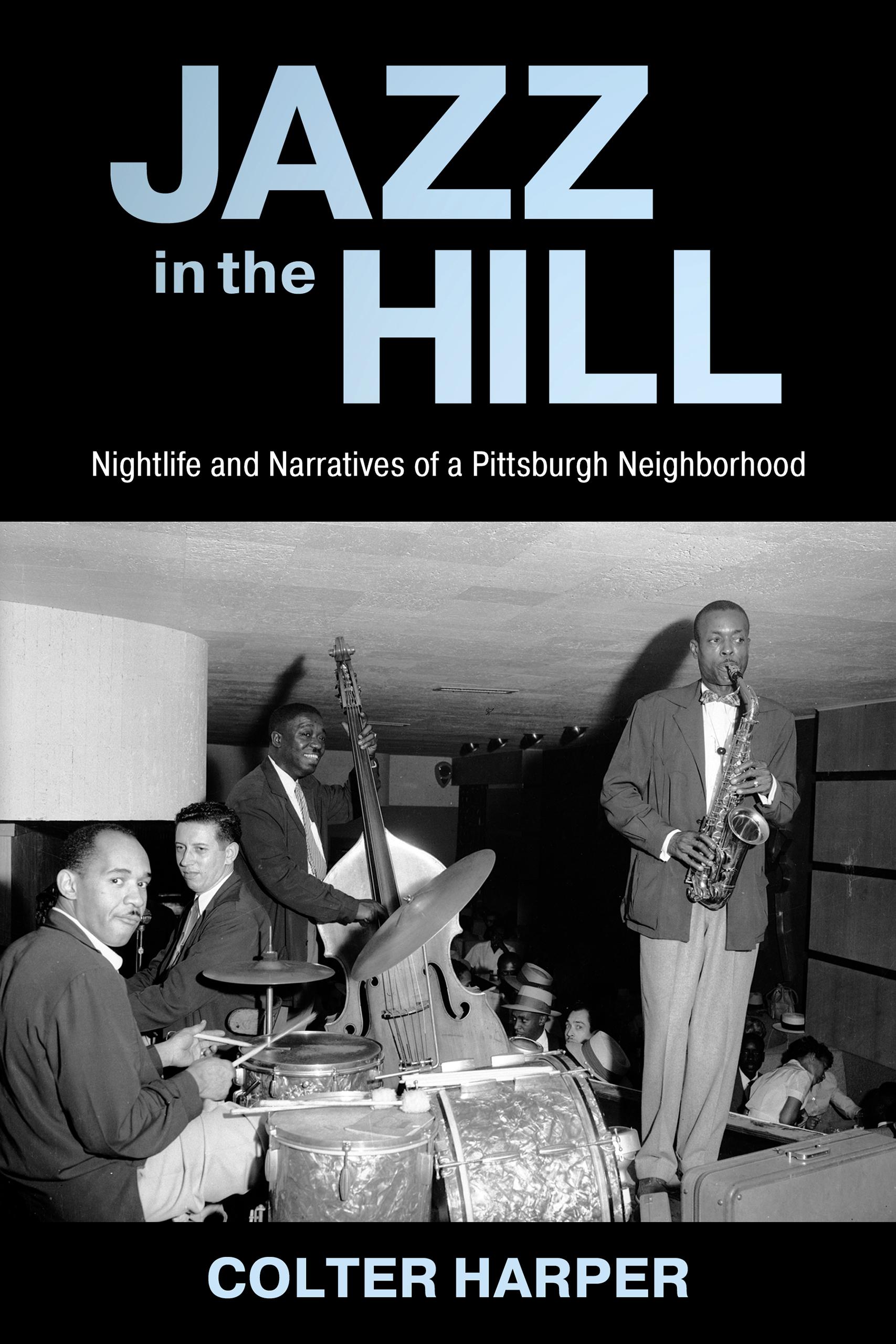
From the 1920s through the 1960s, Pittsburgh’s Hill District was the heart of the city’s Black cultural life and home to a vibrant jazz scene. In Jazz in the Hill: Nightlife and Narratives of a Pittsburgh Neighborhood, Colter Harper looks at how jazz shaped the neighborhood and created a way of life. Beyond backdrops for remarkable careers, jazz clubs sparked the development of a self-determined African American community. In delving into the history of entrepreneurialism, placemaking, labor organizing, and critical listening in the Hill District, Harper forges connections to larger political contexts, processes of urban development, and civil rights struggles.
Harper adopts a broad approach in thinking about jazz clubs, foregrounding the network of patrons, business owners, and musicians who were actively invested in community building. Jazz in the Hill provides a valuable case study detailing the intersections of music, political and cultural history, public policy, labor, and law. The book addresses distinctive eras and issues of twentieth century American urban history, including notions of “vice” during the Prohibition Era (1920–1934); “blight” during the mid-twentieth century boom in urban redevelopment (1946–1973); and workplace integration during the civil rights era (1954–1968). Throughout, Harper demonstrates how the clubs, as a nexus of music, politics, economy, labor, and social relations, supported the livelihood of residents and artists while developing cultures of listening and learning. Though the neighborhood has undergone an extensive socioeconomic transformation that has muted its nightlife, this musical legacy continues to guide current development visions for the Hill on the cusp of its remaking.
Harper adopts a broad approach in thinking about jazz clubs, foregrounding the network of patrons, business owners, and musicians who were actively invested in community building. Jazz in the Hill provides a valuable case study detailing the intersections of music, political and cultural history, public policy, labor, and law. The book addresses distinctive eras and issues of twentieth century American urban history, including notions of “vice” during the Prohibition Era (1920–1934); “blight” during the mid-twentieth century boom in urban redevelopment (1946–1973); and workplace integration during the civil rights era (1954–1968). Throughout, Harper demonstrates how the clubs, as a nexus of music, politics, economy, labor, and social relations, supported the livelihood of residents and artists while developing cultures of listening and learning. Though the neighborhood has undergone an extensive socioeconomic transformation that has muted its nightlife, this musical legacy continues to guide current development visions for the Hill on the cusp of its remaking.
Zahle einfach mit Karte, Klarna, Apple Pay oder Google Pay. Nicht zufrieden? Du hast immer ein 14-tägiges Widerrufsrecht. Lies mehr in unseren AGB. Hast du Fragen, schreib uns eine E-Mail an hello@memmo.org.
Memmo macht das Lernen einfacher – wo auch immer du bist. Bei uns findest du deine Kursbücher und smarte Lerntools an einem Ort: Zusammenfassungen, Quizzes, Podcasts und Lernkarten. Und Ted, dein Lernbuddy, beantwortet alles, was du wissen möchtest. Über 50.000 Studierende lernen bereits hier – gemacht, damit du schneller lernst und weniger Stress hast.
Das könnte dir auch gefallen
Buch kaufen0