
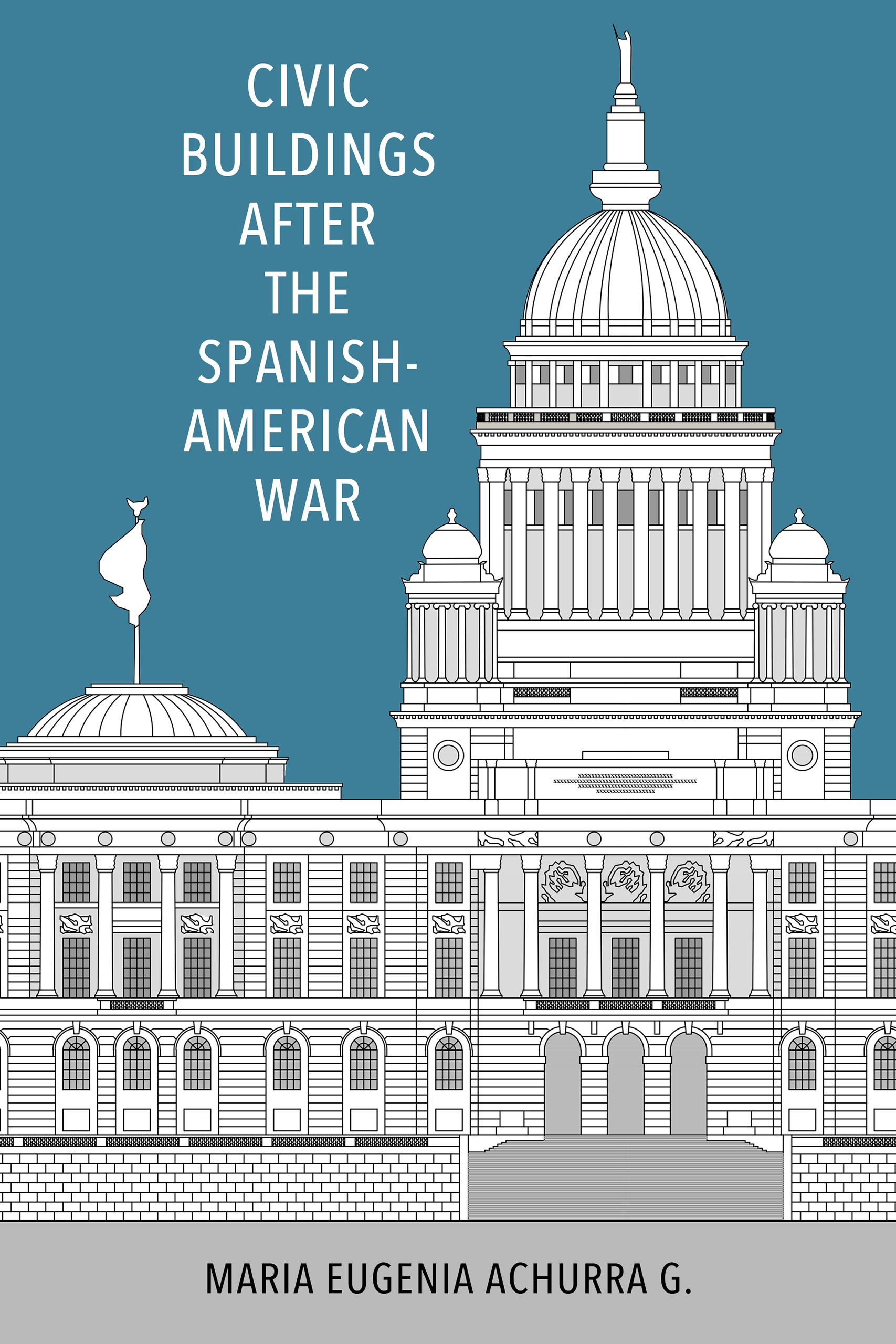
Following the 1898 Spanish-American War, the United States constructed federal buildings in its newly acquired territories, including Cuba, Puerto Rico, and the Philippines. Over a century later, many of these grand Beaux-Arts-style edifices are still in use. In Civic Buildings after the Spanish-American War, Maria Eugenia Achurra G. examines this architecture and urban design as a backdrop for US exceptionalism and expansionism.
The book defines exceptionalism and its role in US Beaux-Arts federal architecture. Subsequent chapters compare specific examples of Beaux-Arts civic architecture in the continental US and Latin America. The book also studies architectural and urban design from other US possessions of the Progressive Era, such as the former Panama Canal Zone and occupied territories like the Dominican Republic. Reviewing the work of relevant designers and architects, Achurra G. argues that architectural examples epitomize the rich, expansionist intentions of twentieth-century Progressive America. These lingering buildings function as intriguing material evidence of the United States’ geopolitical, historical, and commercial meddling in the internal affairs of the Americas and elsewhere.
The book defines exceptionalism and its role in US Beaux-Arts federal architecture. Subsequent chapters compare specific examples of Beaux-Arts civic architecture in the continental US and Latin America. The book also studies architectural and urban design from other US possessions of the Progressive Era, such as the former Panama Canal Zone and occupied territories like the Dominican Republic. Reviewing the work of relevant designers and architects, Achurra G. argues that architectural examples epitomize the rich, expansionist intentions of twentieth-century Progressive America. These lingering buildings function as intriguing material evidence of the United States’ geopolitical, historical, and commercial meddling in the internal affairs of the Americas and elsewhere.
Zahle einfach mit Karte, Klarna, Apple Pay oder Google Pay. Nicht zufrieden? Du hast immer ein 14-tägiges Widerrufsrecht. Lies mehr in unseren AGB. Hast du Fragen, schreib uns eine E-Mail an hello@memmo.org.
Memmo macht das Lernen einfacher – wo auch immer du bist. Bei uns findest du deine Kursbücher und smarte Lerntools an einem Ort: Zusammenfassungen, Quizzes, Podcasts und Lernkarten. Und Ted, dein Lernbuddy, beantwortet alles, was du wissen möchtest. Über 50.000 Studierende lernen bereits hier – gemacht, damit du schneller lernst und weniger Stress hast.
Das könnte dir auch gefallen
Buch kaufen0