
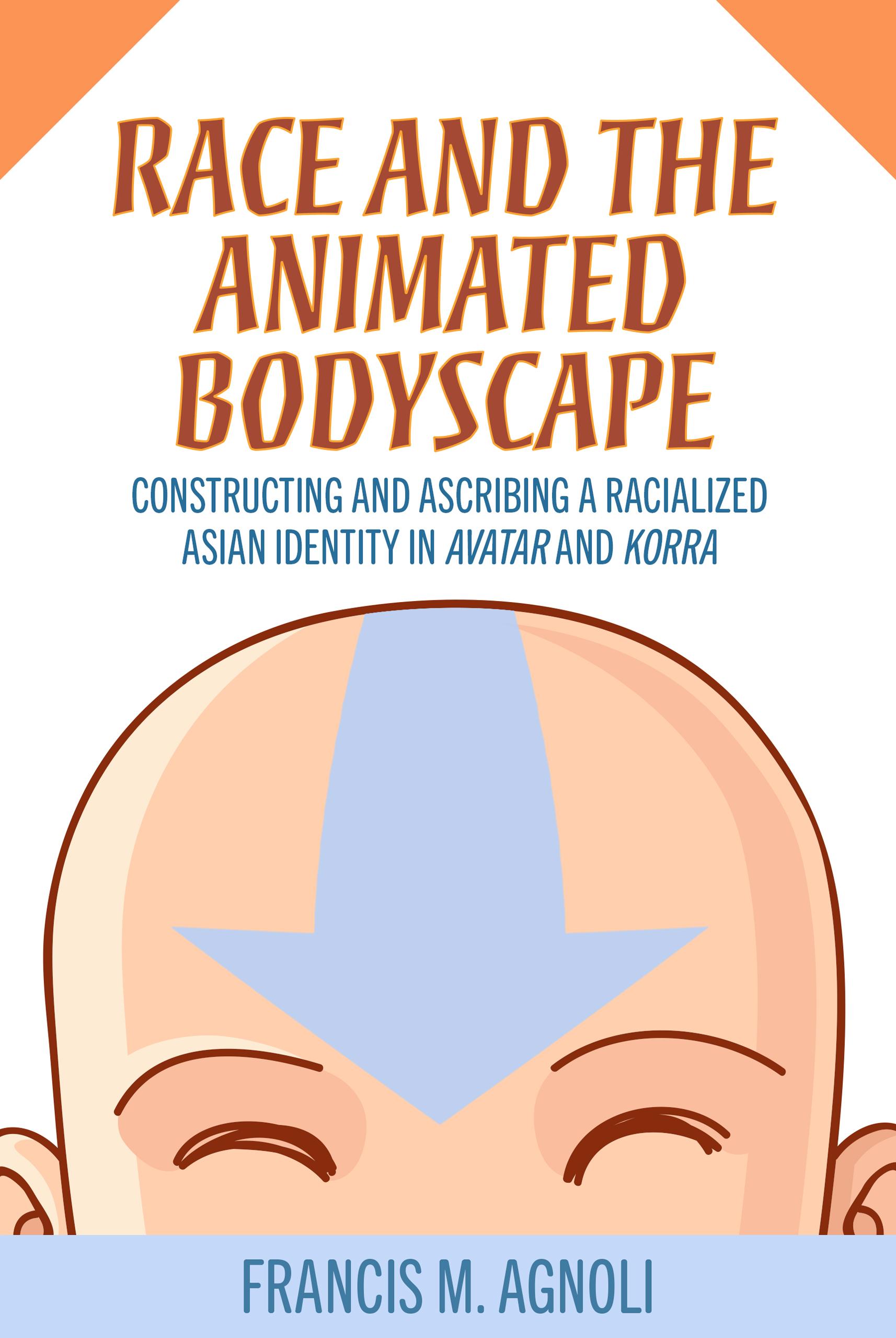
Race does not exist in animation—it must instead be constructed and ascribed. Yet, over the past few years, there has been growing discourse on the intersection of these two subjects within both academic and popular circles. In Race and the Animated Bodyscape: Constructing and Ascribing a Racialized Asian Identity in "Avatar" and "Korra," author Francis M. Agnoli introduces and illustrates the concept of the animated bodyscape, looking specifically at the US television series Avatar: The Last Airbender and its sequel, The Legend of Korra.
Rather than consider animated figures as unified wholes, Agnoli views them as complexes of signs, made up of visual, aural, and narrative components that complement, contradict, and otherwise interact with each other in the creation of meaning. Every one of these components matters, as they are each the result of a series of creative decisions made by various personnel across different production processes. This volume (re)constructs production narratives for Avatar and Korra using original and preexisting interviews with cast and crew members as well as behind-the-scenes material. Each chapter addresses how different types of components were generated, tracing their development from preliminary research to final animation. In doing so, this project identifies the interlocking sets of production communities behind the making of animation and thus behind the making of racialized identities.
Due to its illusory and constructed nature, animation affords untapped opportunities to approach the topic of race in media, looking beyond the role of the actor and taking into account the various factors and processes behind the production of racialized performances. The analysis of race and animation calls for a holistic approach, one that treats both the visual and the aural as intimately connected. This volume offers a blueprint for how to approach the analysis of race and animation.
Rather than consider animated figures as unified wholes, Agnoli views them as complexes of signs, made up of visual, aural, and narrative components that complement, contradict, and otherwise interact with each other in the creation of meaning. Every one of these components matters, as they are each the result of a series of creative decisions made by various personnel across different production processes. This volume (re)constructs production narratives for Avatar and Korra using original and preexisting interviews with cast and crew members as well as behind-the-scenes material. Each chapter addresses how different types of components were generated, tracing their development from preliminary research to final animation. In doing so, this project identifies the interlocking sets of production communities behind the making of animation and thus behind the making of racialized identities.
Due to its illusory and constructed nature, animation affords untapped opportunities to approach the topic of race in media, looking beyond the role of the actor and taking into account the various factors and processes behind the production of racialized performances. The analysis of race and animation calls for a holistic approach, one that treats both the visual and the aural as intimately connected. This volume offers a blueprint for how to approach the analysis of race and animation.
Seiten: 216
Kategorie: Film- & Medievetenskap
e-ISBN: 9781496845108
Versandgewicht: 1.2 kg
Versand in: 1-2 Tage
Zahle einfach mit Karte, Klarna, Apple Pay oder Google Pay. Nicht zufrieden? Du hast immer ein 14-tägiges Widerrufsrecht. Lies mehr in unseren AGB. Hast du Fragen, schreib uns eine E-Mail an hello@memmo.org.
Memmo macht das Lernen einfacher – wo auch immer du bist. Bei uns findest du deine Kursbücher und smarte Lerntools an einem Ort: Zusammenfassungen, Quizzes, Podcasts und Lernkarten. Und Ted, dein Lernbuddy, beantwortet alles, was du wissen möchtest. Über 50.000 Studierende lernen bereits hier – gemacht, damit du schneller lernst und weniger Stress hast.
Das könnte dir auch gefallen
Buch kaufen0