
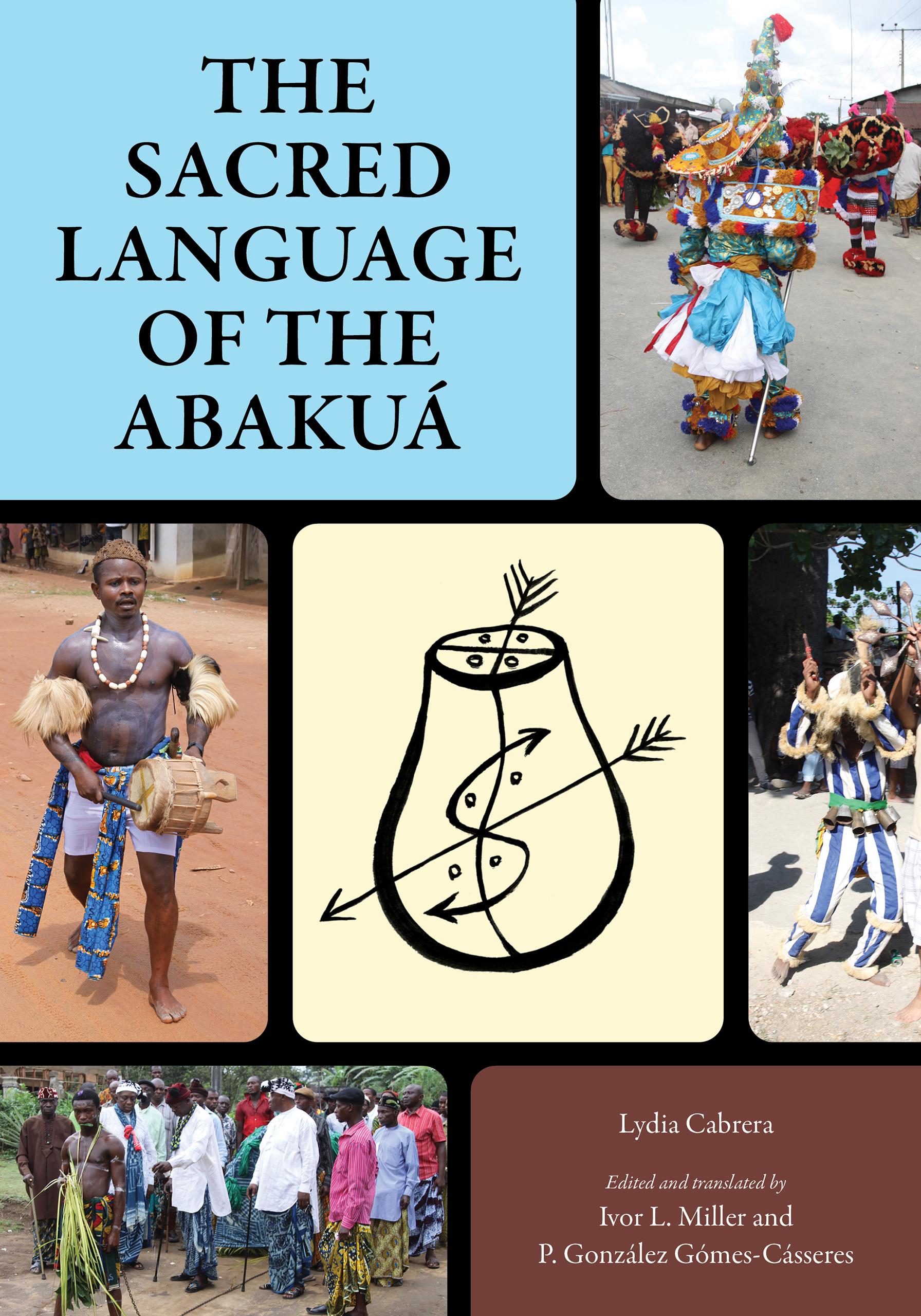
In 1988, Lydia Cabrera (1899–1991) published La lengua sagrada de los Ñáñigos, an Abakuá phrasebook that is to this day the largest work available on any African diaspora community in the Americas. In the early 1800s in Cuba, enslaved Africans from the Cross River region of southeastern Nigeria and southwestern Cameroon created Abakuá societies for protection and mutual aid. Abakuá rites reenact mythic legends of the institution’s history in Africa, using dance, chants, drumming, symbolic writing, herbs, domestic animals, and masked performers to represent African ancestors. Criminalized and scorned in the colonial era, Abakuá members were at the same time contributing to the creation of a unique Cuban culture, including rumba music, now considered a national treasure.
Translated for the first time into English, Cabrera’s lexicon documents phrases vital to the creation of a specific African-derived identity in Cuba and presents the first “insider’s” view of this African heritage. This text presents thoroughly researched commentaries that link hundreds of entries to the context of mythic rites, skilled ritual performance, and the influence of Abakuá in Cuban society and popular music. Generously illustrated with photographs and drawings, the volume includes a new introduction to Cabrera’s writing as well as appendices that situate this important work in Cuba’s history.
With the help of living Abakuá specialists in Cuba and the US, Ivor L. Miller and P. González Gómes-Cásseres have translated Cabrera’s Spanish into English for the first time while keeping her meanings and cultivated style intact, opening this seminal work to new audiences and propelling its legacy in African diaspora studies.
Translated for the first time into English, Cabrera’s lexicon documents phrases vital to the creation of a specific African-derived identity in Cuba and presents the first “insider’s” view of this African heritage. This text presents thoroughly researched commentaries that link hundreds of entries to the context of mythic rites, skilled ritual performance, and the influence of Abakuá in Cuban society and popular music. Generously illustrated with photographs and drawings, the volume includes a new introduction to Cabrera’s writing as well as appendices that situate this important work in Cuba’s history.
With the help of living Abakuá specialists in Cuba and the US, Ivor L. Miller and P. González Gómes-Cásseres have translated Cabrera’s Spanish into English for the first time while keeping her meanings and cultivated style intact, opening this seminal work to new audiences and propelling its legacy in African diaspora studies.
Zahle einfach mit Karte, Klarna, Apple Pay oder Google Pay. Nicht zufrieden? Du hast immer ein 14-tägiges Widerrufsrecht. Lies mehr in unseren AGB. Hast du Fragen, schreib uns eine E-Mail an hello@memmo.org.
Memmo macht das Lernen einfacher – wo auch immer du bist. Bei uns findest du deine Kursbücher und smarte Lerntools an einem Ort: Zusammenfassungen, Quizzes, Podcasts und Lernkarten. Und Ted, dein Lernbuddy, beantwortet alles, was du wissen möchtest. Über 50.000 Studierende lernen bereits hier – gemacht, damit du schneller lernst und weniger Stress hast.
Das könnte dir auch gefallen
Buch kaufen0