
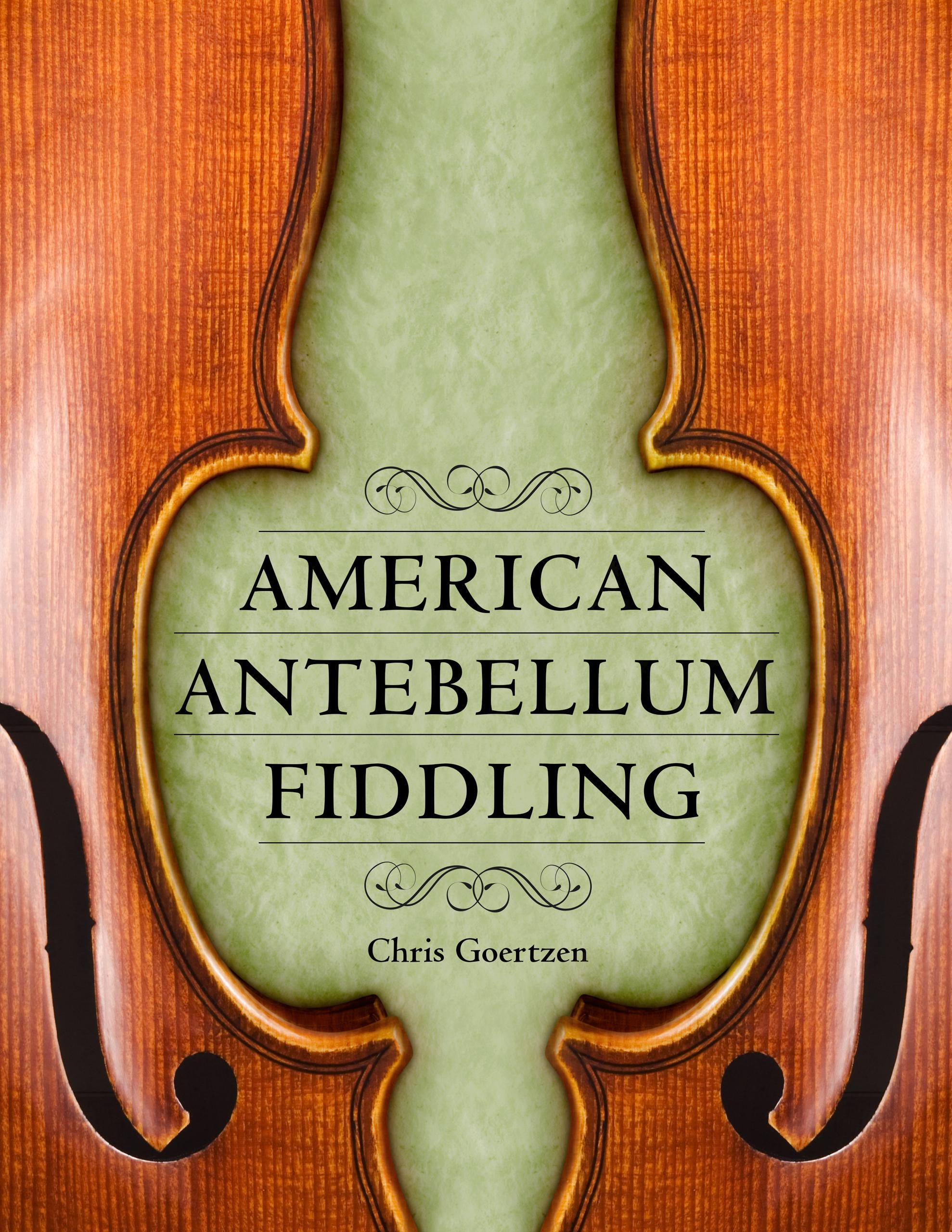
This unique volume is the only book solely about antebellum American fiddling. It includes more than 250 easy-to-read and clearly notated fiddle tunes alongside biographies of fiddlers and careful analysis of their personal tune collections. The reader learns what the tunes of the day were, what the fiddlers’ lives were like, and as much as can be discovered about how fiddling sounded then. Personal histories and tunes’ biographies offer an accessible window on a fascinating period, on decades of growth and change, and on rich cultural history made audible.
In the decades before the Civil War, American fiddling thrived mostly in oral tradition, but some fiddlers also wrote down versions of their tunes. This overlap between oral and written traditions reveals much about the sounds and social contexts of fiddling at that time. In the early 1800s, aspiring young violinists maintained manuscript collections of tunes they intended to learn. These books contained notations of oral-tradition dance tunes—many of them melodies that predated and would survive this era—plus plenty of song melodies and marches. Chris Goertzen takes us into the lives and repertoires of two such young men, Arthur McArthur and Philander Seward. Later, in the 1830s to 1850s, music publications grew in size and shrunk in cost, so fewer musicians kept personal manuscript collections. But a pair of energetic musicians did. Goertzen tells the stories of two remarkable violinist/fiddlers who wrote down many hundreds of tunes and whose notations of those tunes are wonderfully detailed, Charles M. Cobb and William Sidney Mount. Goertzen closes by examining particularly problematic collections. He takes a fresh look at George Knauff’s Virginia Reels and presents and analyzes an amateur musician’s own questionable but valuable transcriptions of his grandfather’s fiddling, which reaches back to antebellum western Virginia.
In the decades before the Civil War, American fiddling thrived mostly in oral tradition, but some fiddlers also wrote down versions of their tunes. This overlap between oral and written traditions reveals much about the sounds and social contexts of fiddling at that time. In the early 1800s, aspiring young violinists maintained manuscript collections of tunes they intended to learn. These books contained notations of oral-tradition dance tunes—many of them melodies that predated and would survive this era—plus plenty of song melodies and marches. Chris Goertzen takes us into the lives and repertoires of two such young men, Arthur McArthur and Philander Seward. Later, in the 1830s to 1850s, music publications grew in size and shrunk in cost, so fewer musicians kept personal manuscript collections. But a pair of energetic musicians did. Goertzen tells the stories of two remarkable violinist/fiddlers who wrote down many hundreds of tunes and whose notations of those tunes are wonderfully detailed, Charles M. Cobb and William Sidney Mount. Goertzen closes by examining particularly problematic collections. He takes a fresh look at George Knauff’s Virginia Reels and presents and analyzes an amateur musician’s own questionable but valuable transcriptions of his grandfather’s fiddling, which reaches back to antebellum western Virginia.
Zahle einfach mit Karte, Klarna, Apple Pay oder Google Pay. Nicht zufrieden? Du hast immer ein 14-tägiges Widerrufsrecht. Lies mehr in unseren AGB. Hast du Fragen, schreib uns eine E-Mail an hello@memmo.org.
Memmo macht das Lernen einfacher – wo auch immer du bist. Bei uns findest du deine Kursbücher und smarte Lerntools an einem Ort: Zusammenfassungen, Quizzes, Podcasts und Lernkarten. Und Ted, dein Lernbuddy, beantwortet alles, was du wissen möchtest. Über 50.000 Studierende lernen bereits hier – gemacht, damit du schneller lernst und weniger Stress hast.
Das könnte dir auch gefallen
Buch kaufen0