
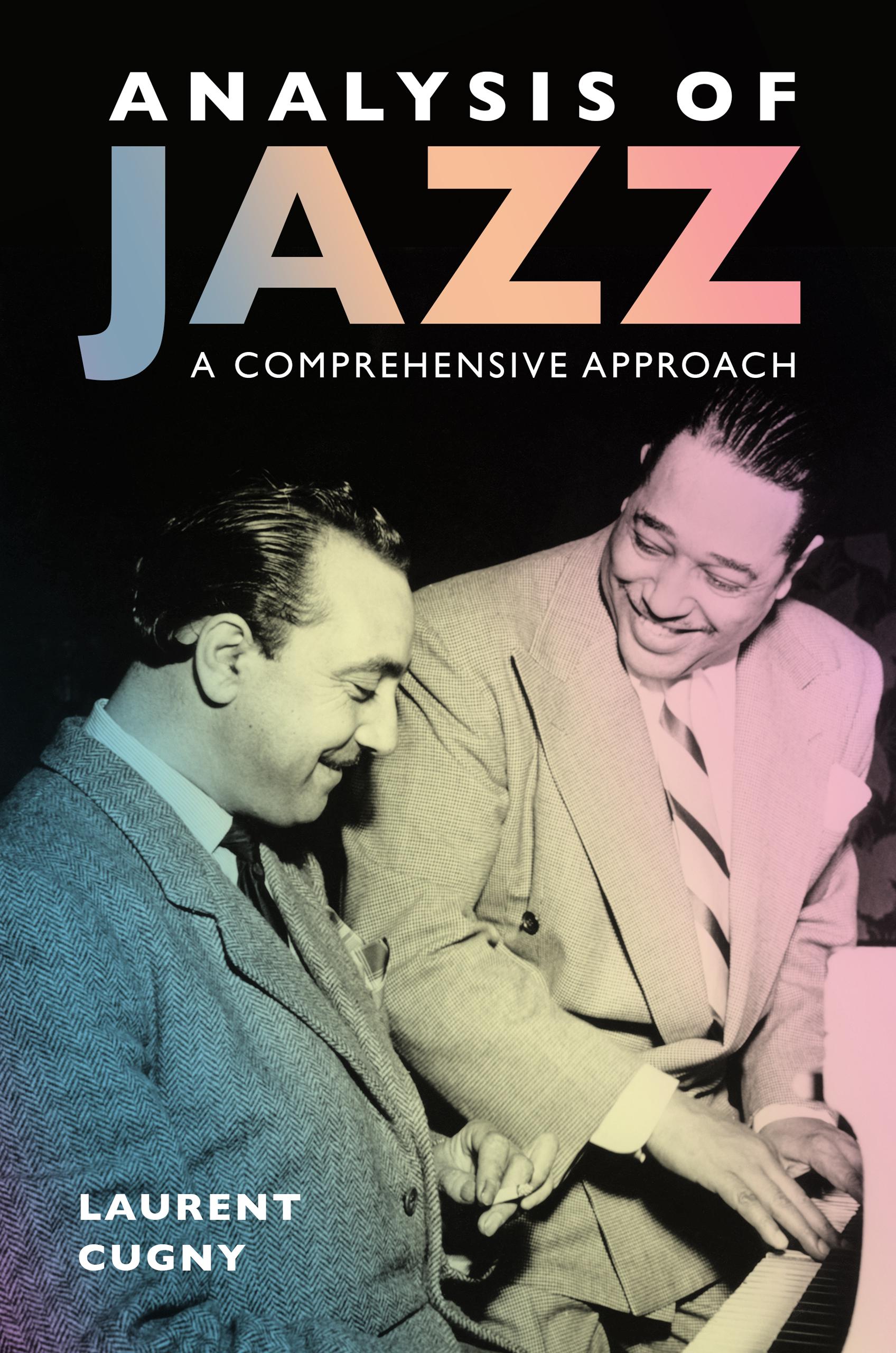
Analysis of Jazz: A Comprehensive Approach, originally published in French as Analyser le jazz, is available here in English for the first time. In this groundbreaking volume, Laurent Cugny examines and connects the theoretical and methodological processes that underlie all of jazz. Jazz in all its forms has been researched and analyzed by performers, scholars, and critics, and Analysis of Jazz is required reading for any serious study of jazz; but not just musicians and musicologists analyze jazz. All listeners are analysts to some extent. Listening is an active process; it may not involve questioning but it always involves remembering, comparing, and listening again. This book is for anyone who attentively listens to and wants to understand jazz.
Divided into three parts, the book focuses on the work of jazz, analytical parameters, and analysis. In part one, Cugny aims at defining what a jazz work is precisely, offering suggestions based on the main features of definition and structure. Part two he dedicates to the analytical parameters of jazz in which a work is performed: harmony, rhythm, form, sound, and melody. Part three takes up the analysis of jazz itself, its history, issues of transcription, and the nature of improvised solos. In conclusion, Cugny addresses the issues of interpretation to reflect on the goals of analysis with regard to understanding the history of jazz and the different cultural backgrounds in which it takes place.
Analysis of Jazz presents a detailed inventory of theoretical tools and issues necessary for understanding jazz.
Divided into three parts, the book focuses on the work of jazz, analytical parameters, and analysis. In part one, Cugny aims at defining what a jazz work is precisely, offering suggestions based on the main features of definition and structure. Part two he dedicates to the analytical parameters of jazz in which a work is performed: harmony, rhythm, form, sound, and melody. Part three takes up the analysis of jazz itself, its history, issues of transcription, and the nature of improvised solos. In conclusion, Cugny addresses the issues of interpretation to reflect on the goals of analysis with regard to understanding the history of jazz and the different cultural backgrounds in which it takes place.
Analysis of Jazz presents a detailed inventory of theoretical tools and issues necessary for understanding jazz.
Zahle einfach mit Karte, Klarna, Apple Pay oder Google Pay. Nicht zufrieden? Du hast immer ein 14-tägiges Widerrufsrecht. Lies mehr in unseren AGB. Hast du Fragen, schreib uns eine E-Mail an hello@memmo.org.
Memmo macht das Lernen einfacher – wo auch immer du bist. Bei uns findest du deine Kursbücher und smarte Lerntools an einem Ort: Zusammenfassungen, Quizzes, Podcasts und Lernkarten. Und Ted, dein Lernbuddy, beantwortet alles, was du wissen möchtest. Über 50.000 Studierende lernen bereits hier – gemacht, damit du schneller lernst und weniger Stress hast.
Das könnte dir auch gefallen
Buch kaufen0