
Winner of the 2018 Eudora Welty Prize
When the United States entered World War I, parts of the country had developed industries, urban cultures, and democratic political systems, but the South lagged behind, remaining an impoverished, agriculture region. Despite New South boosterism, the culture of the early twentieth-century South was comparatively artistically arid. Yet, southern writers dominated the literary marketplace by the 1920s and 1930s.
World War I brought southerners into contact with modernity before the South fully modernized. This shortfall created an inherent tension between the region's existing agricultural social structure and the processes of modernization, leading to distal modernism, a form of writing that combines elements of modernism to depict non-modern social structures. Critics have struggled to formulate explanations for the eruption of modern southern literature, sometimes called the Southern Renaissance.
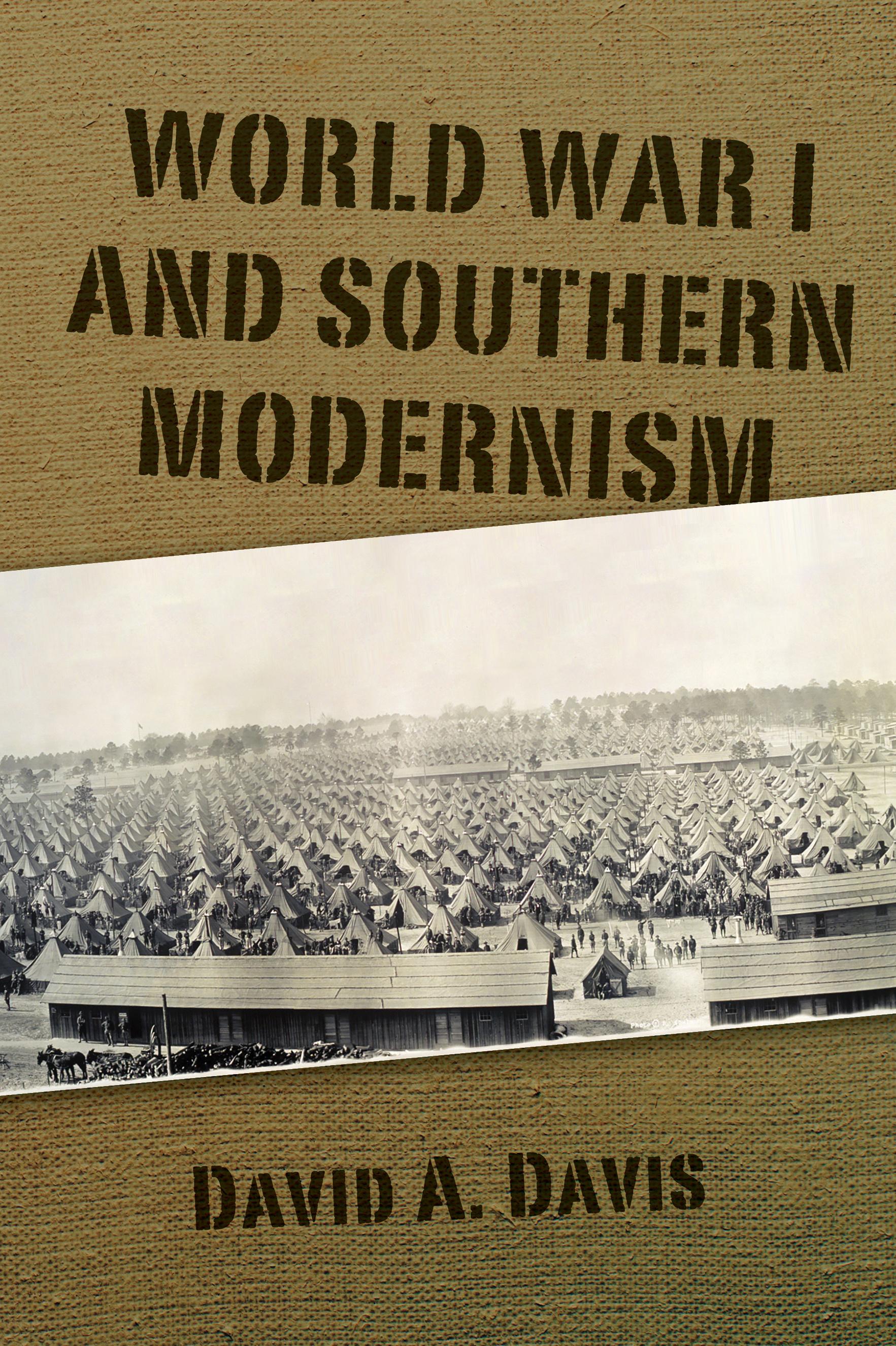
Pinpointing World War I as the catalyst, David A. Davis argues southern modernism was not a self-generating outburst of writing, but a response to the disruptions modernity generated in the region. In World War I and Southern Modernism, Davis examines dozens of works of literature by writers, including William Faulkner, Ellen Glasgow, and Claude McKay, that depict the South during the war. Topics explored in the book include contact between the North and the South, southerners who served in combat, and the developing southern economy. Davis also provides a new lens for this argument, taking a closer look at African Americans in the military and changing gender roles.
When the United States entered World War I, parts of the country had developed industries, urban cultures, and democratic political systems, but the South lagged behind, remaining an impoverished, agriculture region. Despite New South boosterism, the culture of the early twentieth-century South was comparatively artistically arid. Yet, southern writers dominated the literary marketplace by the 1920s and 1930s.
World War I brought southerners into contact with modernity before the South fully modernized. This shortfall created an inherent tension between the region's existing agricultural social structure and the processes of modernization, leading to distal modernism, a form of writing that combines elements of modernism to depict non-modern social structures. Critics have struggled to formulate explanations for the eruption of modern southern literature, sometimes called the Southern Renaissance.
Pinpointing World War I as the catalyst, David A. Davis argues southern modernism was not a self-generating outburst of writing, but a response to the disruptions modernity generated in the region. In World War I and Southern Modernism, Davis examines dozens of works of literature by writers, including William Faulkner, Ellen Glasgow, and Claude McKay, that depict the South during the war. Topics explored in the book include contact between the North and the South, southerners who served in combat, and the developing southern economy. Davis also provides a new lens for this argument, taking a closer look at African Americans in the military and changing gender roles.
Zahle einfach mit Karte, Klarna, Apple Pay oder Google Pay. Nicht zufrieden? Du hast immer ein 14-tägiges Widerrufsrecht. Lies mehr in unseren AGB. Hast du Fragen, schreib uns eine E-Mail an hello@memmo.org.
Memmo macht das Lernen einfacher – wo auch immer du bist. Bei uns findest du deine Kursbücher und smarte Lerntools an einem Ort: Zusammenfassungen, Quizzes, Podcasts und Lernkarten. Und Ted, dein Lernbuddy, beantwortet alles, was du wissen möchtest. Über 50.000 Studierende lernen bereits hier – gemacht, damit du schneller lernst und weniger Stress hast.
Das könnte dir auch gefallen
Buch kaufen0