
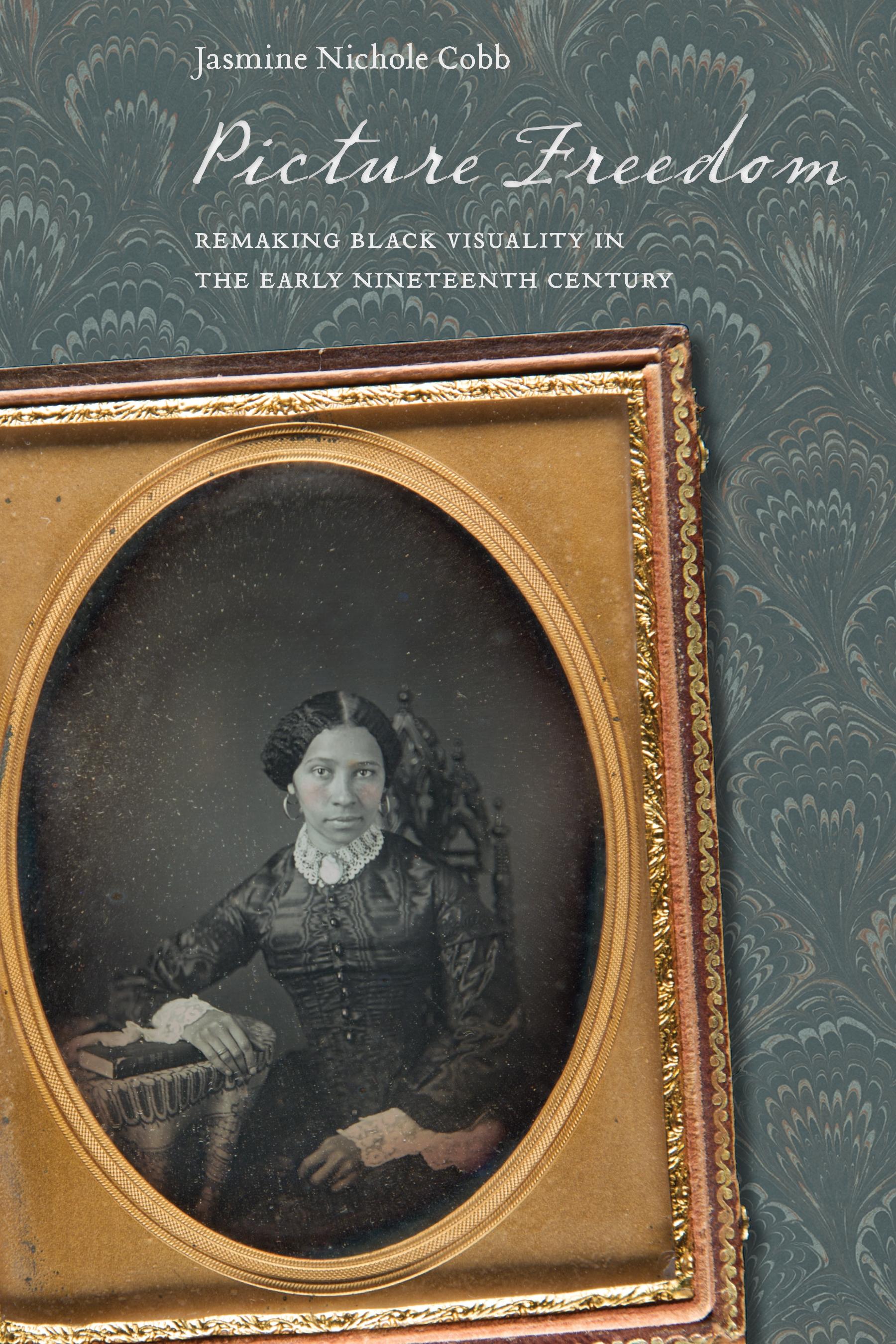
In the decades leading up to the end of U.S. slavery, many free Blacks sat for daguerreotypes decorated in fine garments to document their self-possession. People pictured in these early photographs used portraiture to seize control over representation of the free Black body and reimagine Black visuality divorced from the cultural logics of slavery. In Picture Freedom, Jasmine Nichole Cobb analyzes the ways in which the circulation of various images prepared free Blacks and free Whites for the emancipation of formerly unfree people of African descent. She traces the emergence of Black freedom as both an idea and as an image during the early nineteenth century.
Through an analysis of popular culture of the period—including amateur portraiture, racial caricatures, joke books, antislavery newspapers, abolitionist materials, runaway advertisements, ladies’ magazines, and scrapbooks, as well as scenic wallpaper—Cobb explores the earliest illustrations of free Blacks and reveals the complicated route through visual culture toward a vision of African American citizenship. Picture Freedom reveals how these depictions contributed to public understandings of nationhood, among both domestic eyes and the larger Atlantic world.
Zahle einfach mit Karte, Klarna, Apple Pay oder Google Pay. Nicht zufrieden? Du hast immer ein 14-tägiges Widerrufsrecht. Lies mehr in unseren AGB. Hast du Fragen, schreib uns eine E-Mail an hello@memmo.org.
Memmo macht das Lernen einfacher – wo auch immer du bist. Bei uns findest du deine Kursbücher und smarte Lerntools an einem Ort: Zusammenfassungen, Quizzes, Podcasts und Lernkarten. Und Ted, dein Lernbuddy, beantwortet alles, was du wissen möchtest. Über 50.000 Studierende lernen bereits hier – gemacht, damit du schneller lernst und weniger Stress hast.