
Winner, Body and Embodiment Award presented by the American Sociological Association
Imagine yourself without a face—the task seems impossible. The face is a core feature of our physical identity. Our face is how others identify us and how we think of our ‘self’. Yet, human faces are also functionally essential as mechanisms for communication and as a means of eating, breathing, and seeing. For these reasons, facial disfigurement can endanger our fundamental notions of self and identity or even be life threatening, at worse. Precisely because it is so difficult to conceal our faces, the disfigured face compromises appearance, status, and, perhaps, our very way of being in the world.
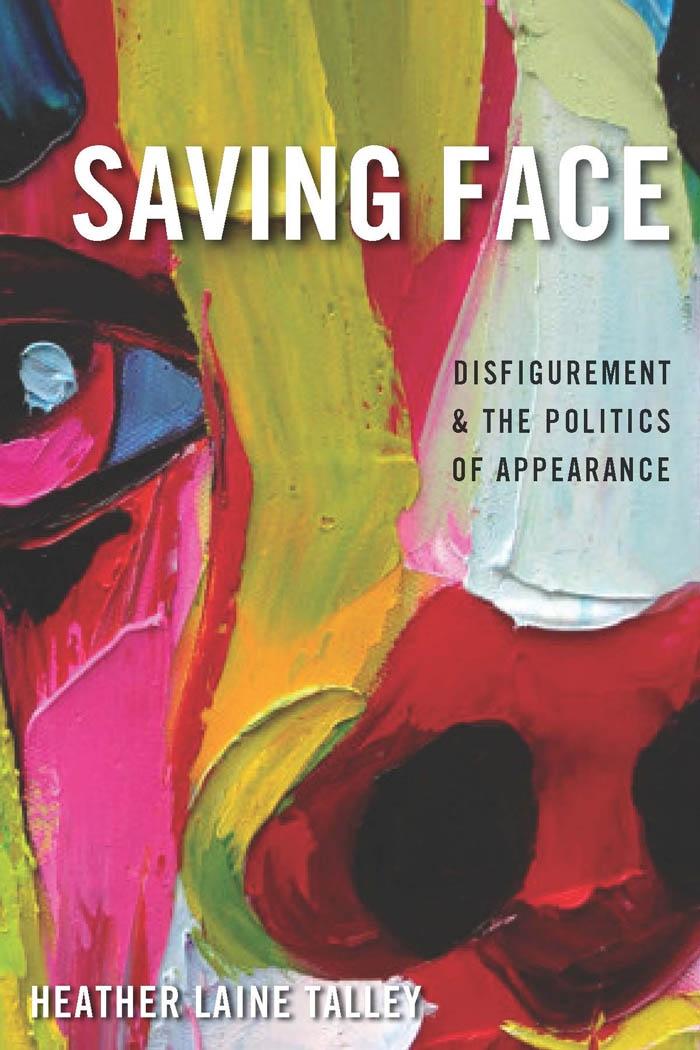
In Saving Face, sociologist Heather Laine Talley examines the cultural meaning and social significance of interventions aimed at repairing faces defined as disfigured. Using ethnography, participant-observation, content analysis, interviews, and autoethnography, Talley explores four sites in which a range of faces are “repaired:” face transplantation, facial feminization surgery, the reality show Extreme Makeover, and the international charitable organization Operation Smile,. Throughout, she considers how efforts focused on repair sometimes intensify the stigma associated with disfigurement. Drawing upon experiences volunteering at a camp for children with severe burns, Talley also considers alternative interventions and everyday practices that both challenge stigma and help those seen as disfigured negotiate outsider status.
Talley delves into the promise and limits of facial surgery, continually examining how we might understand appearance as a facet of privilege and a dimension of inequality. Ultimately, she argues that facial work is not simply a conglomeration of reconstructive techniques aimed at the human face, but rather, that appearance interventions are increasingly treated as lifesaving work. Especially at a time when aesthetic technologies carrying greater risk are emerging and when discrimination based on appearance is rampant, this important book challenges us to think critically about how we see the human face.
Zahle einfach mit Karte, Klarna, Apple Pay oder Google Pay. Nicht zufrieden? Du hast immer ein 14-tägiges Widerrufsrecht. Lies mehr in unseren AGB. Hast du Fragen, schreib uns eine E-Mail an hello@memmo.org.
Memmo macht das Lernen einfacher – wo auch immer du bist. Bei uns findest du deine Kursbücher und smarte Lerntools an einem Ort: Zusammenfassungen, Quizzes, Podcasts und Lernkarten. Und Ted, dein Lernbuddy, beantwortet alles, was du wissen möchtest. Über 50.000 Studierende lernen bereits hier – gemacht, damit du schneller lernst und weniger Stress hast.