
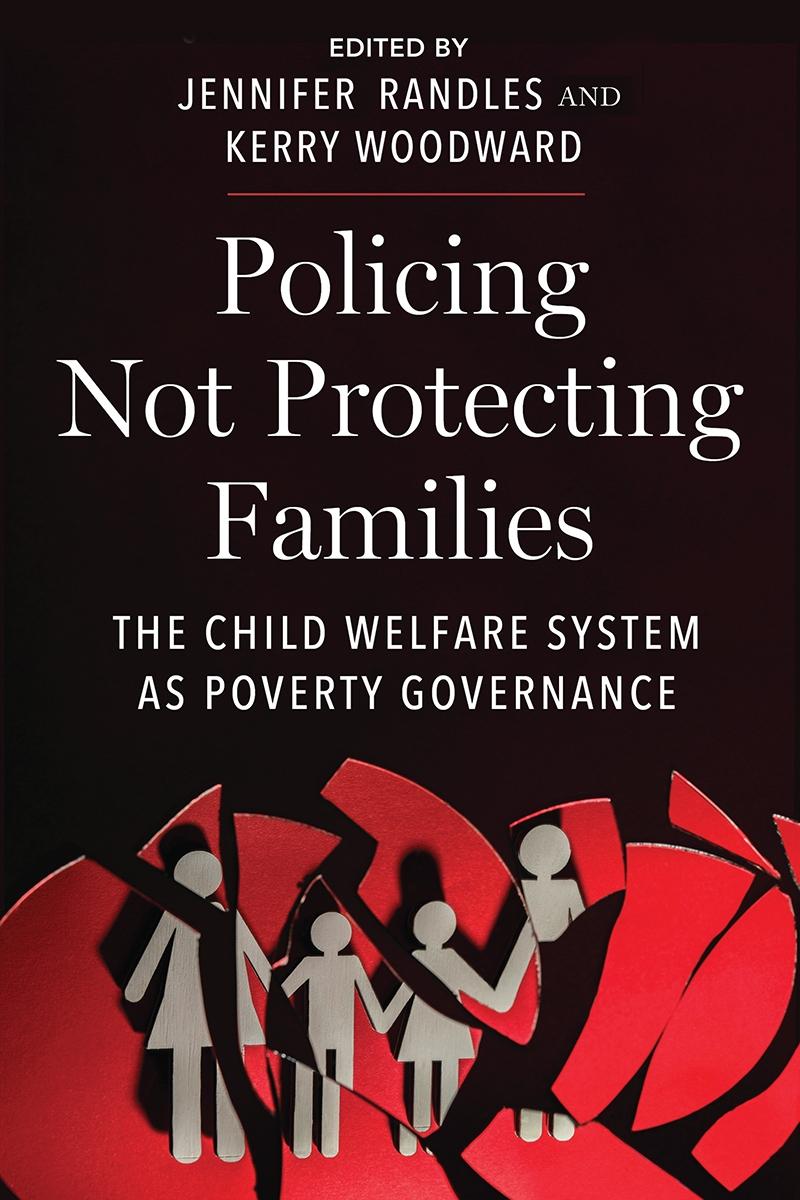
Controlling, surveilling, and punishing poor families through the child welfare system
In a typical year, one in five US children have some interaction with the child welfare system. Countless other families, particularly those who struggle to care for their children due to poverty or economic insecurity, fear child welfare system involvement. Though imagined as a system that protects children from caregivers’ maltreatment, contributors to Policing Not Protecting Families argue that the child welfare system polices and punishes poor parents who are unable to meet white, middle class parenting standards due to structural inequalities.
Bringing together scholars from anthropology, sociology, law, and social work, this collection is the first to critically examine the child welfare system’s role in governing poor, disproportionately Black and Native families. It shows that the child welfare system is a key site of poverty governance, or state control and management of poor families. Chapters bring together empirical research from diverse settings across the US, highlighting the system’s interactions with other state systems and its wide impact on marginalized families. Together the chapters illustrate the failure of the child welfare system to protect children and families from the structural inequalities that shape the lives of poor and other marginalized families.
Zahle einfach mit Karte, Klarna, Apple Pay oder Google Pay. Nicht zufrieden? Du hast immer ein 14-tägiges Widerrufsrecht. Lies mehr in unseren AGB. Hast du Fragen, schreib uns eine E-Mail an hello@memmo.org.
Memmo macht das Lernen einfacher – wo auch immer du bist. Bei uns findest du deine Kursbücher und smarte Lerntools an einem Ort: Zusammenfassungen, Quizzes, Podcasts und Lernkarten. Und Ted, dein Lernbuddy, beantwortet alles, was du wissen möchtest. Über 50.000 Studierende lernen bereits hier – gemacht, damit du schneller lernst und weniger Stress hast.