
Winner, 2024 Bourdieu Best Book Award, given by the Sociology of Education Section of the American Sociological Association
Honorable Mention, Outstanding Scholarly Contribution Award, given by the Children and Youth Section of the American Sociological Association
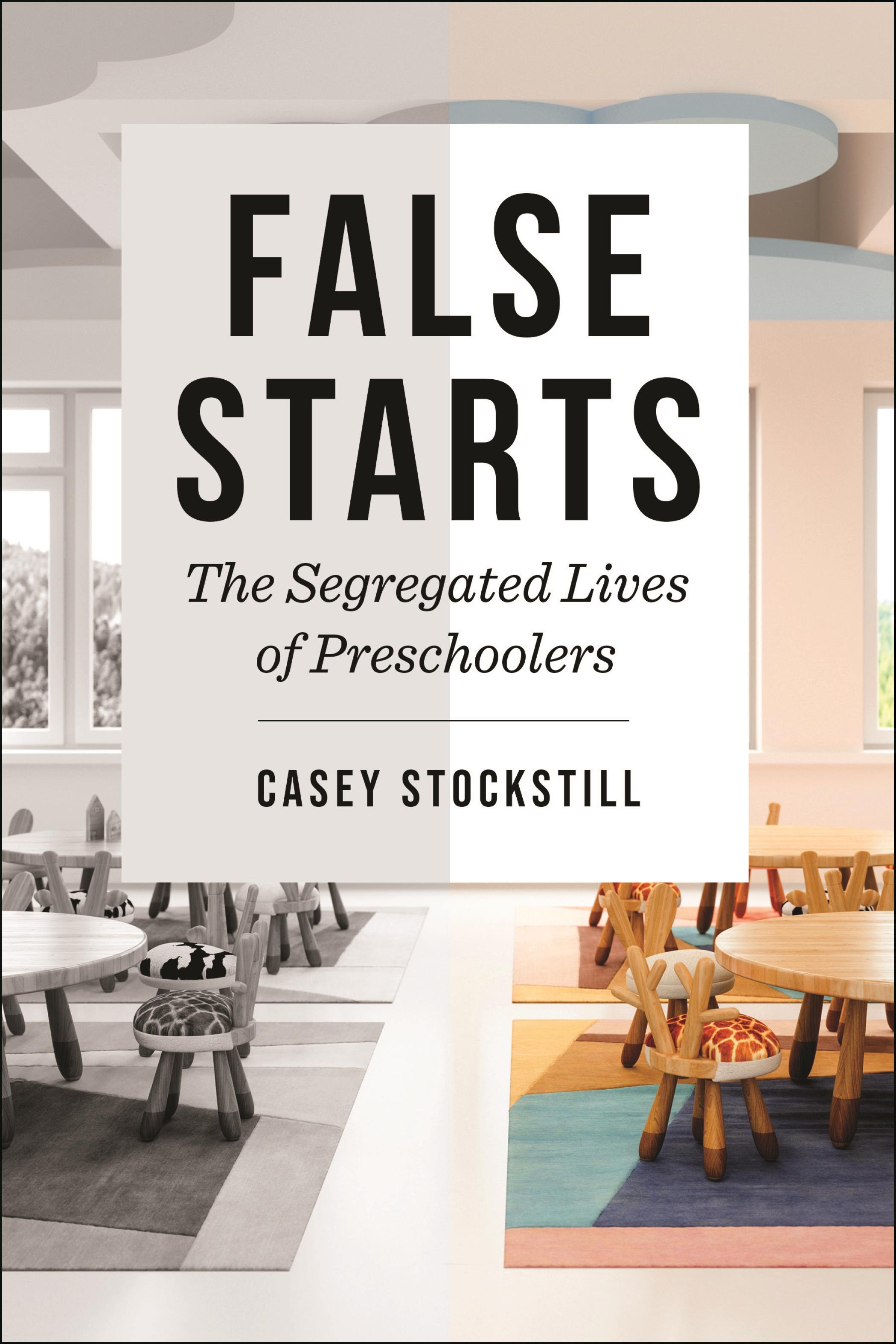
An inside look at the racial and class divides between Head Start and private pre-K classrooms for children and their families
The benefits of preschool have been part of our national conversation since the 1960s, when Head Start, a publicly funded preschool program for low-income children, began. In the past two decades, forty-four states have expanded access to preschool, often citing preschool as an anti-poverty policy. Yet, as Casey Stockstill shows, two-thirds of American preschools are segregated—concentrating primarily poor children of color or affluent white children in separate schools. Stockstill argues that, as a result, segregated preschools entrench rather than disrupt inequality.
Stockstill spent two years observing children and teachers at two preschools in Madison, Wisconsin. Madison, like many other small and medium cities in the United States, is segregated, with affluent and middle-class white people and working class or low-income people of color occupying different sectors of the city. Stockstill observed one preschool that was 95% white and another that was 95% children of color. She shows that this segregation was more than a background variable or inconvenient image; segregation had an impact on children’s experiences in multiple ways, but especially in the ways they spent their time, the supervision and instruction they received, and the ways they learned and socialized with other children. Stockstill shows that even in high-quality preschools that on paper have similar resources, de facto segregation creates different school experiences for children that ultimately reinforce racial and class inequality.
False Starts suggests that as we continue to invest in preschool as an anti-poverty policy, we need a fuller understanding of how segregated classroom environments impact children's educational outcomes and their ability to thrive.
Zahle einfach mit Karte, Klarna, Apple Pay oder Google Pay. Nicht zufrieden? Du hast immer ein 14-tägiges Widerrufsrecht. Lies mehr in unseren AGB. Hast du Fragen, schreib uns eine E-Mail an hello@memmo.org.
Memmo macht das Lernen einfacher – wo auch immer du bist. Bei uns findest du deine Kursbücher und smarte Lerntools an einem Ort: Zusammenfassungen, Quizzes, Podcasts und Lernkarten. Und Ted, dein Lernbuddy, beantwortet alles, was du wissen möchtest. Über 50.000 Studierende lernen bereits hier – gemacht, damit du schneller lernst und weniger Stress hast.