
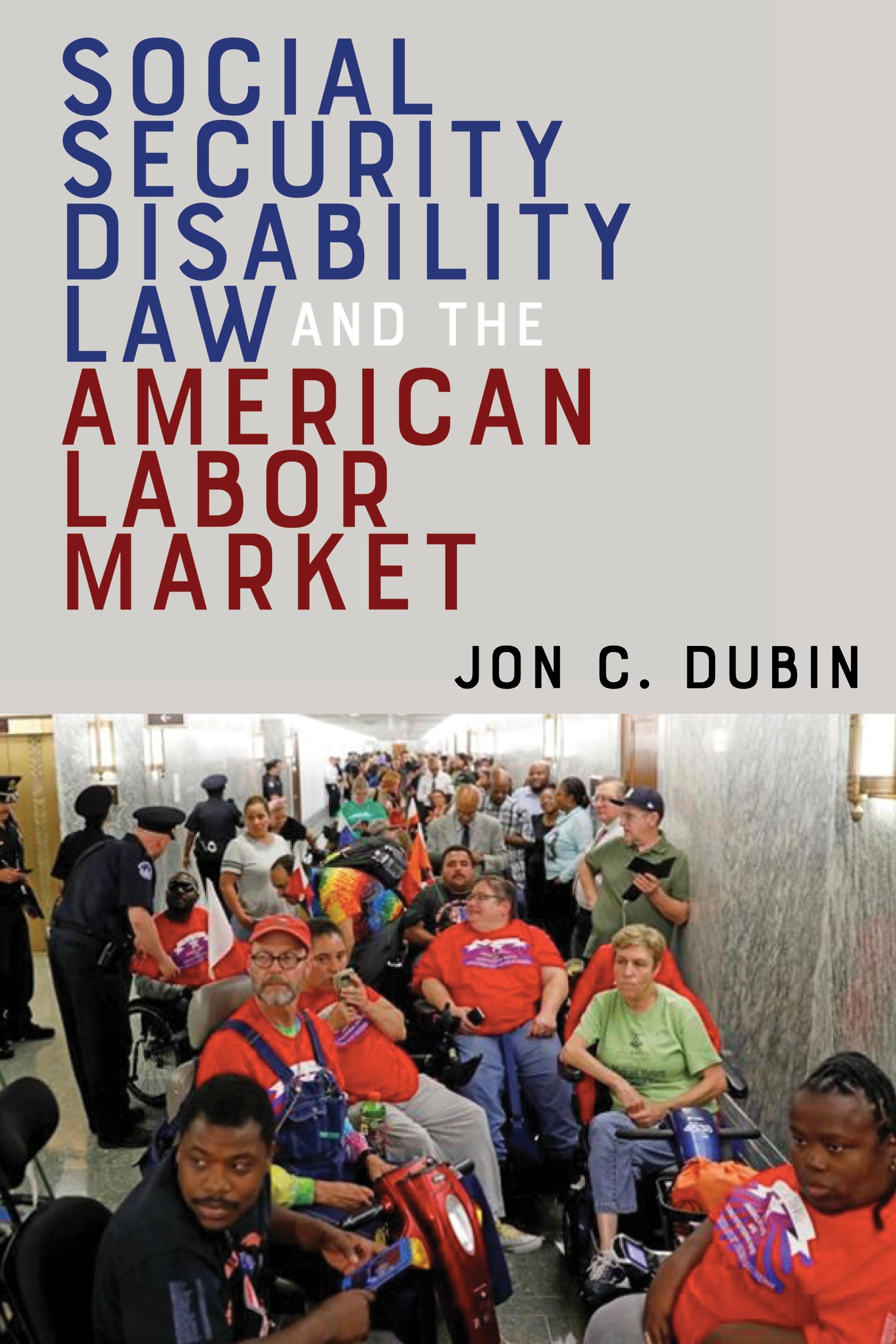
How social security disability law is out of touch with the contemporary American labor market
Passing down nearly a million decisions each year, more judges handle disability cases for the Social Security Administration than federal civil and criminal cases combined.
In Social Security Disability Law and the American Labor Market, Jon C. Dubin challenges the contemporary policies for determining disability benefits and work assessment. He posits the fundamental questions: where are the jobs for persons with significant medical and vocational challenges? And how does the administration misfire in its standards and processes for answering that question? Deploying his profound understanding of the Social Security Administration and Disability law and policy, he demystifies the system, showing us its complex inner mechanisms and flaws, its history and evolution, and how changes in the labor market have rendered some agency processes obsolete. Dubin lays out how those who advocate eviscerating program coverage and needed life support benefits in the guise of modernizing these procedures would reduce the capacity for the Social Security Administration to function properly and serve its intended beneficiaries, and argues that the disability system should instead be “mended, not ended.”
Dubin argues that while it may seem counterintuitive, the transformation from an industrial economy to a twenty-first-century service economy in the information age, with increased automation, and resulting diminished demand for arduous physical labor, has not meaningfully reduced the relevance of, or need for, the disability benefits programs. Indeed, they have created new and different obstacles to work adjustments based on the need for other skills and capacities in the new economy—especially for the significant portion of persons with cognitive, psychiatric, neuro-psychological, or other mental impairments. Therefore, while the disability program is in dire need of empirically supported updating and measures to remedy identified deficiencies, obsolescence, inconsistencies in application, and racial, economic and other inequities, the program’s framework is sufficiently broad and enduring to remain relevant and faithful to the Act’s congressional beneficent purposes and aspirations.
Zahle einfach mit Karte, Klarna, Apple Pay oder Google Pay. Nicht zufrieden? Du hast immer ein 14-tägiges Widerrufsrecht. Lies mehr in unseren AGB. Hast du Fragen, schreib uns eine E-Mail an hello@memmo.org.
Memmo macht das Lernen einfacher – wo auch immer du bist. Bei uns findest du deine Kursbücher und smarte Lerntools an einem Ort: Zusammenfassungen, Quizzes, Podcasts und Lernkarten. Und Ted, dein Lernbuddy, beantwortet alles, was du wissen möchtest. Über 50.000 Studierende lernen bereits hier – gemacht, damit du schneller lernst und weniger Stress hast.