
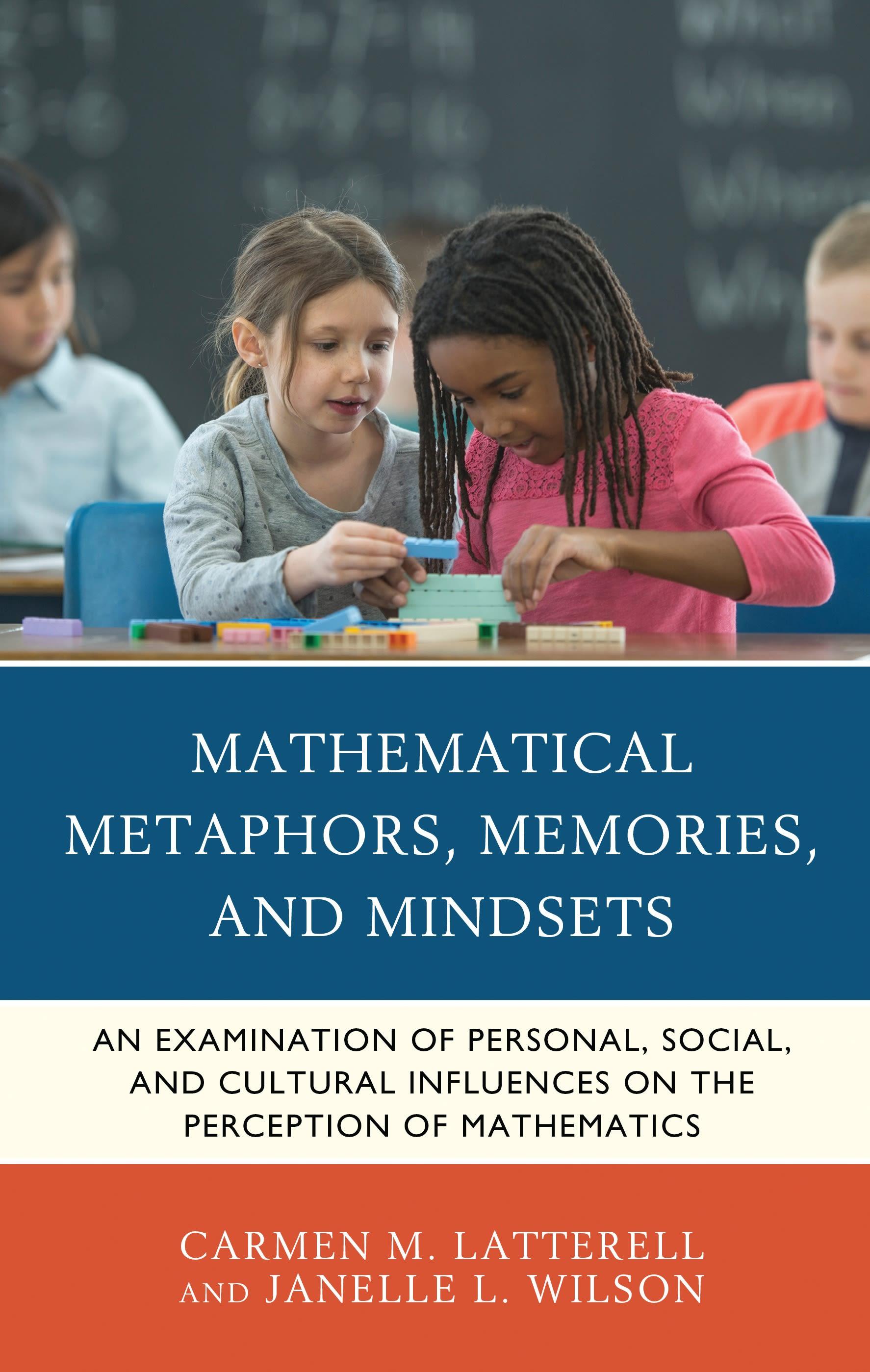
United States’ students continue to have difficulties with the subject of mathematics. Sometimes it is believed that students aren’t smart enough to master mathematics or that mathematics is just too difficult for all but the chosen few. This book offers an alternative explanation: Students’ difficulties in mathematics can best be understood and explained social scientifically. That is, Learning Theories, Agents of Socialization, and more generally, cultural and social milieu, are relevant in trying to understand individuals’ ideas about mathematics.
The book begins by providing an overview of the current status in mathematics education. Popular cultural portrayals of mathematics and mathematicians are examined. The book, then, delves deeper into how students perceive mathematics and mathematicians by examining how students view mathematicians, how students define mathematics, and what themes emerge from students’ mathematical autobiographies and their metaphors. The book describes a semantic differential, in an effort to ascertain the meanings of math that people hold and shows the different patterns of responses among various groups of people. Finally, the book delves into mathematical mindsets, a current approach to understanding mathematical identities, as well as success and failure in mathematics.
The book begins by providing an overview of the current status in mathematics education. Popular cultural portrayals of mathematics and mathematicians are examined. The book, then, delves deeper into how students perceive mathematics and mathematicians by examining how students view mathematicians, how students define mathematics, and what themes emerge from students’ mathematical autobiographies and their metaphors. The book describes a semantic differential, in an effort to ascertain the meanings of math that people hold and shows the different patterns of responses among various groups of people. Finally, the book delves into mathematical mindsets, a current approach to understanding mathematical identities, as well as success and failure in mathematics.
Zahle einfach mit Karte, Klarna, Apple Pay oder Google Pay. Nicht zufrieden? Du hast immer ein 14-tägiges Widerrufsrecht. Lies mehr in unseren AGB. Hast du Fragen, schreib uns eine E-Mail an hello@memmo.org.
Memmo macht das Lernen einfacher – wo auch immer du bist. Bei uns findest du deine Kursbücher und smarte Lerntools an einem Ort: Zusammenfassungen, Quizzes, Podcasts und Lernkarten. Und Ted, dein Lernbuddy, beantwortet alles, was du wissen möchtest. Über 50.000 Studierende lernen bereits hier – gemacht, damit du schneller lernst und weniger Stress hast.