
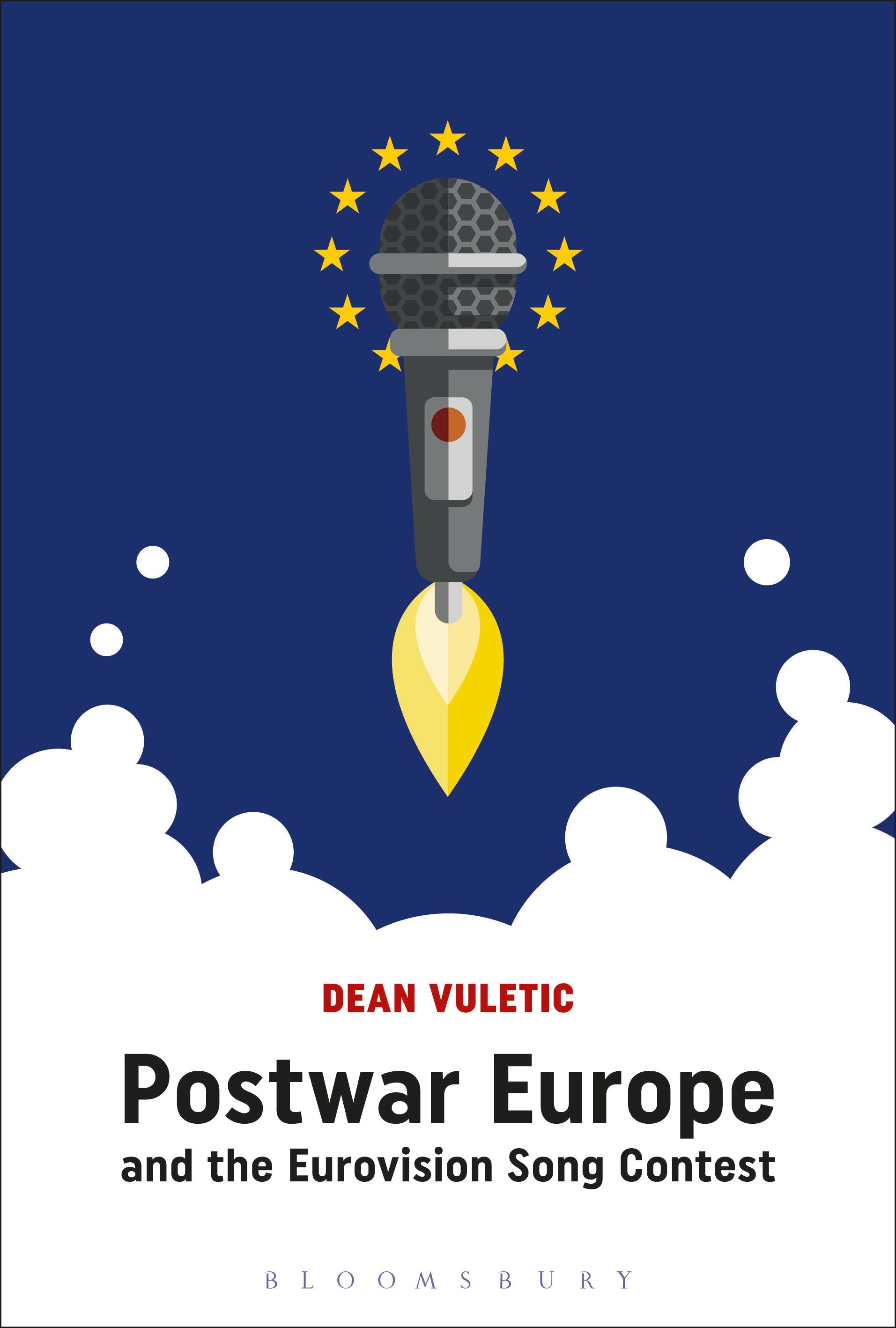
Postwar Europe and the Eurovision Song Contest examines how the Eurovision Song Contest has reflected and become intertwined with the history of postwar Europe from a political perspective.
Established in 1956, the Eurovision Song Contest is the world's largest popular music event and one of the most popular television programmes in Europe, currently attracting a global audience of around 200 million people. Eurovision is often mocked as cultural kitsch because of its over-the-top performances and frivolous song lyrics. Yet there is no cultural medium that connects Europeans more than popular music, the development of which has always been tied to cultural, economic, political, social and technological change – making Eurovision the ideal tool to explain the history of Europe in the last sixty years. This book uses Eurovision as a vehicle to address topics ranging from the Cold War, liberal democracy and communism to nationalism, European integration, economic prosperity and human rights. It analyses these subjects through their cultural, political and social relationships with Eurovision entries as expressed through lyrics and music, as well as by examining public debates that have accompanied the selection of the entries and the organisation of the contest itself. Postwar Europe and the Eurovision Song Contest also considers how states have used Eurovision to define their identities in a European context, be it to assert their national distinctiveness, highlight political issues or affirm their Europeanism or Euroscepticism in the context of European integration.
Based on original sources, including hitherto unpublished archival documents from international broadcasting organisations, this is a novel historical study of interest to anyone keen to know more about the postwar history of Europe and its cultural history in particular.
Established in 1956, the Eurovision Song Contest is the world's largest popular music event and one of the most popular television programmes in Europe, currently attracting a global audience of around 200 million people. Eurovision is often mocked as cultural kitsch because of its over-the-top performances and frivolous song lyrics. Yet there is no cultural medium that connects Europeans more than popular music, the development of which has always been tied to cultural, economic, political, social and technological change – making Eurovision the ideal tool to explain the history of Europe in the last sixty years. This book uses Eurovision as a vehicle to address topics ranging from the Cold War, liberal democracy and communism to nationalism, European integration, economic prosperity and human rights. It analyses these subjects through their cultural, political and social relationships with Eurovision entries as expressed through lyrics and music, as well as by examining public debates that have accompanied the selection of the entries and the organisation of the contest itself. Postwar Europe and the Eurovision Song Contest also considers how states have used Eurovision to define their identities in a European context, be it to assert their national distinctiveness, highlight political issues or affirm their Europeanism or Euroscepticism in the context of European integration.
Based on original sources, including hitherto unpublished archival documents from international broadcasting organisations, this is a novel historical study of interest to anyone keen to know more about the postwar history of Europe and its cultural history in particular.
Zahle einfach mit Karte, Klarna, Apple Pay oder Google Pay. Nicht zufrieden? Du hast immer ein 14-tägiges Widerrufsrecht. Lies mehr in unseren AGB. Hast du Fragen, schreib uns eine E-Mail an hello@memmo.org.
Memmo macht das Lernen einfacher – wo auch immer du bist. Bei uns findest du deine Kursbücher und smarte Lerntools an einem Ort: Zusammenfassungen, Quizzes, Podcasts und Lernkarten. Und Ted, dein Lernbuddy, beantwortet alles, was du wissen möchtest. Über 50.000 Studierende lernen bereits hier – gemacht, damit du schneller lernst und weniger Stress hast.