
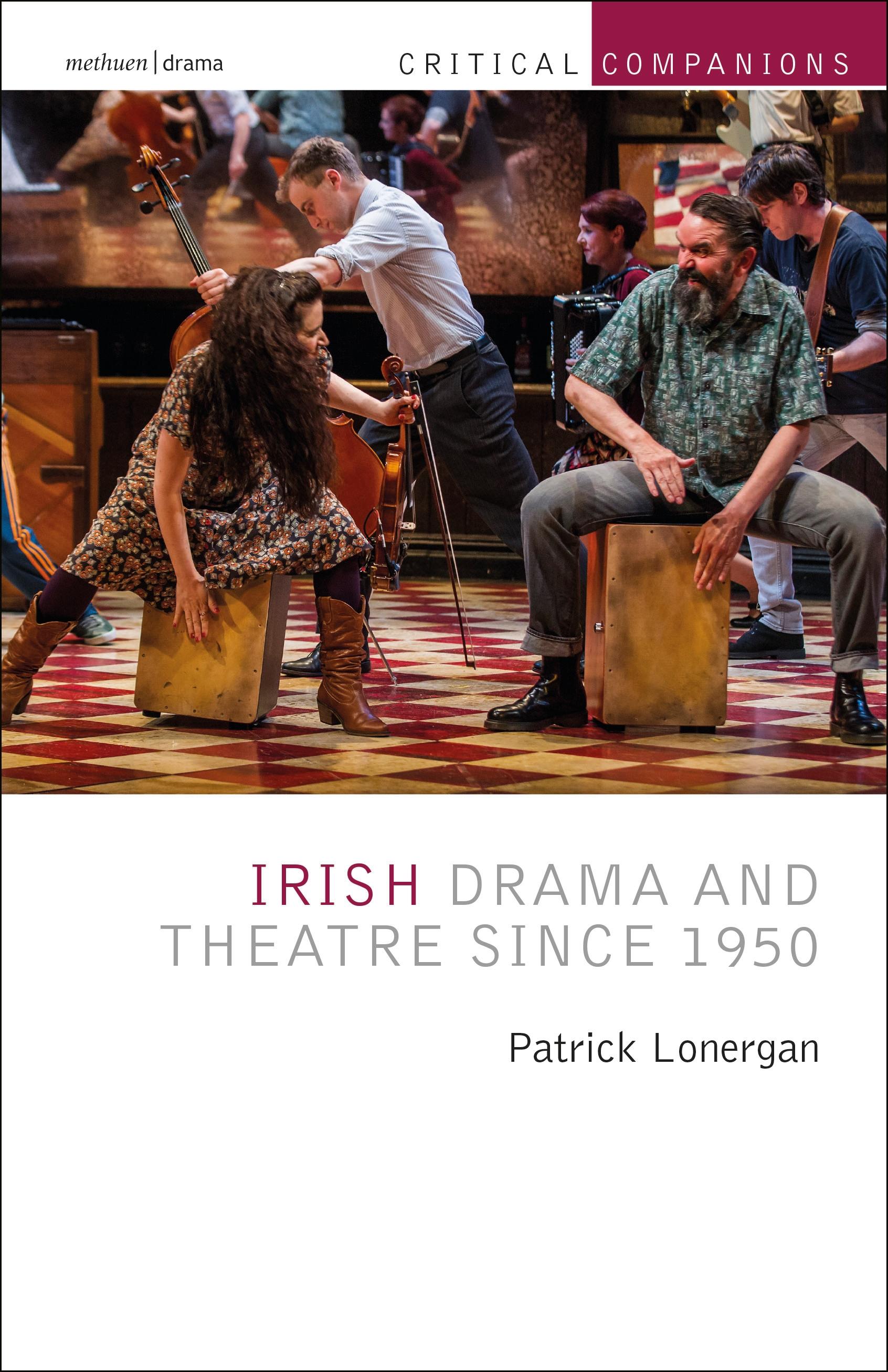
Drawing on major new archival discoveries and recent research, Patrick Lonergan presents an innovative account of Irish drama and theatre, spanning the past seventy years. Rather than offering a linear narrative, the volume traces key themes to illustrate the relationship between theatre and changes in society. In considering internationalization, the Troubles in Northern Ireland, the Celtic Tiger period, feminism, and the changing status of the Catholic Church in Ireland, Lonergan asserts the power of theatre to act as an agent of change and uncovers the contribution of individual artists, plays and productions in challenging societal norms.
Irish Drama and Theatre since 1950 provides a wide-ranging account of major developments, combined with case studies of the premiere or revival of major plays, the establishment of new companies and the influence of international work and artists, including Tennessee Williams, Chekhov and Brecht. While bringing to the fore some of the untold stories and overlooked playwrights following the declaration of the Irish Republic, Lonergan weaves into his account the many Irish theatre-makers who have achieved international prominence in the period: Samuel Beckett, Siobhán McKenna and Brendan Behan in the 1950s, continuing with Brian Friel and Tom Murphy, and concluding with the playwrights who emerged in the late 1990s, including Martin McDonagh, Enda Walsh, Conor McPherson, Marie Jones and Marina Carr. The contribution of major Irish companies to world theatre is also examined, including both the Abbey and Gate theatres, as well as Druid, Field Day and Charabanc.
Through its engaging analysis of seventy years of Irish theatre, this volume charts the acts of gradual but revolutionary change that are the story of Irish theatre and drama and of its social and cultural contexts.
Irish Drama and Theatre since 1950 provides a wide-ranging account of major developments, combined with case studies of the premiere or revival of major plays, the establishment of new companies and the influence of international work and artists, including Tennessee Williams, Chekhov and Brecht. While bringing to the fore some of the untold stories and overlooked playwrights following the declaration of the Irish Republic, Lonergan weaves into his account the many Irish theatre-makers who have achieved international prominence in the period: Samuel Beckett, Siobhán McKenna and Brendan Behan in the 1950s, continuing with Brian Friel and Tom Murphy, and concluding with the playwrights who emerged in the late 1990s, including Martin McDonagh, Enda Walsh, Conor McPherson, Marie Jones and Marina Carr. The contribution of major Irish companies to world theatre is also examined, including both the Abbey and Gate theatres, as well as Druid, Field Day and Charabanc.
Through its engaging analysis of seventy years of Irish theatre, this volume charts the acts of gradual but revolutionary change that are the story of Irish theatre and drama and of its social and cultural contexts.
Zahle einfach mit Karte, Klarna, Apple Pay oder Google Pay. Nicht zufrieden? Du hast immer ein 14-tägiges Widerrufsrecht. Lies mehr in unseren AGB. Hast du Fragen, schreib uns eine E-Mail an hello@memmo.org.
Memmo macht das Lernen einfacher – wo auch immer du bist. Bei uns findest du deine Kursbücher und smarte Lerntools an einem Ort: Zusammenfassungen, Quizzes, Podcasts und Lernkarten. Und Ted, dein Lernbuddy, beantwortet alles, was du wissen möchtest. Über 50.000 Studierende lernen bereits hier – gemacht, damit du schneller lernst und weniger Stress hast.