
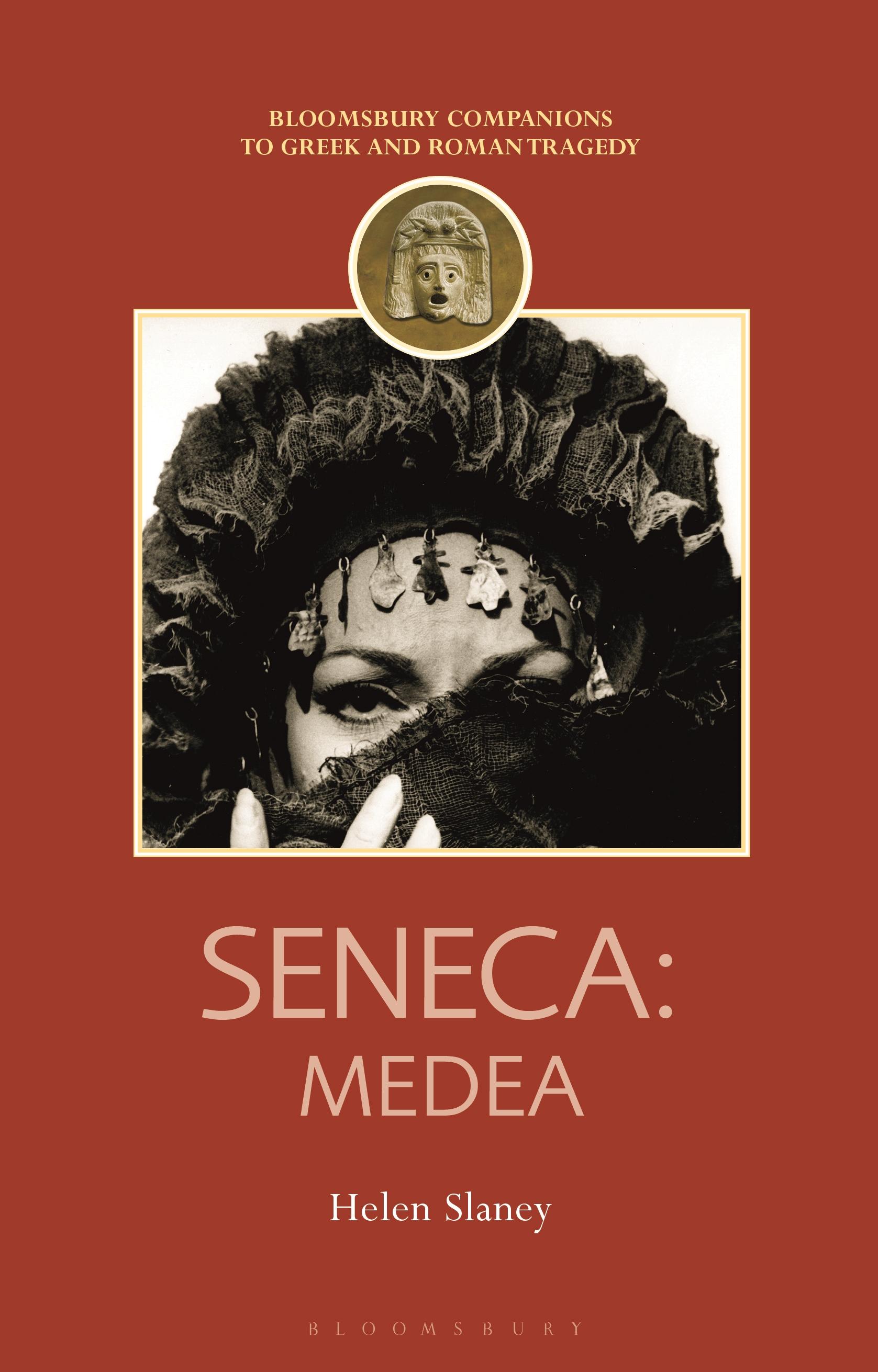
Composed in early imperial Rome by Lucius Annaeus Seneca, Stoic philosopher and tutor to the emperor Nero, the tragedy Medea is dominated by the superhuman energy of its protagonist: diva, killer, enchantress, force of nature. Seneca's treatment of the myth covers an episode identical to that of Euripides' Greek version, enabling instructive comparisons to be drawn. Seneca's Medea has challenged and fascinated theatre-makers across cultures and centuries and should be regarded as integral to the classical heritage of European theatre.
This companion volume sketches the essentials of Seneca's play and at the same time situates it within an interpretive tradition. It also uses Medea to illustrate key features of Senecan dramaturgy, the way in which language functions as a mode of theatrical representation and the way in which individuals are embedded in their surrounding conditions, resonating dissonantly with the principles of Roman Stoicism.
By interweaving some of the play's subsequent receptions, theatrical and textual, into critical analysis of Medea as dramatic poetry, this companion volume will encourage the student to come to grips immediately with the ancient text's inherent multiplicity. In this way, reception theory informs not only the content of the volume but also, fundamentally, the way in which it is presented.
This companion volume sketches the essentials of Seneca's play and at the same time situates it within an interpretive tradition. It also uses Medea to illustrate key features of Senecan dramaturgy, the way in which language functions as a mode of theatrical representation and the way in which individuals are embedded in their surrounding conditions, resonating dissonantly with the principles of Roman Stoicism.
By interweaving some of the play's subsequent receptions, theatrical and textual, into critical analysis of Medea as dramatic poetry, this companion volume will encourage the student to come to grips immediately with the ancient text's inherent multiplicity. In this way, reception theory informs not only the content of the volume but also, fundamentally, the way in which it is presented.
Zahle einfach mit Karte, Klarna, Apple Pay oder Google Pay. Nicht zufrieden? Du hast immer ein 14-tägiges Widerrufsrecht. Lies mehr in unseren AGB. Hast du Fragen, schreib uns eine E-Mail an hello@memmo.org.
Memmo macht das Lernen einfacher – wo auch immer du bist. Bei uns findest du deine Kursbücher und smarte Lerntools an einem Ort: Zusammenfassungen, Quizzes, Podcasts und Lernkarten. Und Ted, dein Lernbuddy, beantwortet alles, was du wissen möchtest. Über 50.000 Studierende lernen bereits hier – gemacht, damit du schneller lernst und weniger Stress hast.