
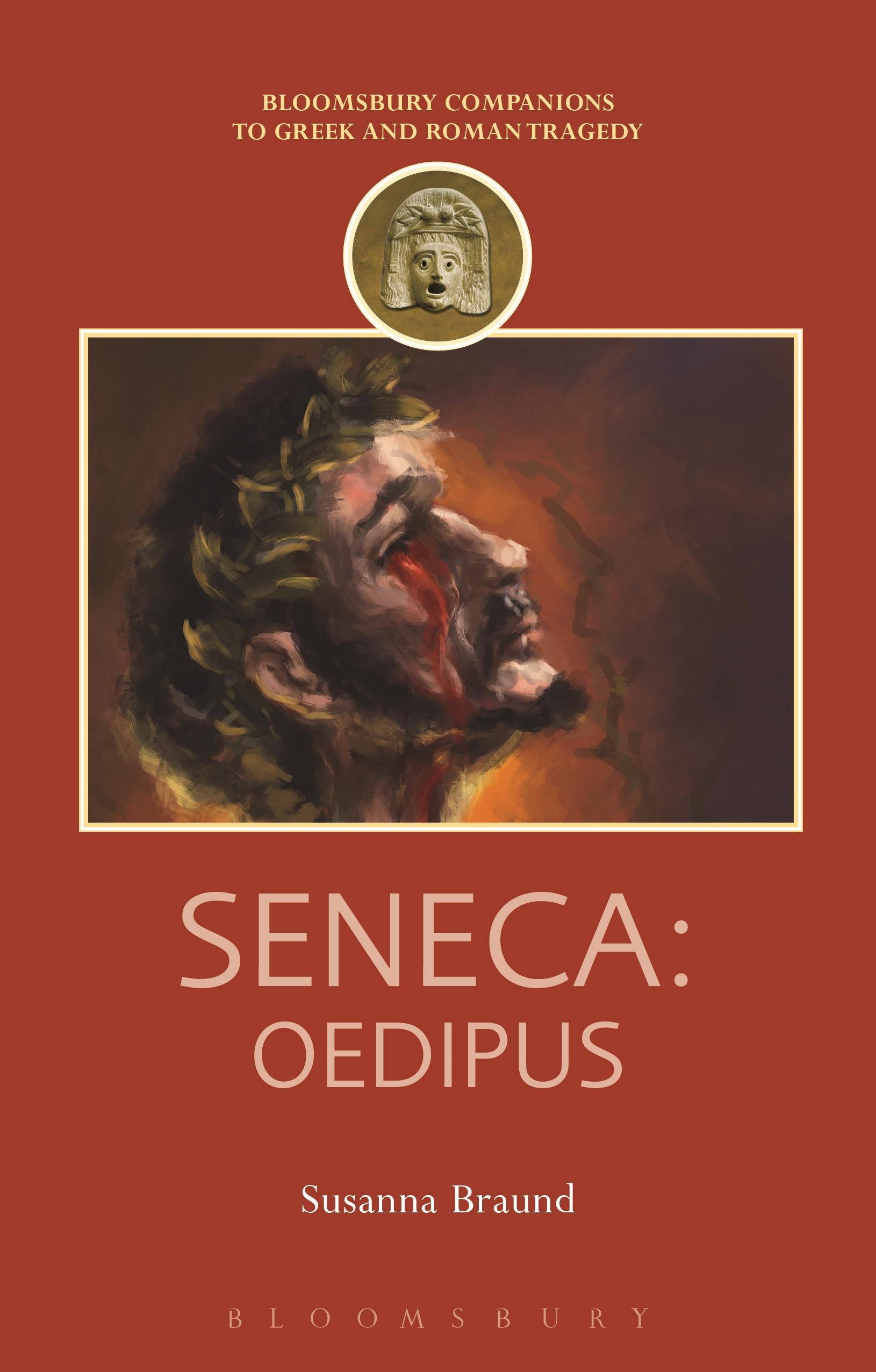
Oedipus, king of Thebes, is one of the giant figures of ancient mythology. Through the centuries, his story has inspired works of epic poetry, lyric poetry, tragedy, opera, a gospel musical and more. The myth has been famously deployed in psychology by Sigmund Freud. It may not be too bold to claim that Oedipus is the name from Greco-Roman mythology best known beyond the academy at the present time, thanks to Freud's famous phrase 'the Oedipus complex'. The most famous version of the Oedipus myth from antiquity is the Greek play by Sophocles. But there is another version, the Latin drama by the Roman philosopher and politician Seneca.
Seneca's version is an entirely different treatment from that of Sophocles and reflects concerns special to the author and his Roman audience in the first century AD. Moreover, the play actually exercised a much greater influence on European literature and thought than has usually been suspected. This book offers a compact and incisive study of the multi-faceted Oedipus myth, of Seneca as dramatist, of the distinctive characteristics of Seneca's play and of the most important aspects of the reception of the play in European drama and culture. The scope of the book ranges chronologically from Homer's treatment of Oedipus myth in the Odyssey down to a twenty-first century Senecan treatment by a Lebanese Canadian dramatist. No knowledge of Latin or other foreign languages is required.
Seneca's version is an entirely different treatment from that of Sophocles and reflects concerns special to the author and his Roman audience in the first century AD. Moreover, the play actually exercised a much greater influence on European literature and thought than has usually been suspected. This book offers a compact and incisive study of the multi-faceted Oedipus myth, of Seneca as dramatist, of the distinctive characteristics of Seneca's play and of the most important aspects of the reception of the play in European drama and culture. The scope of the book ranges chronologically from Homer's treatment of Oedipus myth in the Odyssey down to a twenty-first century Senecan treatment by a Lebanese Canadian dramatist. No knowledge of Latin or other foreign languages is required.
Zahle einfach mit Karte, Klarna, Apple Pay oder Google Pay. Nicht zufrieden? Du hast immer ein 14-tägiges Widerrufsrecht. Lies mehr in unseren AGB. Hast du Fragen, schreib uns eine E-Mail an hello@memmo.org.
Memmo macht das Lernen einfacher – wo auch immer du bist. Bei uns findest du deine Kursbücher und smarte Lerntools an einem Ort: Zusammenfassungen, Quizzes, Podcasts und Lernkarten. Und Ted, dein Lernbuddy, beantwortet alles, was du wissen möchtest. Über 50.000 Studierende lernen bereits hier – gemacht, damit du schneller lernst und weniger Stress hast.