
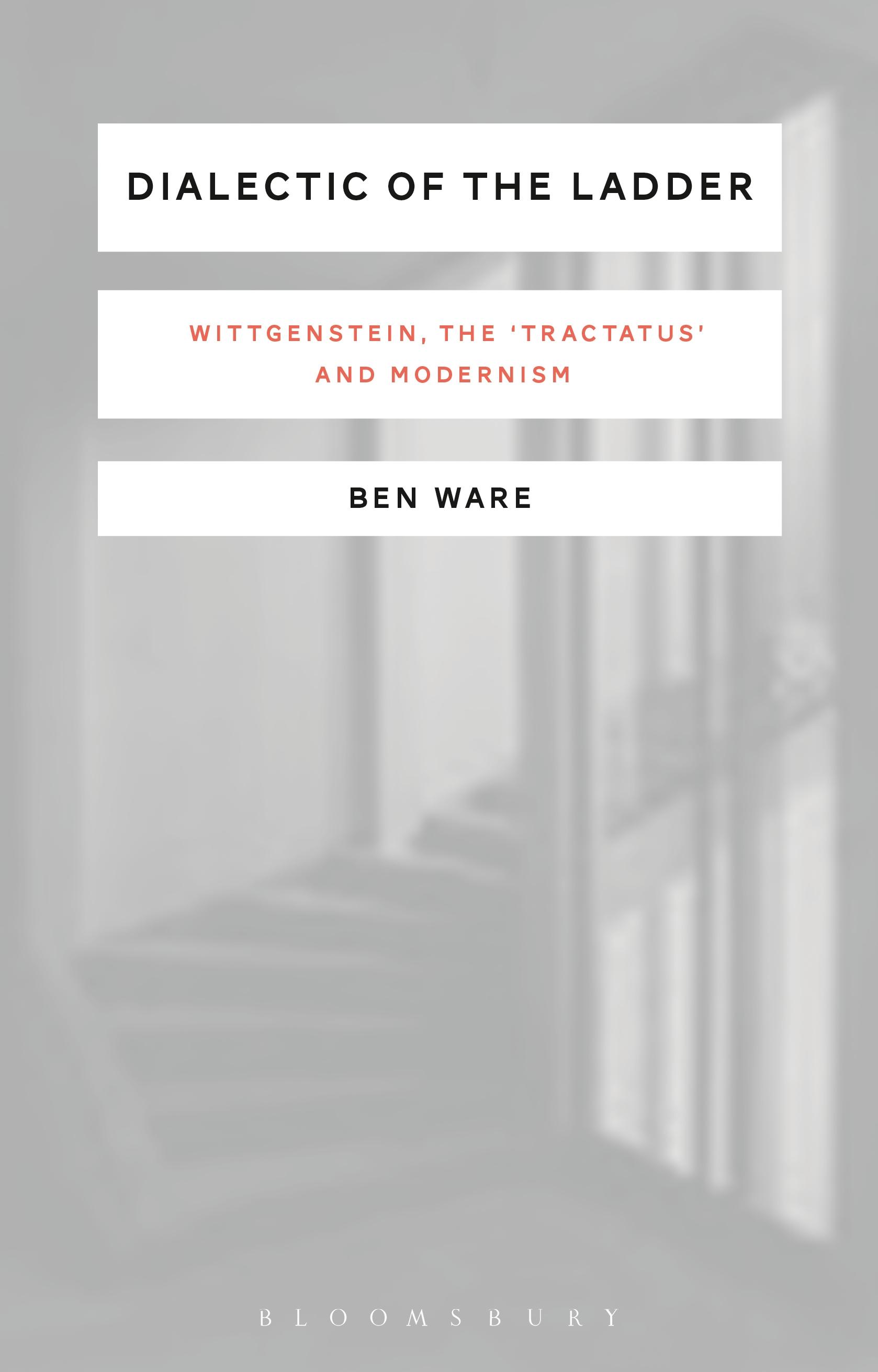
Ludwig Wittgenstein's Tractatus Logico-Philosophicus (1922) remains one of the most enigmatic works of twentieth century thought. In this bold and original new study, Ben Ware argues that Wittgenstein's early masterpiece is neither an analytic treatise on language and logic, nor a quasi-mystical work seeking to communicate 'ineffable' truths. Instead, we come to understand the Tractatus by grasping it in a twofold sense: first, as a dialectical work which invites the reader to overcome certain 'illusions of thought'; and second as a modernist work whose anti-philosophical ambition is intimately tied to its radical aesthetic character.
By placing the Tractatus in the force field of modernism, Dialectic of the Ladder clears the ground for a new and challenging exploration of the work's ethical dimension. It also casts new light upon the cultural, aesthetic and political significances of Wittgenstein's writing, revealing hitherto unacknowledged affinities with a host of philosophical and literary authors, including Hegel, Kierkegaard, Marx, Nietzsche, Adorno, Benjamin, and Kafka.
By placing the Tractatus in the force field of modernism, Dialectic of the Ladder clears the ground for a new and challenging exploration of the work's ethical dimension. It also casts new light upon the cultural, aesthetic and political significances of Wittgenstein's writing, revealing hitherto unacknowledged affinities with a host of philosophical and literary authors, including Hegel, Kierkegaard, Marx, Nietzsche, Adorno, Benjamin, and Kafka.
Zahle einfach mit Karte, Klarna, Apple Pay oder Google Pay. Nicht zufrieden? Du hast immer ein 14-tägiges Widerrufsrecht. Lies mehr in unseren AGB. Hast du Fragen, schreib uns eine E-Mail an hello@memmo.org.
Memmo macht das Lernen einfacher – wo auch immer du bist. Bei uns findest du deine Kursbücher und smarte Lerntools an einem Ort: Zusammenfassungen, Quizzes, Podcasts und Lernkarten. Und Ted, dein Lernbuddy, beantwortet alles, was du wissen möchtest. Über 50.000 Studierende lernen bereits hier – gemacht, damit du schneller lernst und weniger Stress hast.