
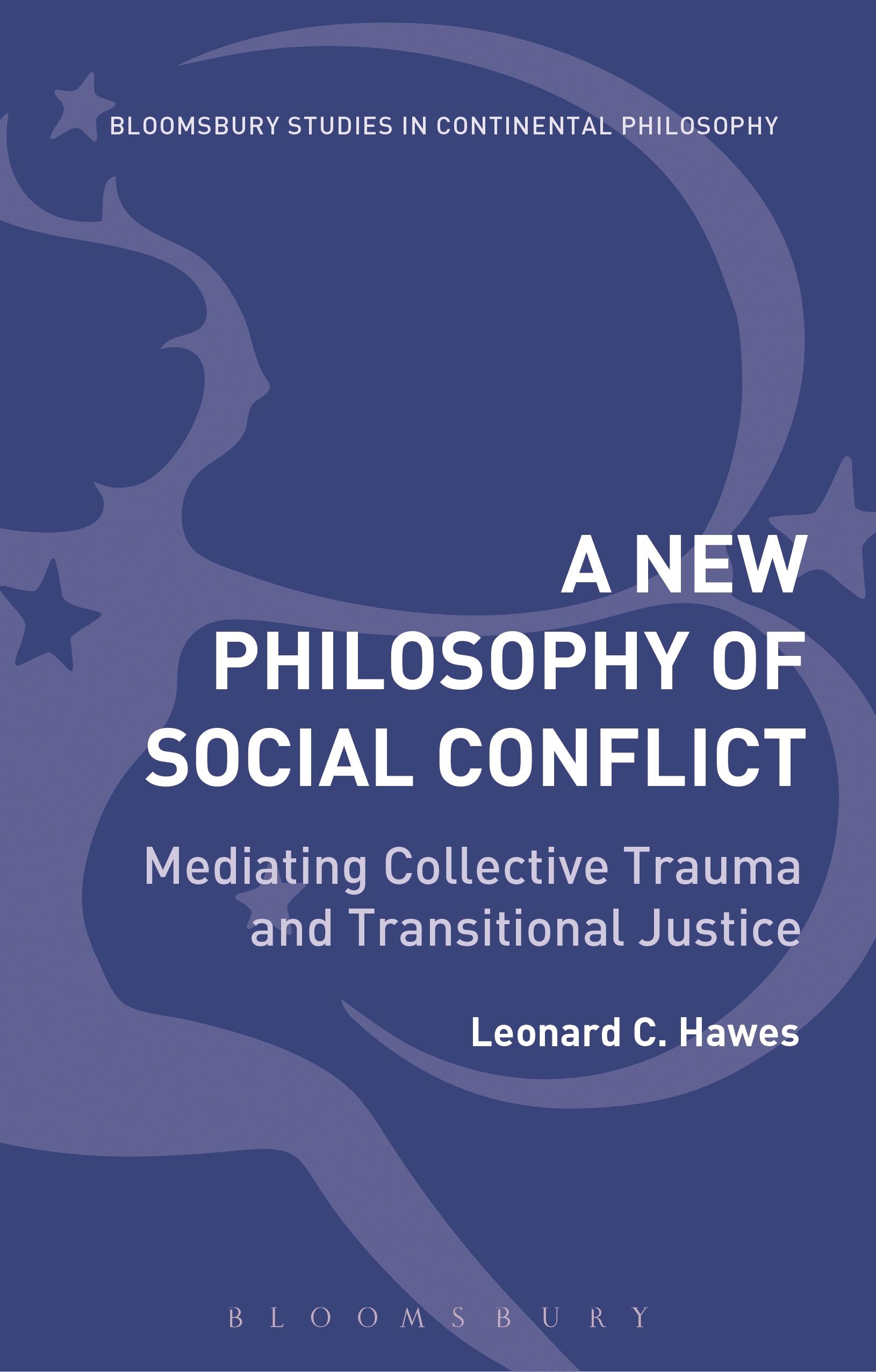
A New Philosophy of Social Conflict joins in the contemporary conflict resolution and transitional justice debates by contributing a Deleuze-Guattarian reading of the post-genocide justice and reconciliation experiment in Rwanda -the Gacaca courts. In doing so, Hawes addresses two significant problems for which the work of Deleuze and Guattari provides invaluable insight: how to live ethically with the consequences of conflict and trauma and how to negotiate the chaos of living through trauma, in ways that create self-organizing, discursive processes for resolving and reconciling these ontological dilemmas in life-affirming ways.
Hawes draws on Deleuze-Guattarian thinking to create new concepts that enable us to think more productively and to live more ethically in a world increasingly characterized by sociocultural trauma and conflict, and to imagine alternative ways of resolving and reconciling trauma and conflict.
Hawes draws on Deleuze-Guattarian thinking to create new concepts that enable us to think more productively and to live more ethically in a world increasingly characterized by sociocultural trauma and conflict, and to imagine alternative ways of resolving and reconciling trauma and conflict.
Zahle einfach mit Karte, Klarna, Apple Pay oder Google Pay. Nicht zufrieden? Du hast immer ein 14-tägiges Widerrufsrecht. Lies mehr in unseren AGB. Hast du Fragen, schreib uns eine E-Mail an hello@memmo.org.
Memmo macht das Lernen einfacher – wo auch immer du bist. Bei uns findest du deine Kursbücher und smarte Lerntools an einem Ort: Zusammenfassungen, Quizzes, Podcasts und Lernkarten. Und Ted, dein Lernbuddy, beantwortet alles, was du wissen möchtest. Über 50.000 Studierende lernen bereits hier – gemacht, damit du schneller lernst und weniger Stress hast.