
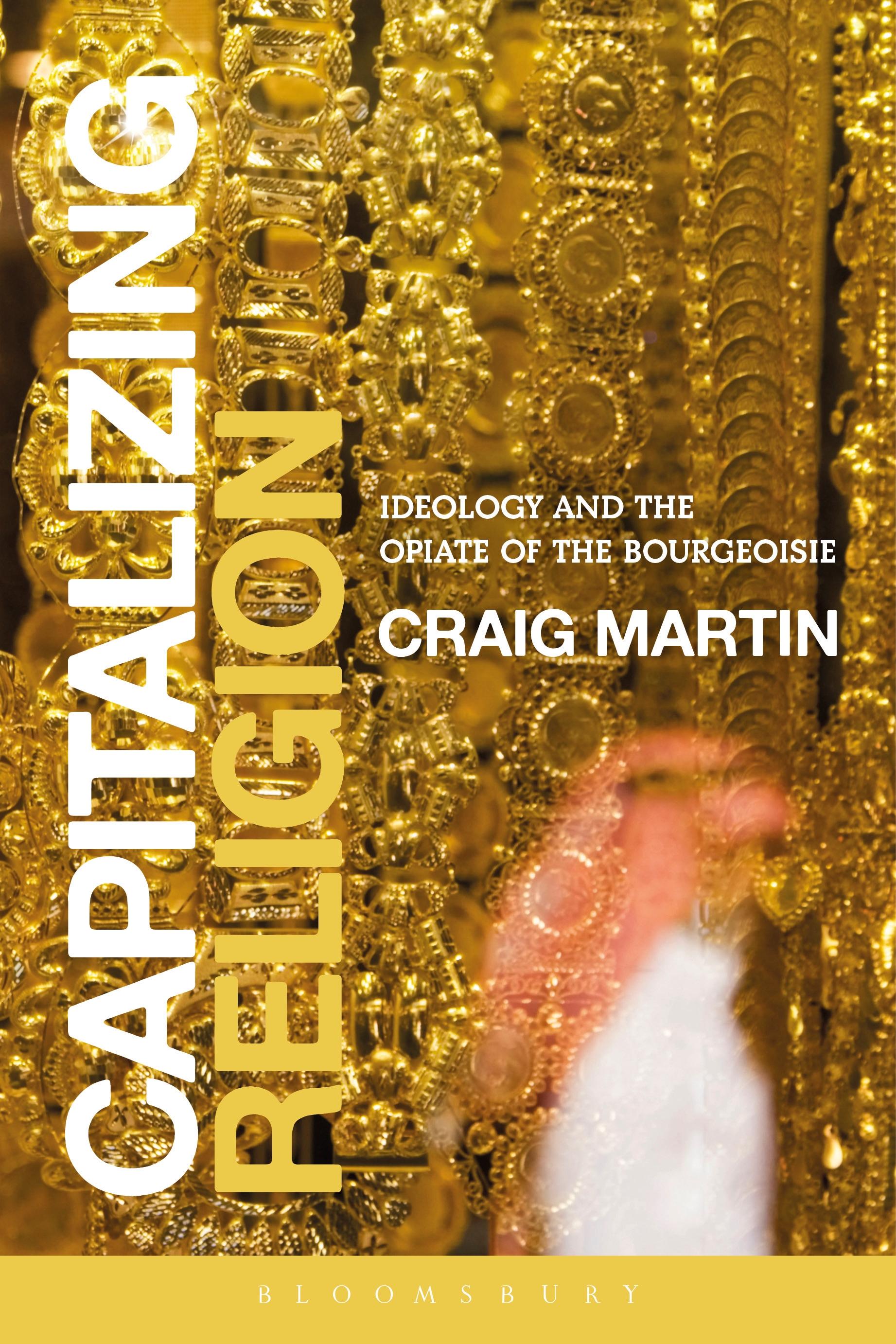
Talk of 'spirituality' and 'individual religion' is proliferating both in popular discourse and scholarly works. Increasingly people claim to be 'spiritual but not religious,' or to prefer 'individual religion' to 'organized religion.' Scholars have for decades noted the phenomenon - primarily within the middle class - of individuals picking and choosing elements from among various religious traditions, forming their own religion or spirituality for themselves.
While the topics of 'spirituality' and 'individual religion' are regularly treated as self-evident by the media and even some scholars of religion, Capitalizing Religion provides one of the first critical analyses of the phenomenon, arguing that these recent forms of spirituality are in many cases linked to capitalist ideology and consumer practices. Examining cases such as Eckhart Tolle's The Power of Now, and Karen Berg's God Wears Lipstick, Craig Martin ultimately argues that so-called 'individual religion' is a religion of the status quo or, more critically, 'an opiate of the bourgeoisie.'
Capitalizing Religion: Ideology and Opiate of the Bourgeoisie is a landmark publication in critical religious studies.
While the topics of 'spirituality' and 'individual religion' are regularly treated as self-evident by the media and even some scholars of religion, Capitalizing Religion provides one of the first critical analyses of the phenomenon, arguing that these recent forms of spirituality are in many cases linked to capitalist ideology and consumer practices. Examining cases such as Eckhart Tolle's The Power of Now, and Karen Berg's God Wears Lipstick, Craig Martin ultimately argues that so-called 'individual religion' is a religion of the status quo or, more critically, 'an opiate of the bourgeoisie.'
Capitalizing Religion: Ideology and Opiate of the Bourgeoisie is a landmark publication in critical religious studies.
Zahle einfach mit Karte, Klarna, Apple Pay oder Google Pay. Nicht zufrieden? Du hast immer ein 14-tägiges Widerrufsrecht. Lies mehr in unseren AGB. Hast du Fragen, schreib uns eine E-Mail an hello@memmo.org.
Memmo macht das Lernen einfacher – wo auch immer du bist. Bei uns findest du deine Kursbücher und smarte Lerntools an einem Ort: Zusammenfassungen, Quizzes, Podcasts und Lernkarten. Und Ted, dein Lernbuddy, beantwortet alles, was du wissen möchtest. Über 50.000 Studierende lernen bereits hier – gemacht, damit du schneller lernst und weniger Stress hast.