
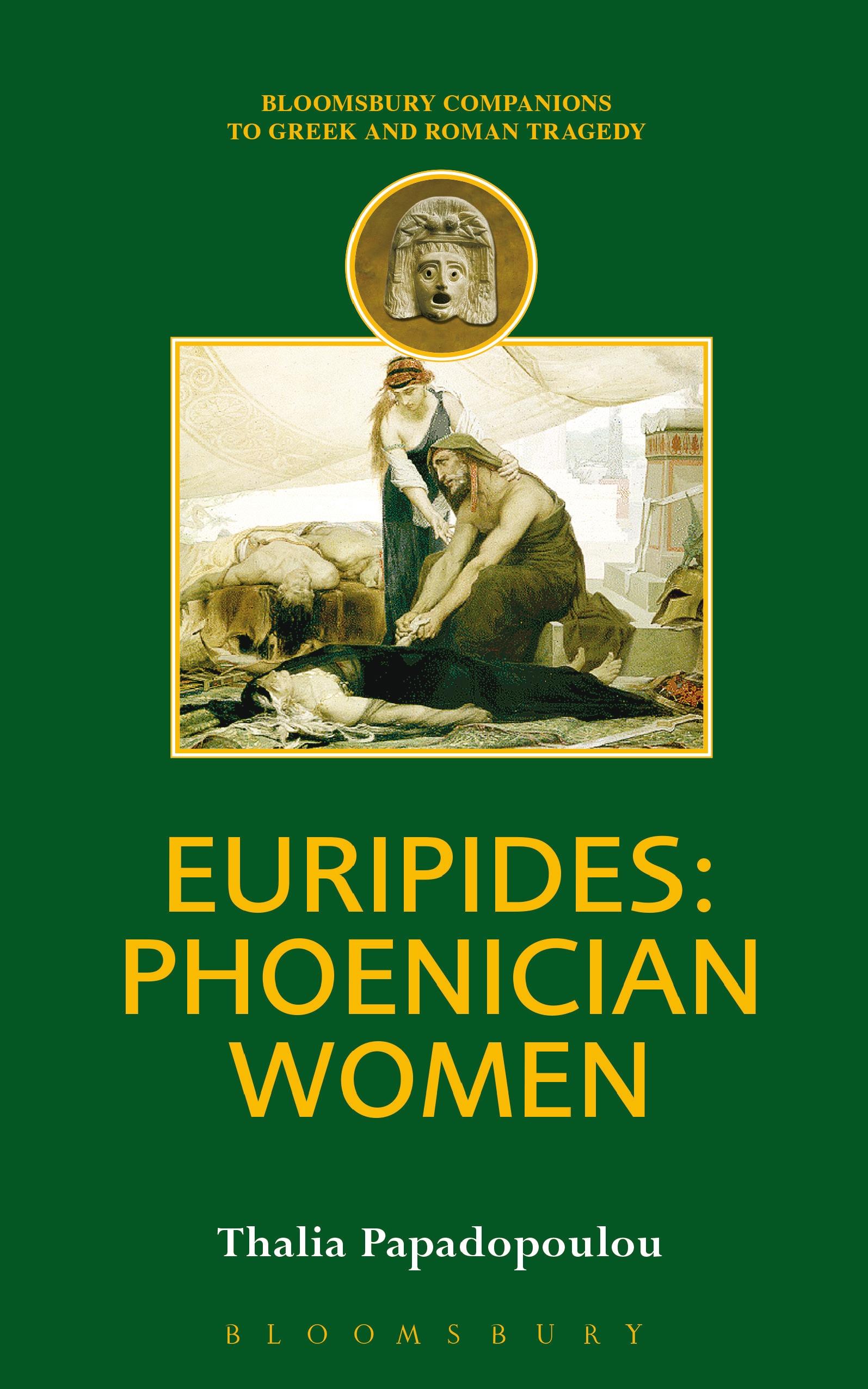
"Phoenician Women", one of Euripides' later tragedies, is an intriguing play that arguably displays some of his finest dramatic technique. Rich in cast and varied in incident, it is an example of Euripides' experimentation with structure. It dramatises the most fertile mythical tradition of the city of Thebes and its doomed royal family, focusing in particular on the conflict between Eteocles and Polyneices as a result of their father Oedipus' curse, which eventually leads to mutual fratricide. The play was very popular throughout antiquity, and became part of the so-called "Byzantine Triad" (along with "Hecuba" and "Orestes"), of plays studied in the school curriculum.Thalia Papadopoulou here offers a thorough survey of the play in its historical context, against the background of Athenian tragedy and Euripidean dramaturgy. Employing various critical approaches, she investigates the literary tradition and the dynamics of intertextuality, Euripidean dramatic technique, the use of rhetoric, characterisation, gender, the function of the Chorus, aspects of performance and the reception of the play from antiquity to modern times.
Zahle einfach mit Karte, Klarna, Apple Pay oder Google Pay. Nicht zufrieden? Du hast immer ein 14-tägiges Widerrufsrecht. Lies mehr in unseren AGB. Hast du Fragen, schreib uns eine E-Mail an hello@memmo.org.
Memmo macht das Lernen einfacher – wo auch immer du bist. Bei uns findest du deine Kursbücher und smarte Lerntools an einem Ort: Zusammenfassungen, Quizzes, Podcasts und Lernkarten. Und Ted, dein Lernbuddy, beantwortet alles, was du wissen möchtest. Über 50.000 Studierende lernen bereits hier – gemacht, damit du schneller lernst und weniger Stress hast.