
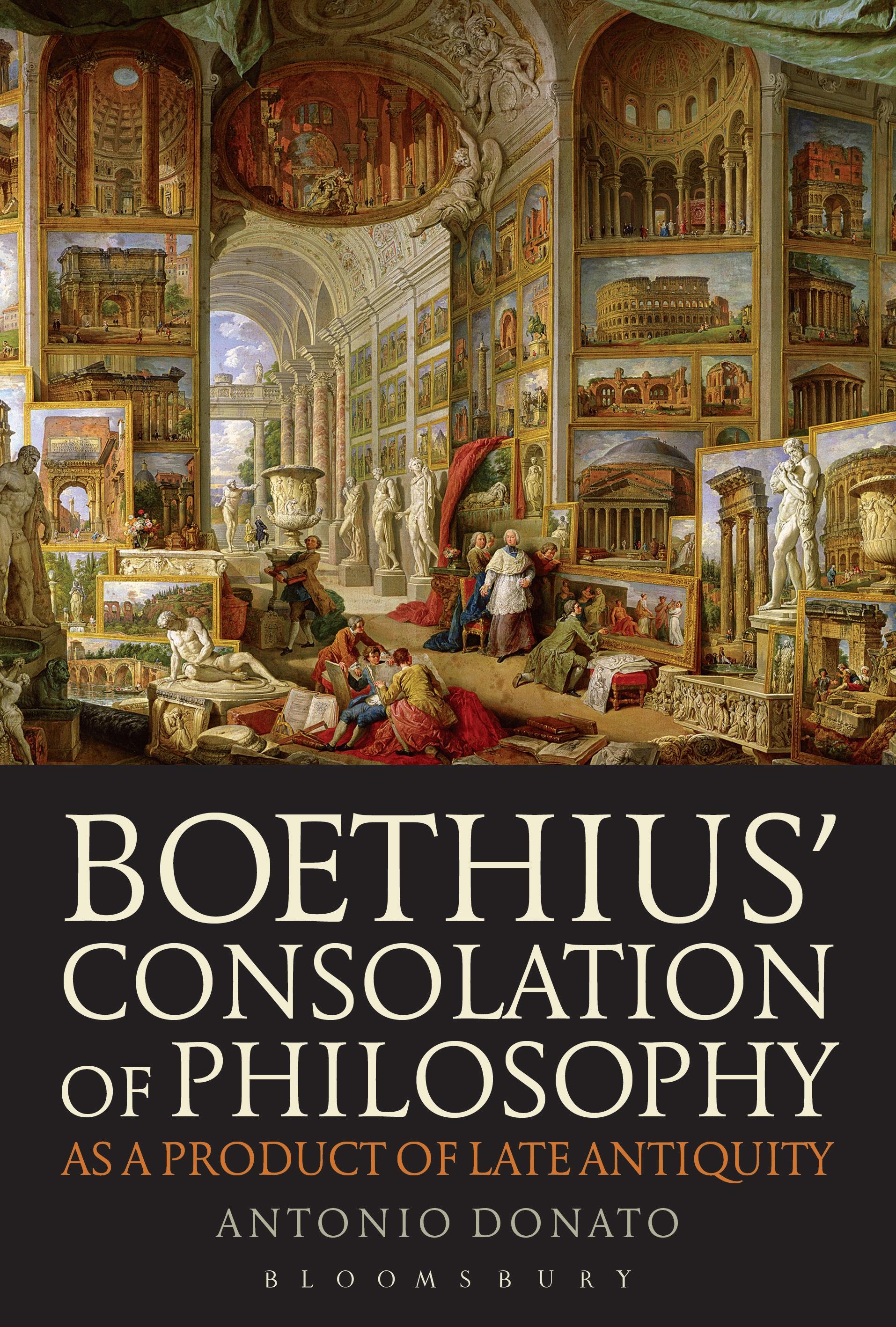
In the last fifty years the field of Late Antiquity has advanced significantly. Today we have a picture of this period that is more precise and accurate than before. However, the study of one of the most significant texts of this age, Boethius' Consolation of Philosophy, has not benefited enough from these advances in scholarship. Antonio Donato aims to fill this gap by investigating how the study of the Consolation can profit from the knowledge of Boethius' cultural, political and social background that is available today.
The book focuses on three topics: Boethius' social/political background, his notion of philosophy and its sources, and his understanding of the relation between Christianity and classical culture. These topics deal with issues that are of crucial importance for the exegesis of the Consolation. The study of Boethius' social/political background allows us to gain a better understanding of the identity of the character Boethius and to recognize his role in the Consolation. Examination of the possible sources of Boethius' notion of philosophy and of their influence on the Consolation offers valuable instruments to evaluate the role of the text's philosophical discussions and their relation to its literary features. Finally, the long-standing problem of the lack of overt Christian elements in the Consolation can be enlightened by considering how Boethius relies on a peculiar understanding of philosophy's goal and its relation to Christianity that was common among some of his predecessors and contemporaries.
The book focuses on three topics: Boethius' social/political background, his notion of philosophy and its sources, and his understanding of the relation between Christianity and classical culture. These topics deal with issues that are of crucial importance for the exegesis of the Consolation. The study of Boethius' social/political background allows us to gain a better understanding of the identity of the character Boethius and to recognize his role in the Consolation. Examination of the possible sources of Boethius' notion of philosophy and of their influence on the Consolation offers valuable instruments to evaluate the role of the text's philosophical discussions and their relation to its literary features. Finally, the long-standing problem of the lack of overt Christian elements in the Consolation can be enlightened by considering how Boethius relies on a peculiar understanding of philosophy's goal and its relation to Christianity that was common among some of his predecessors and contemporaries.
Zahle einfach mit Karte, Klarna, Apple Pay oder Google Pay. Nicht zufrieden? Du hast immer ein 14-tägiges Widerrufsrecht. Lies mehr in unseren AGB. Hast du Fragen, schreib uns eine E-Mail an hello@memmo.org.
Memmo macht das Lernen einfacher – wo auch immer du bist. Bei uns findest du deine Kursbücher und smarte Lerntools an einem Ort: Zusammenfassungen, Quizzes, Podcasts und Lernkarten. Und Ted, dein Lernbuddy, beantwortet alles, was du wissen möchtest. Über 50.000 Studierende lernen bereits hier – gemacht, damit du schneller lernst und weniger Stress hast.