
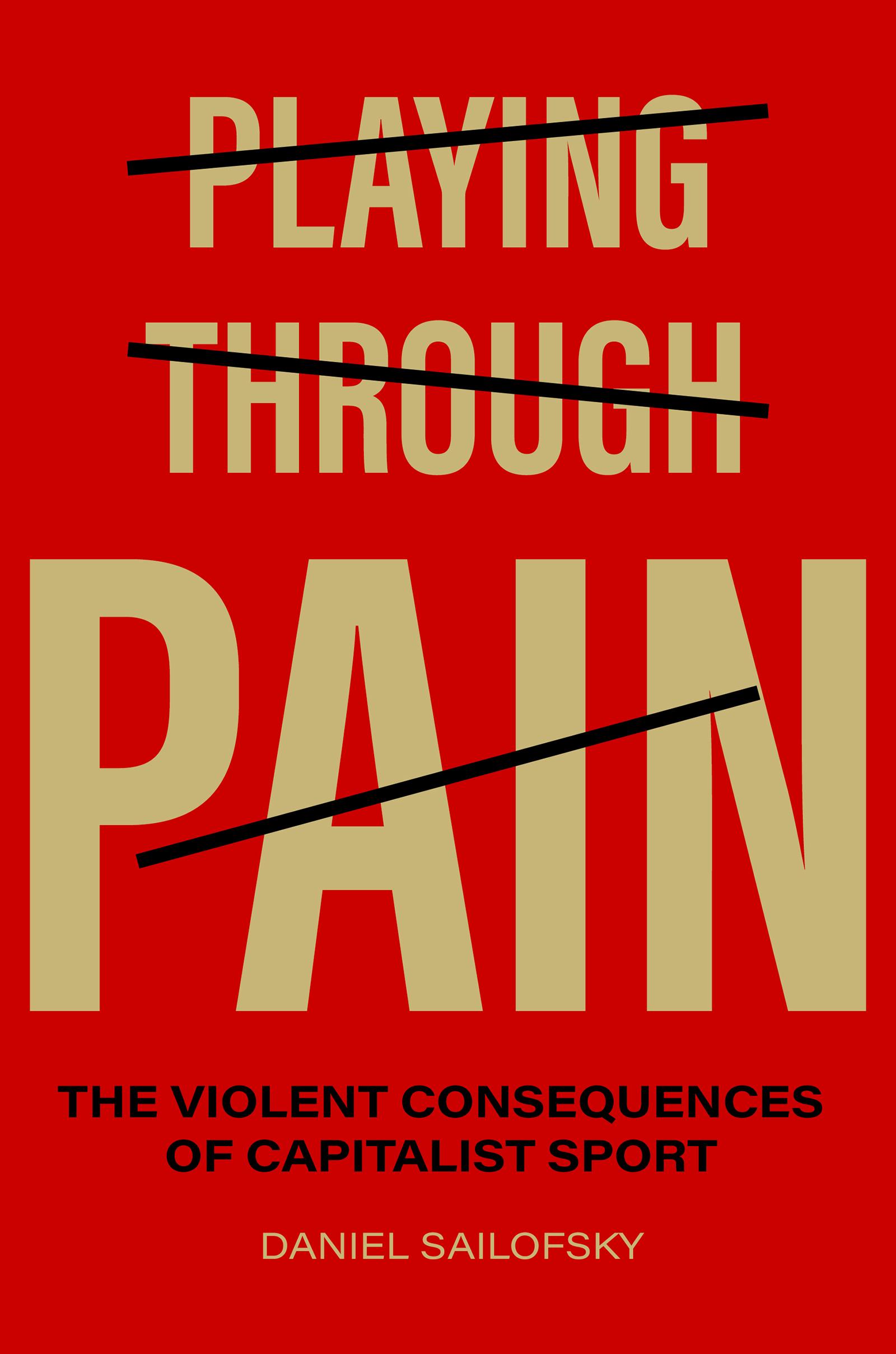
For many fans and casual observers, professional sports and violence are deeply connected. Violence on the field has real consequences for players, notably in the form of life-altering injuries from concussions. Off the field, in the last several decades, scores of athletes have committed violent acts, from domestic abuse and sexual assault to animal abuse and murder. Beyond athletes, sport also serves as a site of political and structural violence, from the displacement and hyperpolicing of everyday people for mega-events to the “sportswashing” of environmentally harmful industries.
Daniel Sailofsky examines the endemic violence in professional sports and argues that—while related to masculinity, misogyny, and individual factors like alcohol consumption and gambling—it is most intimately tied to capitalism and to capitalist modes of consumption and profit. Sailofsky explains how capitalism creates the conditions for violence to thrive and uncovers how sports leaders—coaches, league officials, and team owners—obfuscate these relationships to avoid accountability.
From minor league baseball exploitation to spectator hooliganism, Sailofsky shows the connections between the business of sports and violence, but also, more importantly, he imagines new forms of sport that are not places of harm.
Daniel Sailofsky examines the endemic violence in professional sports and argues that—while related to masculinity, misogyny, and individual factors like alcohol consumption and gambling—it is most intimately tied to capitalism and to capitalist modes of consumption and profit. Sailofsky explains how capitalism creates the conditions for violence to thrive and uncovers how sports leaders—coaches, league officials, and team owners—obfuscate these relationships to avoid accountability.
From minor league baseball exploitation to spectator hooliganism, Sailofsky shows the connections between the business of sports and violence, but also, more importantly, he imagines new forms of sport that are not places of harm.
Zahle einfach mit Karte, Klarna, Apple Pay oder Google Pay. Nicht zufrieden? Du hast immer ein 14-tägiges Widerrufsrecht. Lies mehr in unseren AGB. Hast du Fragen, schreib uns eine E-Mail an hello@memmo.org.
Memmo macht das Lernen einfacher – wo auch immer du bist. Bei uns findest du deine Kursbücher und smarte Lerntools an einem Ort: Zusammenfassungen, Quizzes, Podcasts und Lernkarten. Und Ted, dein Lernbuddy, beantwortet alles, was du wissen möchtest. Über 50.000 Studierende lernen bereits hier – gemacht, damit du schneller lernst und weniger Stress hast.
Das könnte dir auch gefallen
Buch kaufen0