
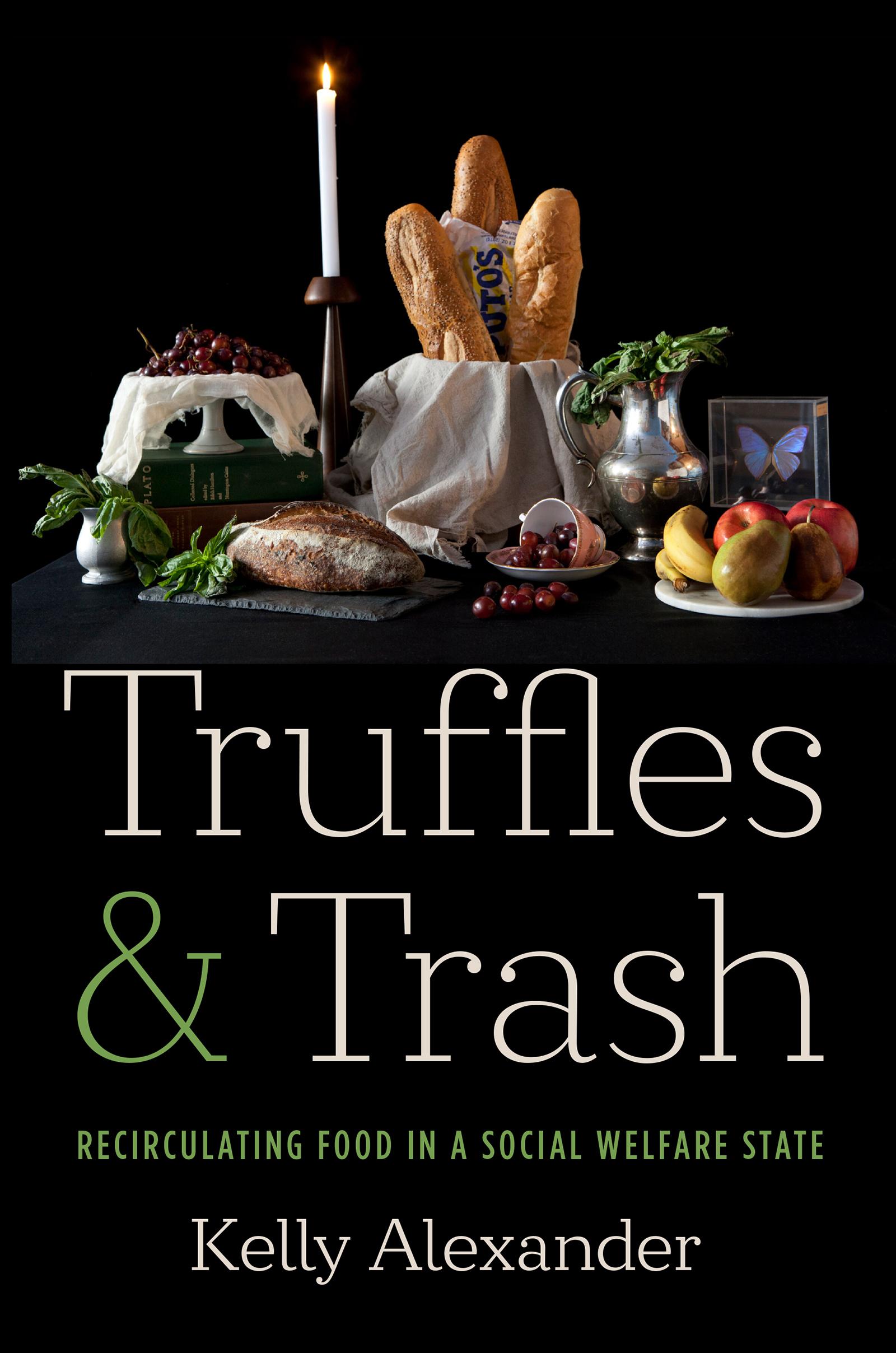
On a fragile planet with spreading food insecurity, food waste is a political and ethical problem. Examining the collaborative, sometimes scrappy institutional and community efforts to recuperate and redistribute food waste in Brussels, Belgium, Kelly Alexander reveals it is also an opportunity for new forms of sociality. Her study plays out across a diverse set of locations—including a food bank with ties to the EU, a social restaurant serving low-cost meals made from supermarket surplus by an emergent immigrant labor force, and a social inclusion program in an urban market with a “zero food waste” pop-up café. Alexander argues that these efforts, in concert with innovative policy, effectively recirculate wasted food to new publics and produce what she terms a “spectrum of edibility.”
According to Alexander, these models face challenges—including reproducing the very power dynamics across race, class, and citizenship status they seek to circumvent. They also mirror the challenges of the everyday operations of the European social welfare state, which is increasingly reliant on NGOs to meet provisioning promises. Yet she finds that they also move the needle forward to reduce food waste across one city, providing an example for major urban centers around the world.
Zahle einfach mit Karte, Klarna, Apple Pay oder Google Pay. Nicht zufrieden? Du hast immer ein 14-tägiges Widerrufsrecht. Lies mehr in unseren AGB. Hast du Fragen, schreib uns eine E-Mail an hello@memmo.org.
Memmo macht das Lernen einfacher – wo auch immer du bist. Bei uns findest du deine Kursbücher und smarte Lerntools an einem Ort: Zusammenfassungen, Quizzes, Podcasts und Lernkarten. Und Ted, dein Lernbuddy, beantwortet alles, was du wissen möchtest. Über 50.000 Studierende lernen bereits hier – gemacht, damit du schneller lernst und weniger Stress hast.