
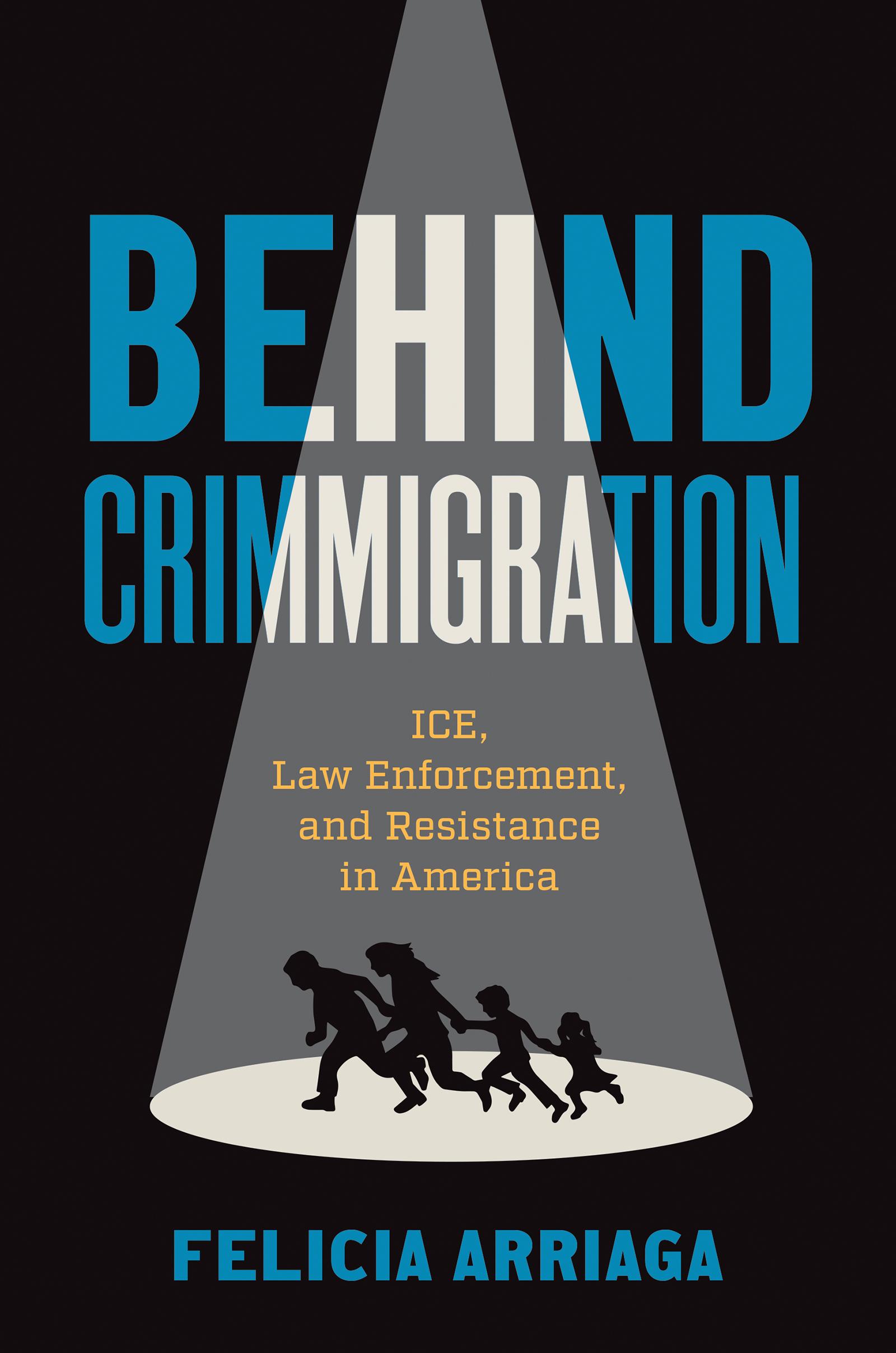
In recent years, dozens of counties in North Carolina have partnered with federal law enforcement in the criminalization of immigration—what many have dubbed “crimmigration.” Southern border enforcement still monopolizes the national immigration debate, but immigration enforcement has become common within the United States as well. While Immigration and Customs Enforcement (ICE) operations are a major part of American immigration enforcement, Felicia Arriaga maintains that ICE relies on an already well-established system—the use of local law enforcement and local governments to identify, incarcerate, and deport undocumented immigrants.
Arriaga contends that the long-term partnership between local sheriffs and immigration law enforcement in places like North Carolina has created a form of racialized social control of the Latinx community. Arriaga uses data from five county sheriff’s offices and their governing bodies to trace the creation and subsequent normalization of ICE and local law enforcement partnerships. Arriaga argues that the methods used by these partnerships to control immigration are employed throughout the United States, but they have been particularly visible in North Carolina, where the Latinx population increased by 111 percent between 2000 and 2010. Arriaga’s evidence also reveals how Latinx communities are resisting and adapting to these systems.
Arriaga contends that the long-term partnership between local sheriffs and immigration law enforcement in places like North Carolina has created a form of racialized social control of the Latinx community. Arriaga uses data from five county sheriff’s offices and their governing bodies to trace the creation and subsequent normalization of ICE and local law enforcement partnerships. Arriaga argues that the methods used by these partnerships to control immigration are employed throughout the United States, but they have been particularly visible in North Carolina, where the Latinx population increased by 111 percent between 2000 and 2010. Arriaga’s evidence also reveals how Latinx communities are resisting and adapting to these systems.
Zahle einfach mit Karte, Klarna, Apple Pay oder Google Pay. Nicht zufrieden? Du hast immer ein 14-tägiges Widerrufsrecht. Lies mehr in unseren AGB. Hast du Fragen, schreib uns eine E-Mail an hello@memmo.org.
Memmo macht das Lernen einfacher – wo auch immer du bist. Bei uns findest du deine Kursbücher und smarte Lerntools an einem Ort: Zusammenfassungen, Quizzes, Podcasts und Lernkarten. Und Ted, dein Lernbuddy, beantwortet alles, was du wissen möchtest. Über 50.000 Studierende lernen bereits hier – gemacht, damit du schneller lernst und weniger Stress hast.
Das könnte dir auch gefallen
Buch kaufen0