
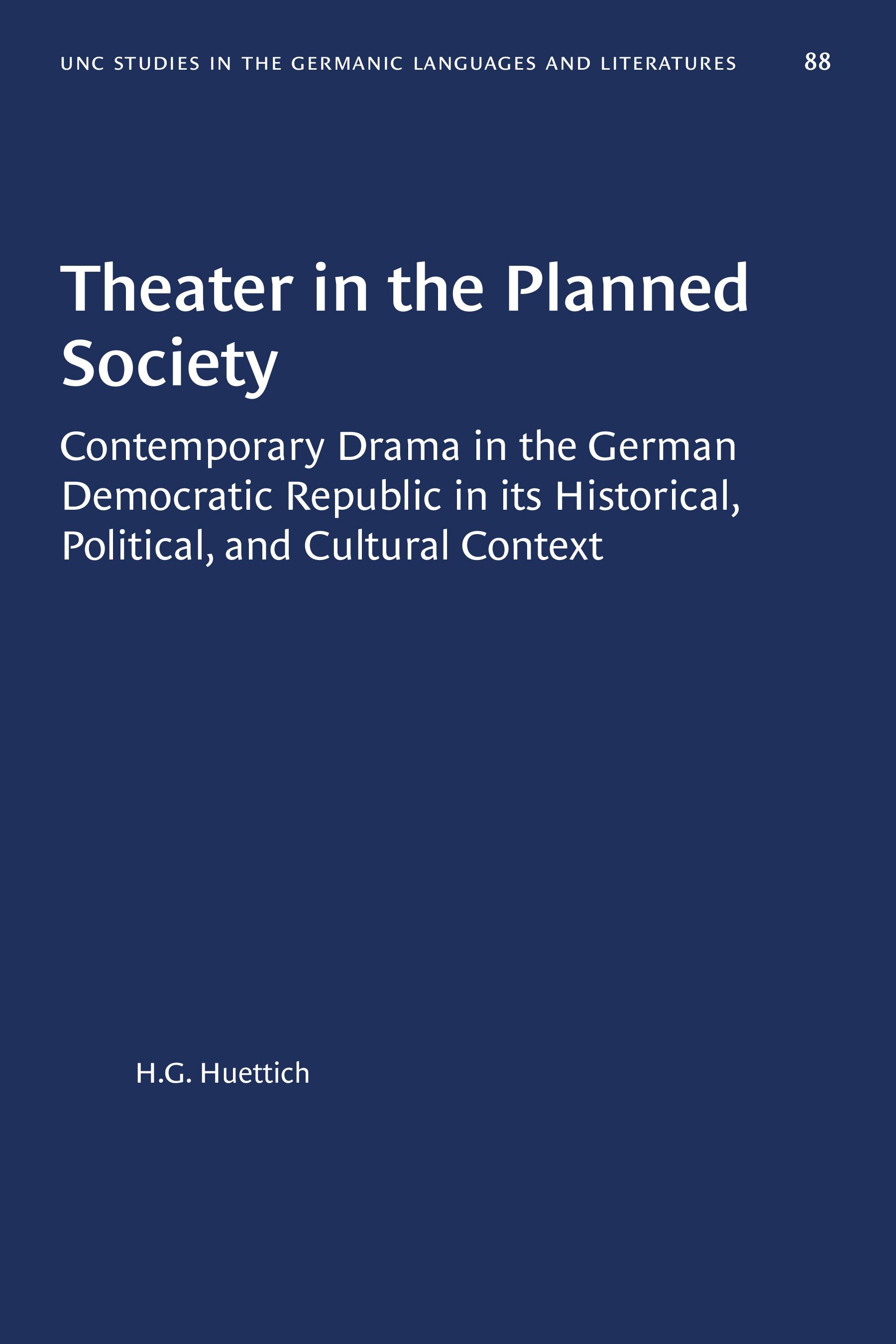
This study presents the historical development of topical drama in the German Democratic Republic from 1945 to 1975. The author investigates the sociopolitical function of both dramas and dramatists such as Karl Grünberg, Friedrich Wolf, and Erwin Strittmatter during the various transitional stages of the GDR’s growth toward a socialist society.
The substantive, critical study of plays, authors, productions, and dramatic theory is supplemented by a critical analysis of the Socialist Unity Party’s cultural and literary policies during the GDR’s turbulent history. While Western critics tend to isolate individual GDR dramas and interpret them out of context, Huettich explores in depth how the cultural policy of the GDR significantly helped shape the course of post-World War II drama in the 'planned society.'
The substantive, critical study of plays, authors, productions, and dramatic theory is supplemented by a critical analysis of the Socialist Unity Party’s cultural and literary policies during the GDR’s turbulent history. While Western critics tend to isolate individual GDR dramas and interpret them out of context, Huettich explores in depth how the cultural policy of the GDR significantly helped shape the course of post-World War II drama in the 'planned society.'
Zahle einfach mit Karte, Klarna, Apple Pay oder Google Pay. Nicht zufrieden? Du hast immer ein 14-tägiges Widerrufsrecht. Lies mehr in unseren AGB. Hast du Fragen, schreib uns eine E-Mail an hello@memmo.org.
Memmo macht das Lernen einfacher – wo auch immer du bist. Bei uns findest du deine Kursbücher und smarte Lerntools an einem Ort: Zusammenfassungen, Quizzes, Podcasts und Lernkarten. Und Ted, dein Lernbuddy, beantwortet alles, was du wissen möchtest. Über 50.000 Studierende lernen bereits hier – gemacht, damit du schneller lernst und weniger Stress hast.
Das könnte dir auch gefallen
Buch kaufen0