
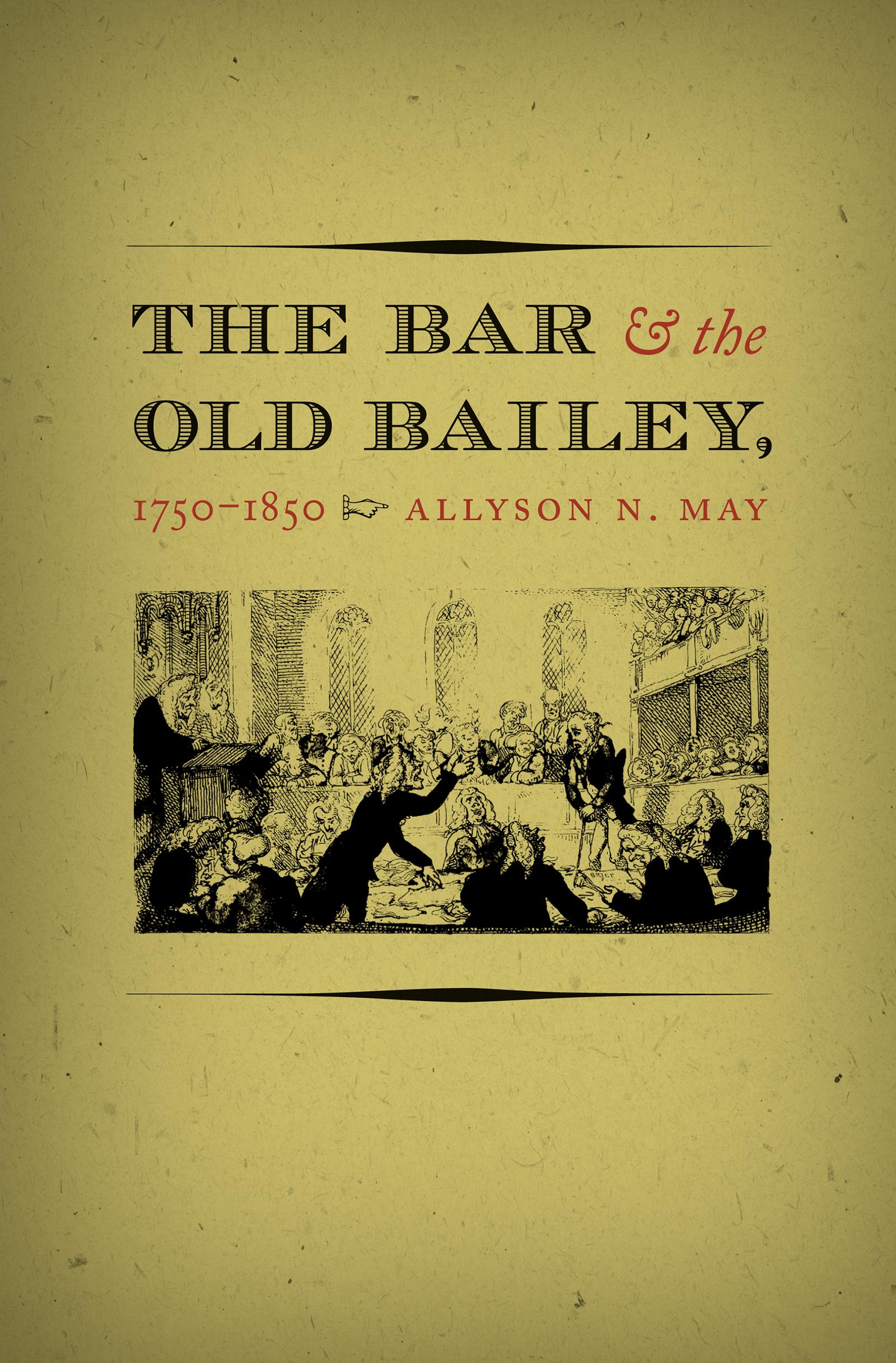
Allyson May chronicles the history of the English criminal trial and the development of a criminal bar in London between 1750 and 1850. She charts the transformation of the legal process and the evolution of professional standards of conduct for the criminal bar through an examination of the working lives of the Old Bailey barristers of the period. In describing the rise of adversarialism, May uncovers the motivations and interests of prosecutors, defendants, the bench, and the state, as well as the often-maligned “Old Bailey hacks” themselves.
Traditionally, the English criminal trial consisted of a relatively unstructured altercation between the victim-prosecutor and the accused, who generally appeared without a lawyer. A criminal bar had emerged in London by the 1780s, and in 1836 the Prisoners' Counsel Act recognized the defendant’s right to legal counsel in felony trials and lifted many restrictions on the activities of defense lawyers. May explores the role of barristers before and after the Prisoners' Counsel Act. She also details the careers of individual members of the bar — describing their civil practice in local, customary courts as well as their criminal practice — and the promotion of Old Bailey counsel to the bench of that court. A comprehensive biographical appendix augments this discussion.
Traditionally, the English criminal trial consisted of a relatively unstructured altercation between the victim-prosecutor and the accused, who generally appeared without a lawyer. A criminal bar had emerged in London by the 1780s, and in 1836 the Prisoners' Counsel Act recognized the defendant’s right to legal counsel in felony trials and lifted many restrictions on the activities of defense lawyers. May explores the role of barristers before and after the Prisoners' Counsel Act. She also details the careers of individual members of the bar — describing their civil practice in local, customary courts as well as their criminal practice — and the promotion of Old Bailey counsel to the bench of that court. A comprehensive biographical appendix augments this discussion.
Zahle einfach mit Karte, Klarna, Apple Pay oder Google Pay. Nicht zufrieden? Du hast immer ein 14-tägiges Widerrufsrecht. Lies mehr in unseren AGB. Hast du Fragen, schreib uns eine E-Mail an hello@memmo.org.
Memmo macht das Lernen einfacher – wo auch immer du bist. Bei uns findest du deine Kursbücher und smarte Lerntools an einem Ort: Zusammenfassungen, Quizzes, Podcasts und Lernkarten. Und Ted, dein Lernbuddy, beantwortet alles, was du wissen möchtest. Über 50.000 Studierende lernen bereits hier – gemacht, damit du schneller lernst und weniger Stress hast.
Das könnte dir auch gefallen
Buch kaufen0