
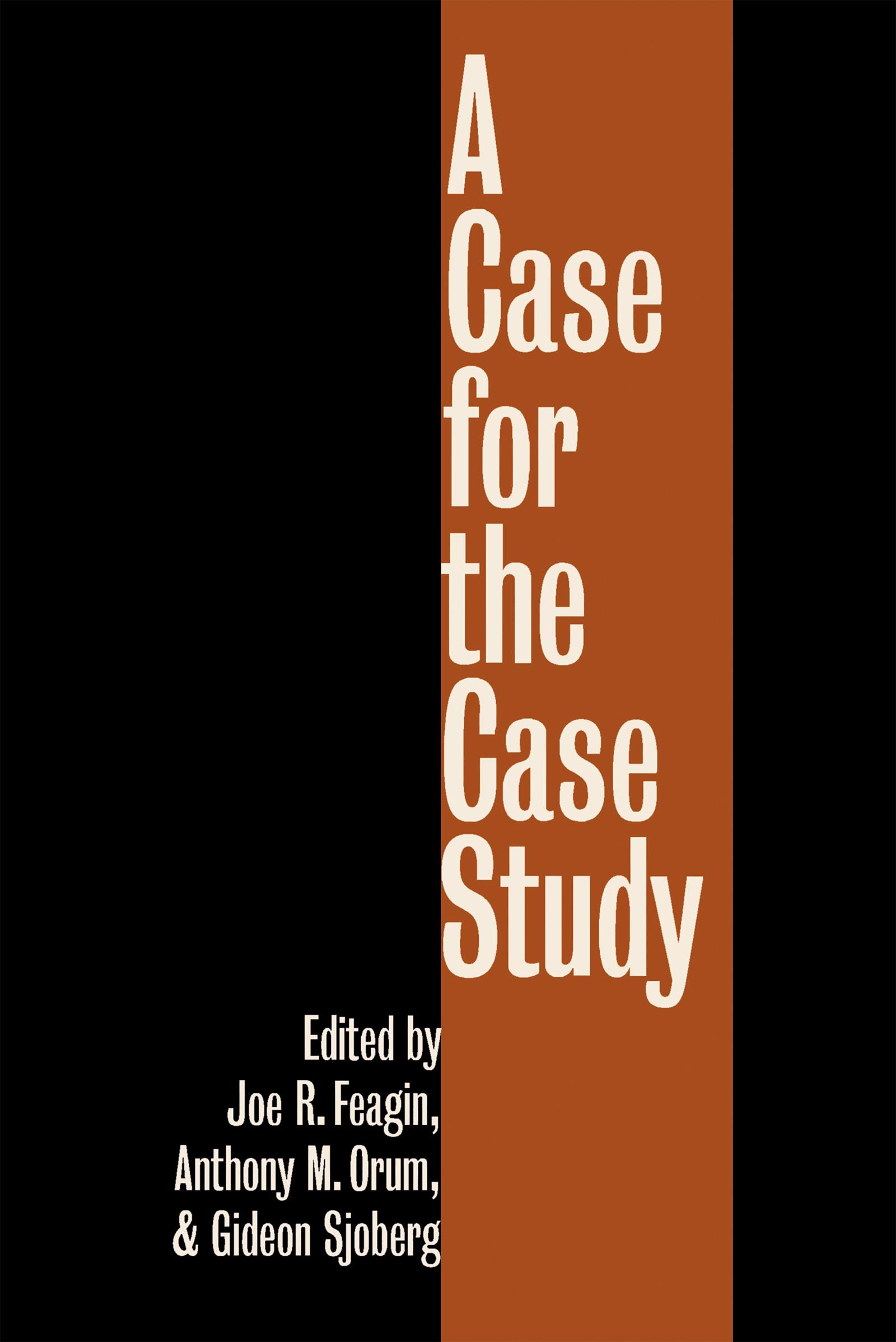
Since the end of World War II, social science research has become increasingly quantitative in nature. A Case for the Case Study provides a rationale for an alternative to quantitative research: the close investigation of single instances of social phenomena.
The first section of the book contains an overview of the central methodological issues involved in the use of the case study method. Then, well-known scholars describe how they undertook case study research in order to understand changes in church involvement, city life, gender roles, white-collar crimes, family structure, homelessness, and other types of social experience. Each contributor confronts several key questions: What does the case study tell us that other approaches cannot? To what extent can one generalize from the study of a single case or of a highly limited set of cases? Does case study work provide the basis for postulating broad principles of social structure and behavior? The answers vary, but the consensus is that the opportunity to examine certain kinds of social phenomena in depth enables social scientists to advance greatly our empirical understanding of social life.
The contributors are Leon Anderson, Howard M. Bahr, Theodore Caplow, Joe R. Feagin, Gilbert Geis, Gerald Handel, Anthonly M. Orum, Andree F. Sjoberg, Gideon Sjoberg, David A. Snow, Ted R. Vaughan, R. Stephen Warner, Christine L. Williams, and Norma Williams.
Zahle einfach mit Karte, Klarna, Apple Pay oder Google Pay. Nicht zufrieden? Du hast immer ein 14-tägiges Widerrufsrecht. Lies mehr in unseren AGB. Hast du Fragen, schreib uns eine E-Mail an hello@memmo.org.
Memmo macht das Lernen einfacher – wo auch immer du bist. Bei uns findest du deine Kursbücher und smarte Lerntools an einem Ort: Zusammenfassungen, Quizzes, Podcasts und Lernkarten. Und Ted, dein Lernbuddy, beantwortet alles, was du wissen möchtest. Über 50.000 Studierende lernen bereits hier – gemacht, damit du schneller lernst und weniger Stress hast.