
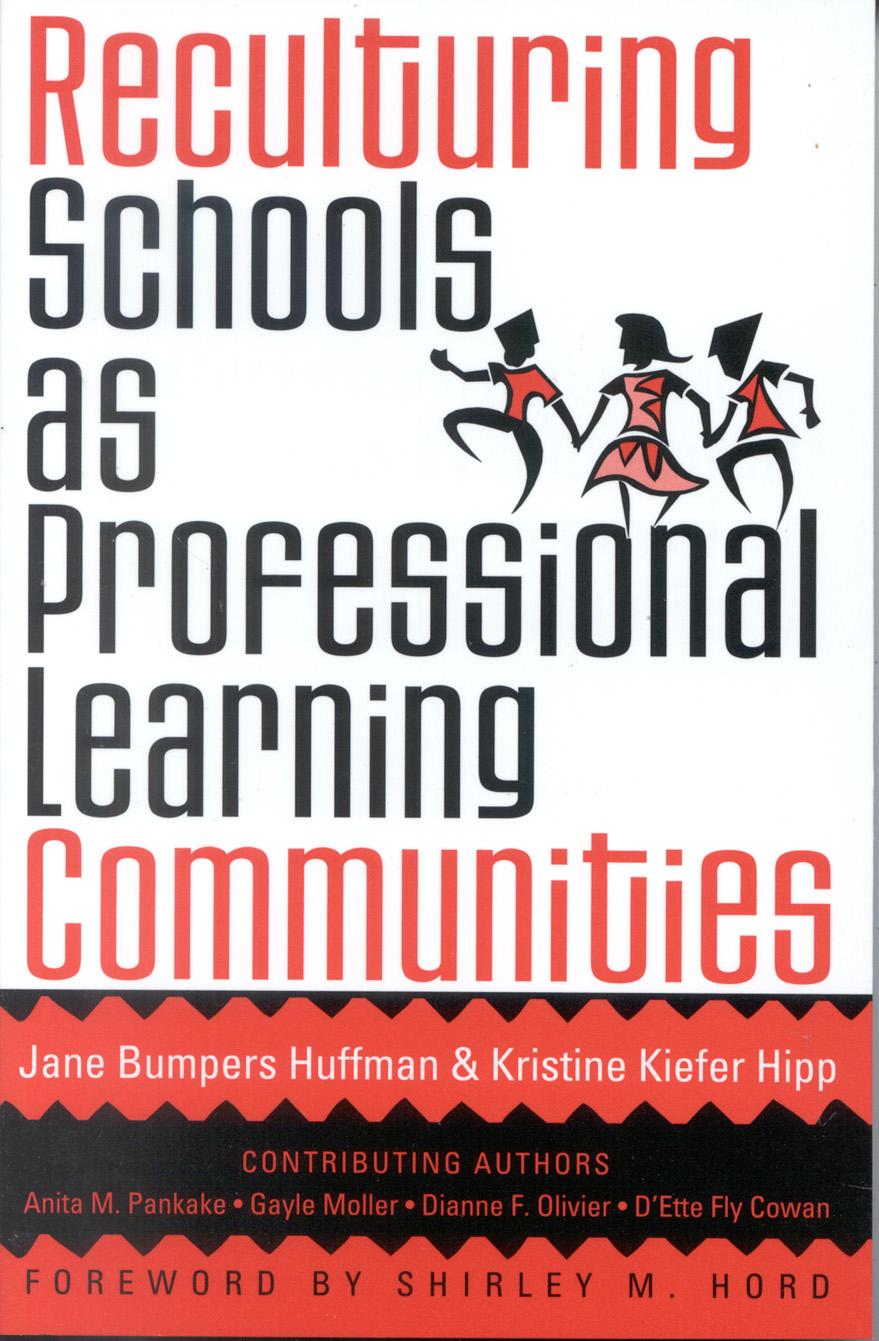
This important work documents and examines evidence of efforts taking place in rural, urban, and suburban Pre-K-12 schools that are actively engaged in creating professional learning communities (PLCs). Literature is reviewed that defines and identifies the distinguishing dimensions of PLCs. A five-year, federally funded research study is explained including the methodology and demographics of the six study schools and a synthesis of the 64 interviews.
A PLC organizer (PLCO) is introduced, which realigns with Shirley Hord's original 1997 research. The organizer provides the framework to explain the five PLC dimensions and related critical attributes. The PLCO also merges Fullan's model, Phases of Change (1985), which includes initiation, implementation, and institutionalization.
The authors provide extensive evidence of the progressive development of a PLC from initiation to implementation using exemplars and non-exemplars from interviews that either hinder or facilitate creating and sustaining PLCs. A new assessment tool, the Professional Learning Community Assessment (PLCA), is also presented and can be used for diagnosis and evaluation of schools as they work toward school reform efforts. Readers are also presented with information that connects professional learning community work to a new approach to school improvement. Five case studies are included that can be used in schools and university classrooms for the purpose of engaging educators in reflection, open dialogue, problem finding, and problem solving. This first-hand documented information provides readers with unique issues as they wrestle with the challenges of transforming schools into organizations that meet diverse students needs.
Lessons learned from this problem-based learning can easily transfer to the readers' own experiences and schools. The authors conclude by highlighting significant findings, reviewing the most recent related research that addresses sustaining such efforts, and offering suggestions for school leaders to
A PLC organizer (PLCO) is introduced, which realigns with Shirley Hord's original 1997 research. The organizer provides the framework to explain the five PLC dimensions and related critical attributes. The PLCO also merges Fullan's model, Phases of Change (1985), which includes initiation, implementation, and institutionalization.
The authors provide extensive evidence of the progressive development of a PLC from initiation to implementation using exemplars and non-exemplars from interviews that either hinder or facilitate creating and sustaining PLCs. A new assessment tool, the Professional Learning Community Assessment (PLCA), is also presented and can be used for diagnosis and evaluation of schools as they work toward school reform efforts. Readers are also presented with information that connects professional learning community work to a new approach to school improvement. Five case studies are included that can be used in schools and university classrooms for the purpose of engaging educators in reflection, open dialogue, problem finding, and problem solving. This first-hand documented information provides readers with unique issues as they wrestle with the challenges of transforming schools into organizations that meet diverse students needs.
Lessons learned from this problem-based learning can easily transfer to the readers' own experiences and schools. The authors conclude by highlighting significant findings, reviewing the most recent related research that addresses sustaining such efforts, and offering suggestions for school leaders to
Zahle einfach mit Karte, Klarna, Apple Pay oder Google Pay. Nicht zufrieden? Du hast immer ein 14-tägiges Widerrufsrecht. Lies mehr in unseren AGB. Hast du Fragen, schreib uns eine E-Mail an hello@memmo.org.
Memmo macht das Lernen einfacher – wo auch immer du bist. Bei uns findest du deine Kursbücher und smarte Lerntools an einem Ort: Zusammenfassungen, Quizzes, Podcasts und Lernkarten. Und Ted, dein Lernbuddy, beantwortet alles, was du wissen möchtest. Über 50.000 Studierende lernen bereits hier – gemacht, damit du schneller lernst und weniger Stress hast.