
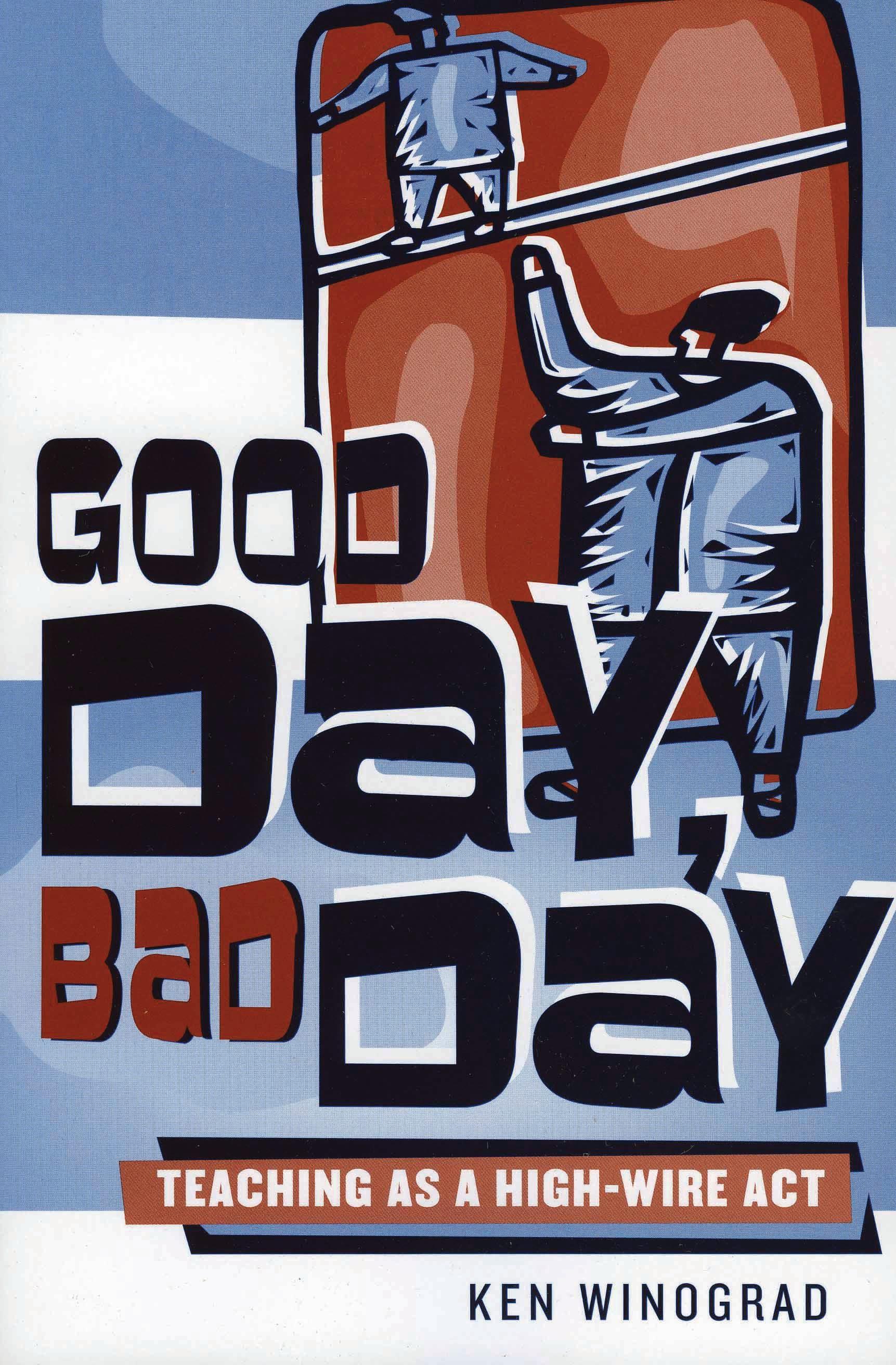
Here is the story of how Ken Winograd grappled with the uncertainties and contradictions of teaching and, in the process, began to understand himself as teacher. Winograd contends that it is crucial that teachers, especially beginning teachers, examine and reflect on the inevitable complexities of classroom life as they work to construct professional identities that are flexible, strategic, and multifaceted. After 13 years working as a teacher educator, he returned to the classroom as a teacher in a nongraded primary classroom. In Good Day, Bad Day, he describes this experience.
The first half of the book contains Winograd's daily journal, where he details his everyday work. The journal describes his struggles with students, the efforts to construct a curriculum that reflected his changing beliefs about teaching, and the highs and lows typical of beginning teaching. The second half of the book formally examines various nonpedagogic aspects of teaching, including teacher-student power relations, the emotions of teaching, and the development of teacher identity. Good Day, Bad Day will be useful to teachers, teacher educators, administrators, and policymakers committed to the development of teachers who can reflect critically on their experience and then act to improve their working conditions as well as the learning conditions of students.
The first half of the book contains Winograd's daily journal, where he details his everyday work. The journal describes his struggles with students, the efforts to construct a curriculum that reflected his changing beliefs about teaching, and the highs and lows typical of beginning teaching. The second half of the book formally examines various nonpedagogic aspects of teaching, including teacher-student power relations, the emotions of teaching, and the development of teacher identity. Good Day, Bad Day will be useful to teachers, teacher educators, administrators, and policymakers committed to the development of teachers who can reflect critically on their experience and then act to improve their working conditions as well as the learning conditions of students.
Zahle einfach mit Karte, Klarna, Apple Pay oder Google Pay. Nicht zufrieden? Du hast immer ein 14-tägiges Widerrufsrecht. Lies mehr in unseren AGB. Hast du Fragen, schreib uns eine E-Mail an hello@memmo.org.
Memmo macht das Lernen einfacher – wo auch immer du bist. Bei uns findest du deine Kursbücher und smarte Lerntools an einem Ort: Zusammenfassungen, Quizzes, Podcasts und Lernkarten. Und Ted, dein Lernbuddy, beantwortet alles, was du wissen möchtest. Über 50.000 Studierende lernen bereits hier – gemacht, damit du schneller lernst und weniger Stress hast.