
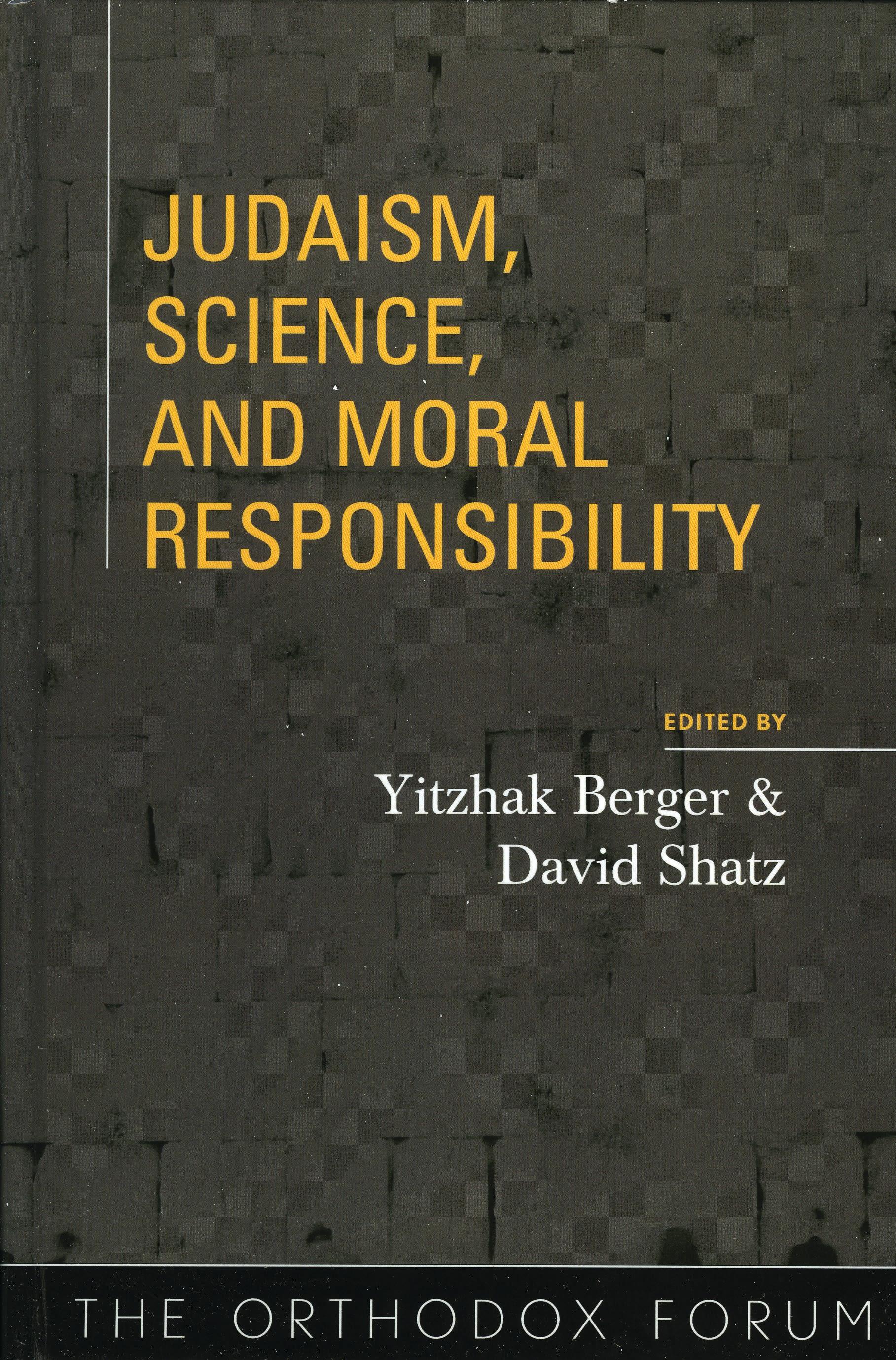
Do human beings have free will? Are they genuinely responsible for their actions? These questions have persisted all through the history of philosophy, but in the 21st century they have become defined more sharply and clearly than ever. Indeed, a vivid and mighty tension underlies today's intellectual struggles over free will. On the one hand, the rapid advances of several empirical disciplines, notably neuropsychology and genetics, threaten our instinctive affirmation that free will and moral responsibility exist. On the other hand, the depth and force of our instincts-our powerful intuition that there is free will, that there is moral responsibility-present, for most people, an almost impenetrable barrier against the sweeping denial of free will suggested by empirical research. The papers in this volume address this tension from a dual vantage point. While drawing heavily upon traditional Jewish texts and teachings, they also offer a blend of scientific, philosophical, psychological, and social insights into this most mystifying of topics. In addition, they illuminate the concept of repentance, a transformation of character that ranks in much of Jewish literature as the highest expression of free will.
Seiten: 316
Kategorie: Religion & Teologi
e-ISBN: 9781461638346
Versandgewicht: 1.2 kg
Versand in: 1-2 Tage
Zahle einfach mit Karte, Klarna, Apple Pay oder Google Pay. Nicht zufrieden? Du hast immer ein 14-tägiges Widerrufsrecht. Lies mehr in unseren AGB. Hast du Fragen, schreib uns eine E-Mail an hello@memmo.org.
Memmo macht das Lernen einfacher – wo auch immer du bist. Bei uns findest du deine Kursbücher und smarte Lerntools an einem Ort: Zusammenfassungen, Quizzes, Podcasts und Lernkarten. Und Ted, dein Lernbuddy, beantwortet alles, was du wissen möchtest. Über 50.000 Studierende lernen bereits hier – gemacht, damit du schneller lernst und weniger Stress hast.