
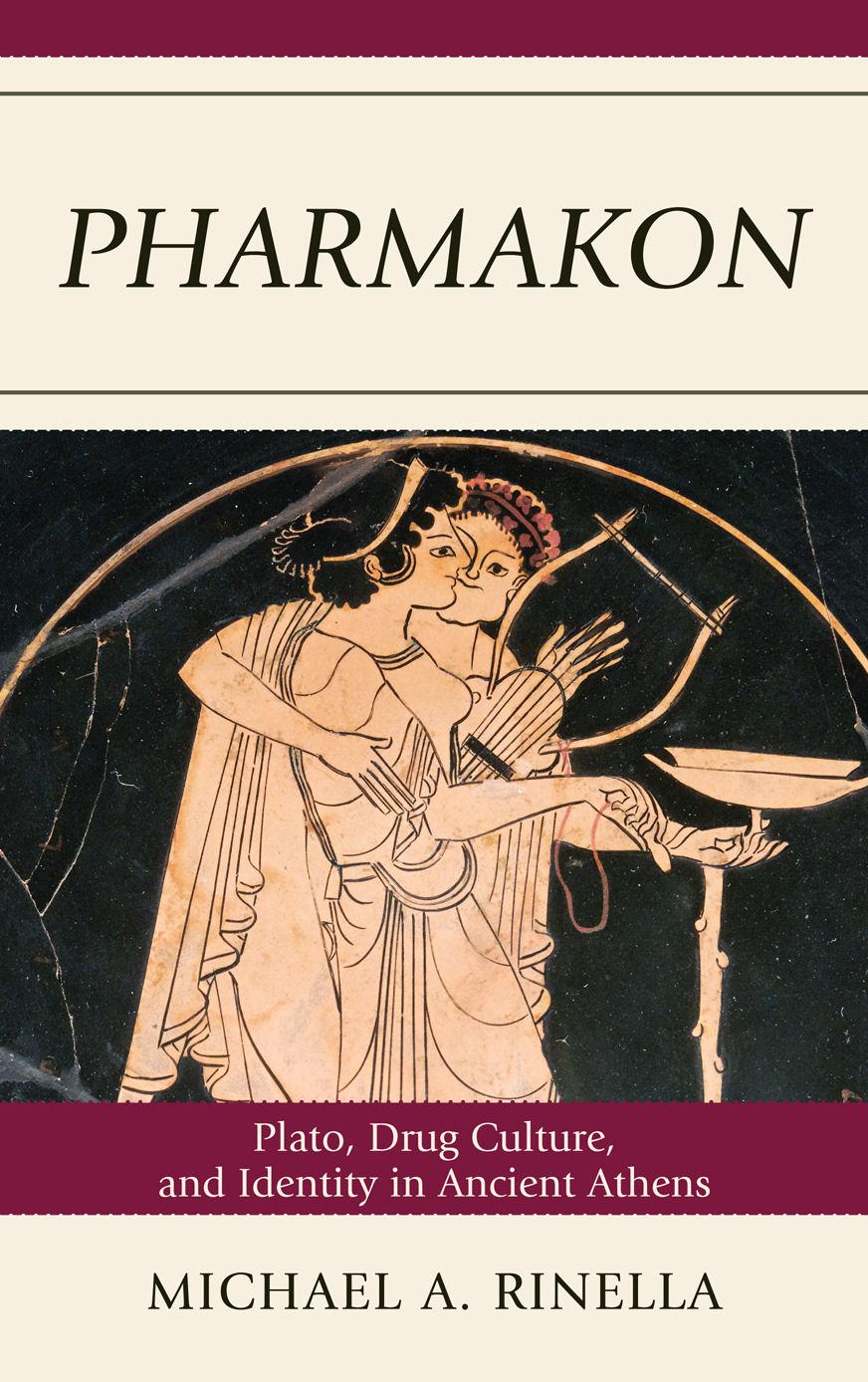
Pharmakon: Plato, Drug Culture, and Identity in Ancient Athens examines the emerging concern for controlling states of psychological ecstasy in the history of western thought, focusing on ancient Greece (c. 750 - 146 BCE), particularly the Classical Period (c. 500 - 336 BCE) and especially the dialogues of the Athenian philosopher Plato (427 - 347 BCE).
Employing a diverse array of materials ranging from literature, philosophy, medicine, botany, pharmacology, religion, magic, and law, Pharmakon fundamentally reframes the conceptual context of how we read and interpret Plato's dialogues. Michael A. Rinella demonstrates how the power and truth claims of philosophy, repeatedly likened to a pharmakon, opposes itself to the cultural authority of a host of other occupations in ancient Greek society who derived their powers from, or likened their authority to, some pharmakon. These included Dionysian and Eleusinian religion, physicians and other healers, magicians and other magic workers, poets, sophists, rhetoricians, as well as others.
Accessible to the general reader, yet challenging to the specialist, Pharmakon is a comprehensive examination of the place of drugs in ancient thought that will compel the reader to understand Plato in a new way.
Employing a diverse array of materials ranging from literature, philosophy, medicine, botany, pharmacology, religion, magic, and law, Pharmakon fundamentally reframes the conceptual context of how we read and interpret Plato's dialogues. Michael A. Rinella demonstrates how the power and truth claims of philosophy, repeatedly likened to a pharmakon, opposes itself to the cultural authority of a host of other occupations in ancient Greek society who derived their powers from, or likened their authority to, some pharmakon. These included Dionysian and Eleusinian religion, physicians and other healers, magicians and other magic workers, poets, sophists, rhetoricians, as well as others.
Accessible to the general reader, yet challenging to the specialist, Pharmakon is a comprehensive examination of the place of drugs in ancient thought that will compel the reader to understand Plato in a new way.
Zahle einfach mit Karte, Klarna, Apple Pay oder Google Pay. Nicht zufrieden? Du hast immer ein 14-tägiges Widerrufsrecht. Lies mehr in unseren AGB. Hast du Fragen, schreib uns eine E-Mail an hello@memmo.org.
Memmo macht das Lernen einfacher – wo auch immer du bist. Bei uns findest du deine Kursbücher und smarte Lerntools an einem Ort: Zusammenfassungen, Quizzes, Podcasts und Lernkarten. Und Ted, dein Lernbuddy, beantwortet alles, was du wissen möchtest. Über 50.000 Studierende lernen bereits hier – gemacht, damit du schneller lernst und weniger Stress hast.