
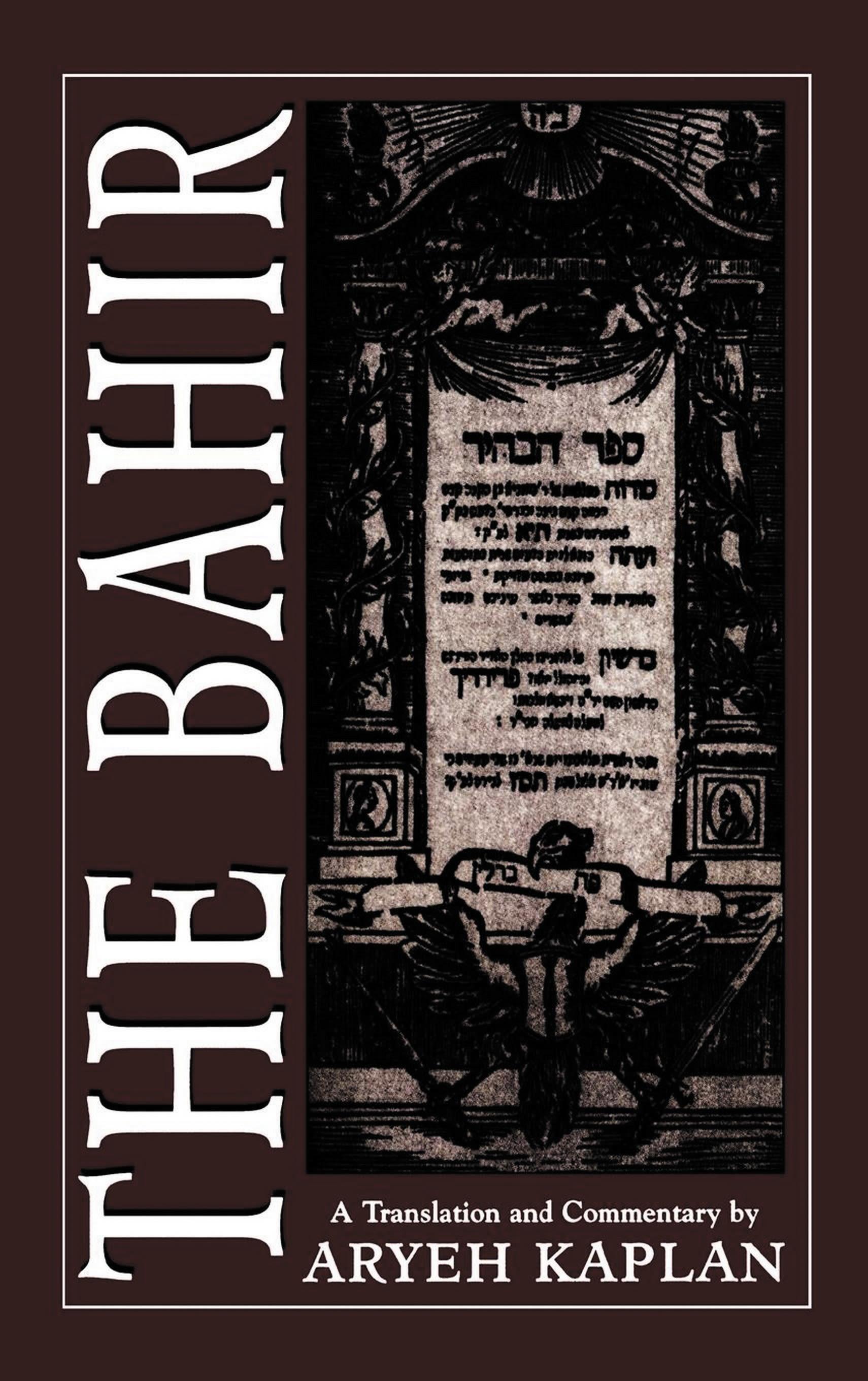
The Bahir is one of the oldest and most important of all classical Kabbalah texts. Until the publication of the Zohar, the Bahir was the most influential and widely quoted primary source of Kabbalistic teachings.
The Bahir is quoted in every major book on Kabbalah, the earliest being the Raavad's commentary on Sefer Yetzirah, and it is cited numerous times by Rabbi Moshe ben Nachman (Ramban) in his commentary on the Torah. It is also quoted many times in the Zohar. It was first published around 1176 by the Provence school of Kabbalists; the first printed edition appeared in Amsterdam in 1651.
The name Bahir is derived from the first verse quoted in the text (Job 37:21), "And now they do not see light, it is brilliant (Bahir) in the skies." It is also called the "Midrash of Rabbi Nehuniah ben HaKana," particularly by the Ramban. The reason might be that Rabbi Nehuniah's name is at the very beginning of the book, but most Kabbalists actually attribute the Bahir to him and his school. Some consider it the oldest kabbalistic text ever written.
Although the Bahir is a fairly small book, some 12,000 words in all, it was very highly esteemed among those who probed its mysteries. Rabbi Judah Chayit, a prominent fifteenth-century Kabbalist, writes, "Make this book a crown for your head." Much of the text is very difficult to understand, and Rabbi Moshe Cordevero (1522-1570), head of the Safed school of Kabbalah, says, "The words of this text are bright (Bahir) and sparkling, but their brilliance can blind the eye."
One of the most important concepts revealed in the Bahir is that of the Ten Sefirot, and careful analysis of these discussions yields much of what will be found in later kabbalistic works, as well as their relation to anthropomorphism and the reason for the commandments. Also included is a discussion of reincarnation, or Gilgul, an interpretation of the letters of the Hebrew alphabet, the Thirty-two Paths of Wisdom, and the concept of Tzimtzum, the s
The Bahir is quoted in every major book on Kabbalah, the earliest being the Raavad's commentary on Sefer Yetzirah, and it is cited numerous times by Rabbi Moshe ben Nachman (Ramban) in his commentary on the Torah. It is also quoted many times in the Zohar. It was first published around 1176 by the Provence school of Kabbalists; the first printed edition appeared in Amsterdam in 1651.
The name Bahir is derived from the first verse quoted in the text (Job 37:21), "And now they do not see light, it is brilliant (Bahir) in the skies." It is also called the "Midrash of Rabbi Nehuniah ben HaKana," particularly by the Ramban. The reason might be that Rabbi Nehuniah's name is at the very beginning of the book, but most Kabbalists actually attribute the Bahir to him and his school. Some consider it the oldest kabbalistic text ever written.
Although the Bahir is a fairly small book, some 12,000 words in all, it was very highly esteemed among those who probed its mysteries. Rabbi Judah Chayit, a prominent fifteenth-century Kabbalist, writes, "Make this book a crown for your head." Much of the text is very difficult to understand, and Rabbi Moshe Cordevero (1522-1570), head of the Safed school of Kabbalah, says, "The words of this text are bright (Bahir) and sparkling, but their brilliance can blind the eye."
One of the most important concepts revealed in the Bahir is that of the Ten Sefirot, and careful analysis of these discussions yields much of what will be found in later kabbalistic works, as well as their relation to anthropomorphism and the reason for the commandments. Also included is a discussion of reincarnation, or Gilgul, an interpretation of the letters of the Hebrew alphabet, the Thirty-two Paths of Wisdom, and the concept of Tzimtzum, the s
Zahle einfach mit Karte, Klarna, Apple Pay oder Google Pay. Nicht zufrieden? Du hast immer ein 14-tägiges Widerrufsrecht. Lies mehr in unseren AGB. Hast du Fragen, schreib uns eine E-Mail an hello@memmo.org.
Memmo macht das Lernen einfacher – wo auch immer du bist. Bei uns findest du deine Kursbücher und smarte Lerntools an einem Ort: Zusammenfassungen, Quizzes, Podcasts und Lernkarten. Und Ted, dein Lernbuddy, beantwortet alles, was du wissen möchtest. Über 50.000 Studierende lernen bereits hier – gemacht, damit du schneller lernst und weniger Stress hast.