
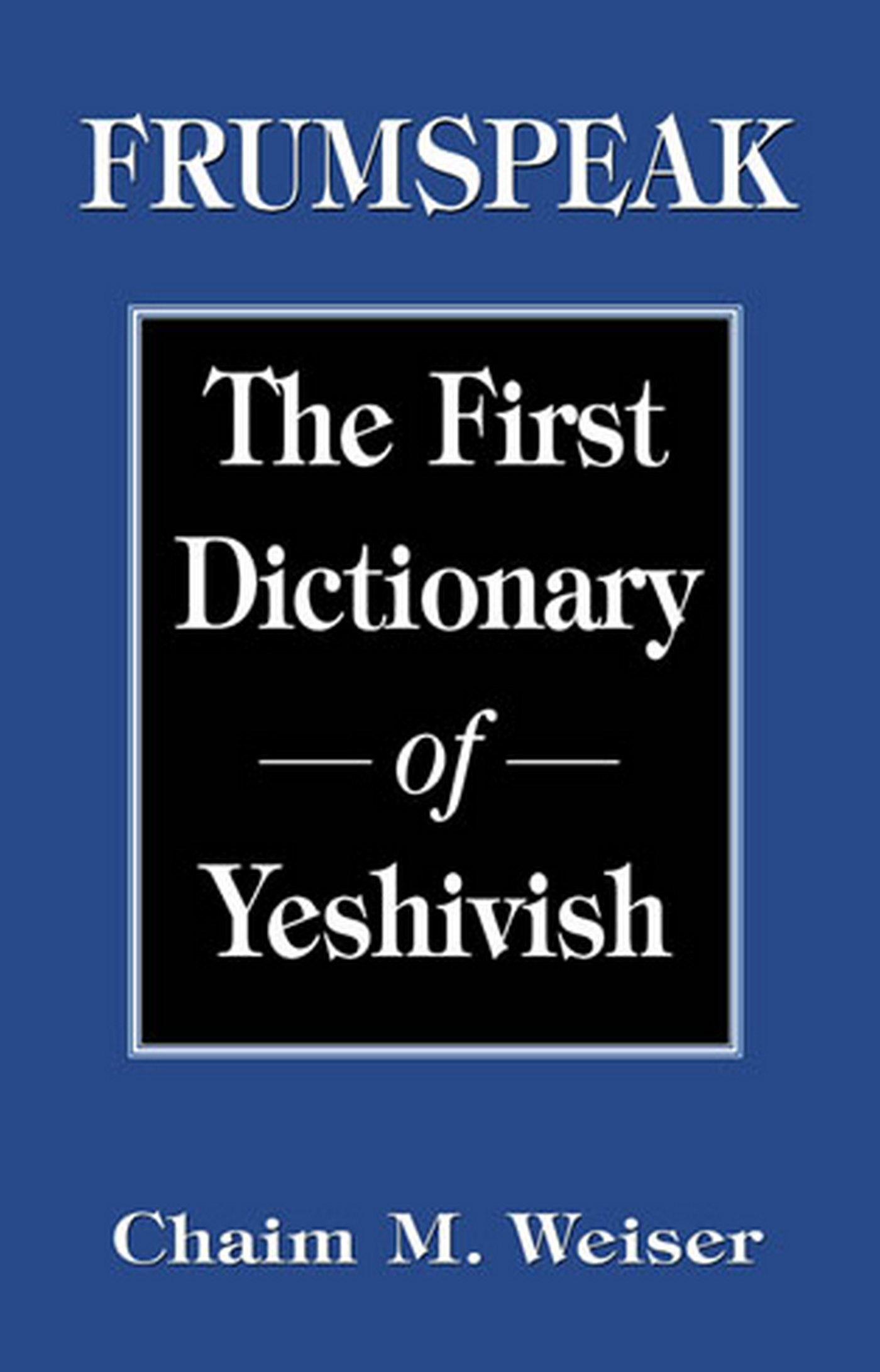
Frumspeak examines the unique linguistic habits of Orthodox, native-born Americans. This book seeks to draw comparisons with parallel phenomena of Jewish linguistic creation including Yiddish and Ladino and reaches into the linguistic consciousness of the American Orthodox community to reveal how that community thinks, communicates, and educates.
The Jewish religion molds the character of this community and determines how it works, builds a home life, celebrates, and educates children. By focusing on Jewish education, the community fosters an intimacy with the classic primary texts of Judaism. These texts are replete with memorable linguistic formulations, vivid imagery, and technical terminology, all of which govern the ways in which Orthodox Jews face the challenges of daily life.
Orthodox children often gain academic exposure to sophisticated concepts years before they have to undertake the responsibilities of adulthood. With each new encounter a reference to rabbinic literature is drawn upon, and the classical terms become associated with tangible experience. The result is the English, Hebrew, Aramaic, and Yiddish amalgam that this book terms Yeshivish.
Yeshivish grows increasingly prevalent as the American Orthodox community continues to grow into a strong, organized body responsible for its own education and welfare. Frumspeak examines the origins of Yeshivish and attempts to determine its place in religious and linguistic thought.
As a dictionary, Frumspeak provides definitions for Yeshivish words and suggests an English equivalent for each. Every entry traces the etymology of the original word to the point at which the word enters the language. All definitions include a sentence drawn from actual experience, to exemplify each meaning and to distinguish it from others.
The Jewish religion molds the character of this community and determines how it works, builds a home life, celebrates, and educates children. By focusing on Jewish education, the community fosters an intimacy with the classic primary texts of Judaism. These texts are replete with memorable linguistic formulations, vivid imagery, and technical terminology, all of which govern the ways in which Orthodox Jews face the challenges of daily life.
Orthodox children often gain academic exposure to sophisticated concepts years before they have to undertake the responsibilities of adulthood. With each new encounter a reference to rabbinic literature is drawn upon, and the classical terms become associated with tangible experience. The result is the English, Hebrew, Aramaic, and Yiddish amalgam that this book terms Yeshivish.
Yeshivish grows increasingly prevalent as the American Orthodox community continues to grow into a strong, organized body responsible for its own education and welfare. Frumspeak examines the origins of Yeshivish and attempts to determine its place in religious and linguistic thought.
As a dictionary, Frumspeak provides definitions for Yeshivish words and suggests an English equivalent for each. Every entry traces the etymology of the original word to the point at which the word enters the language. All definitions include a sentence drawn from actual experience, to exemplify each meaning and to distinguish it from others.
Zahle einfach mit Karte, Klarna, Apple Pay oder Google Pay. Nicht zufrieden? Du hast immer ein 14-tägiges Widerrufsrecht. Lies mehr in unseren AGB. Hast du Fragen, schreib uns eine E-Mail an hello@memmo.org.
Memmo macht das Lernen einfacher – wo auch immer du bist. Bei uns findest du deine Kursbücher und smarte Lerntools an einem Ort: Zusammenfassungen, Quizzes, Podcasts und Lernkarten. Und Ted, dein Lernbuddy, beantwortet alles, was du wissen möchtest. Über 50.000 Studierende lernen bereits hier – gemacht, damit du schneller lernst und weniger Stress hast.