
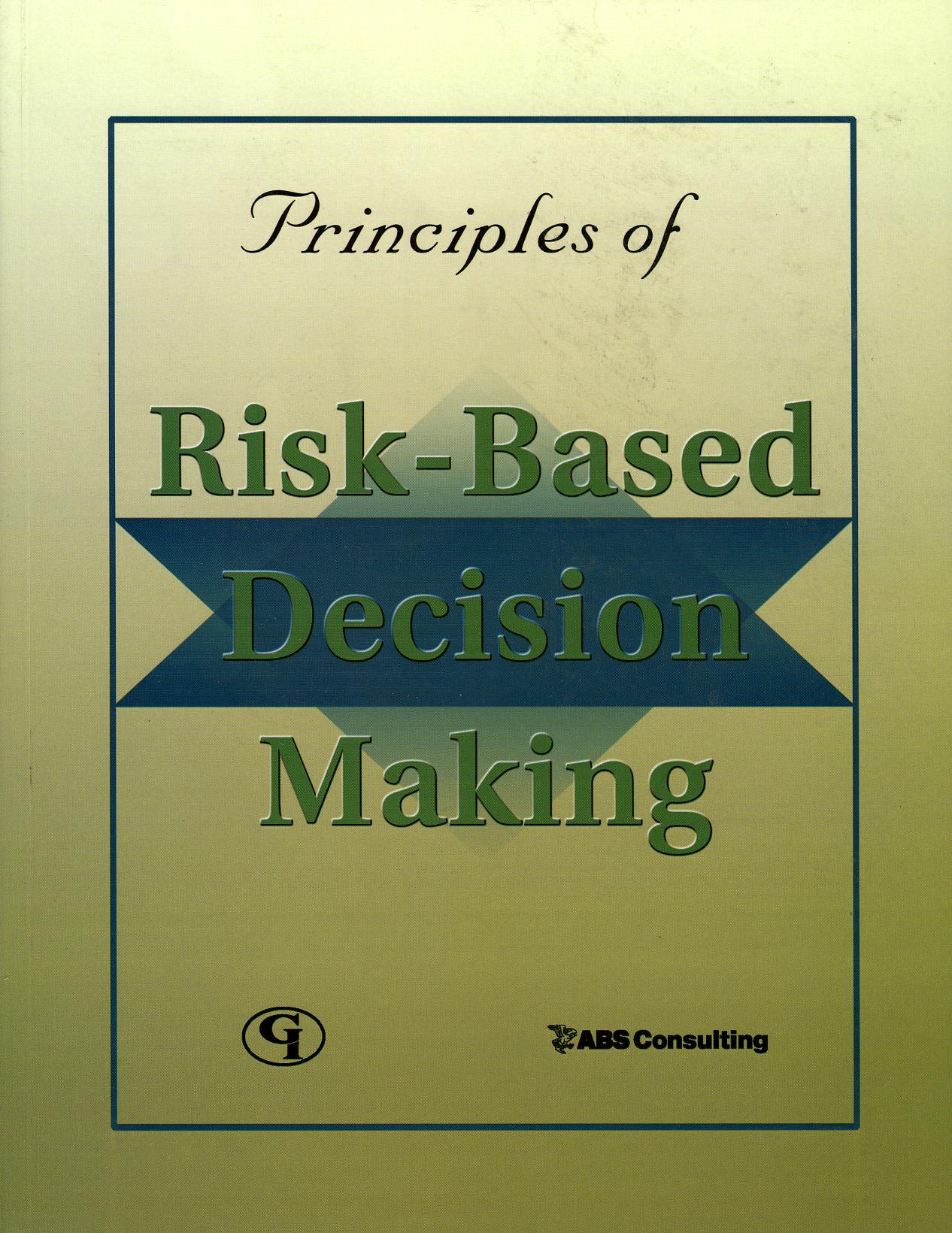
Principles of Risk-Based Decision Making provides managers with the foundation for creating a proactive organizational culture that systematically incorporates risk into key decision-making processes. Based on methodology adopted by a number of organizations including the federal government, this book examines risk-based decision making as a process for organizing information about the possibility for unwanted outcomes in a simple, practical way that helps decision makers make timely, informed management choices that minimize harmful effects on safety and health, the environment, property loss, or mission success.
Citing practical examples, charts, and checklists, the authors break the risk-based decision making process into five key components: establishing the decision structure, performing the risk assessment, managing sufficient risks, monitoring effectiveness of adopted risk controls through impact assessment, and facilitating risk communication. They examine each component in detail and outline available decision analysis and risk assessment tools that aid in each of these risk-based decision making functions.
This book also walks readers through eight project management steps-from scoping a risk assessment to evaluating the recommendations-the components of each, and the importance of these steps to the success of a risk assessment.
Special features include a table for applying the risk-based decision-making process, a hazard identification guidesheet, an example of human error, an acronym list, and a glossary.
Citing practical examples, charts, and checklists, the authors break the risk-based decision making process into five key components: establishing the decision structure, performing the risk assessment, managing sufficient risks, monitoring effectiveness of adopted risk controls through impact assessment, and facilitating risk communication. They examine each component in detail and outline available decision analysis and risk assessment tools that aid in each of these risk-based decision making functions.
This book also walks readers through eight project management steps-from scoping a risk assessment to evaluating the recommendations-the components of each, and the importance of these steps to the success of a risk assessment.
Special features include a table for applying the risk-based decision-making process, a hazard identification guidesheet, an example of human error, an acronym list, and a glossary.
Zahle einfach mit Karte, Klarna, Apple Pay oder Google Pay. Nicht zufrieden? Du hast immer ein 14-tägiges Widerrufsrecht. Lies mehr in unseren AGB. Hast du Fragen, schreib uns eine E-Mail an hello@memmo.org.
Memmo macht das Lernen einfacher – wo auch immer du bist. Bei uns findest du deine Kursbücher und smarte Lerntools an einem Ort: Zusammenfassungen, Quizzes, Podcasts und Lernkarten. Und Ted, dein Lernbuddy, beantwortet alles, was du wissen möchtest. Über 50.000 Studierende lernen bereits hier – gemacht, damit du schneller lernst und weniger Stress hast.