
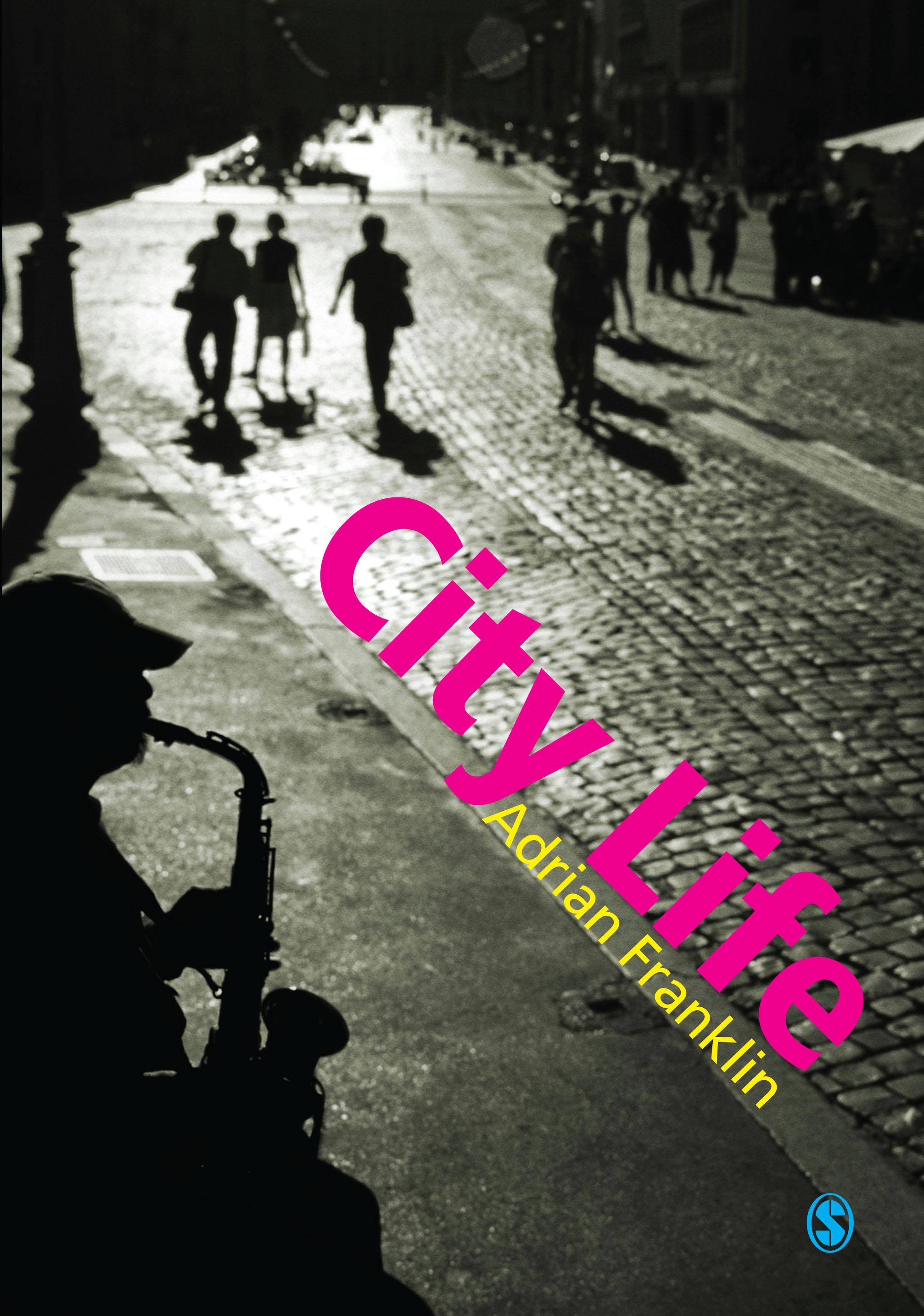
"A brave foray into the interdisciplinary and a serious attempt to cover city life in all its complexity... Franklin′s optimism about the city is refreshing. He revels in the growing human and cultural diversity and the ′re-emergence and spread of a more tolerant, carnivalesque, culture-driven city life′, and he celebrates the city′s ability to offer shelter to the unexpected and the fragile. For Franklin, the city is a product of nature, with all its vicissitudes."
- Times Higher Education
"Franklin writes with barely restrained optimism as he emphasizes the excitement, vitality and potential of cities. This advances the idea of city lives as assemblages of ‘human and non-human networks of texts, software, culture, behaviour, architecture, trees and gardens’... Franklin uses a wide range of sources in making his case. Historical accounts, search engine statistics and social and cultural theory are all smoothly integrated into the narrative."
- Sociology
Cities are more important as cultural entities than their mere function as dormitories and industrial sites. Yet, the understanding of what makes a city ′alive′ and appealing in cultural terms is still hotly contested - why are some cities so much more interesting, popular and successful than others?
In this engaging discussion of ′city life′ Adrian Franklin takes the reader on a tour of contemporary western cities exploring their historical development and arguing that it is the transformative, ritual and performative qualities of successful cities that makes a difference.
Here is a new urban culture characterized by ecological frames of reference; tracking the making of contemporary city life from traditional times, through early modern, machinic and modernised stages of development. Adopting dynamic narrative structures and stories to develop its critical position this book creates a vibrant synthesis of city life from its key components of leisure and tourism, recreation and play, arts and culture, nature and environment, and architecture and public space.
Emphasising the importance of experience the book represents the fluid complexity of the city as a living space, an environment and a posthumanist space of transformation. It will be of interest to all those engaging with the difficulties of urban life in sociology, human geography, tourism and cultural studies.
- Times Higher Education
"Franklin writes with barely restrained optimism as he emphasizes the excitement, vitality and potential of cities. This advances the idea of city lives as assemblages of ‘human and non-human networks of texts, software, culture, behaviour, architecture, trees and gardens’... Franklin uses a wide range of sources in making his case. Historical accounts, search engine statistics and social and cultural theory are all smoothly integrated into the narrative."
- Sociology
Cities are more important as cultural entities than their mere function as dormitories and industrial sites. Yet, the understanding of what makes a city ′alive′ and appealing in cultural terms is still hotly contested - why are some cities so much more interesting, popular and successful than others?
In this engaging discussion of ′city life′ Adrian Franklin takes the reader on a tour of contemporary western cities exploring their historical development and arguing that it is the transformative, ritual and performative qualities of successful cities that makes a difference.
Here is a new urban culture characterized by ecological frames of reference; tracking the making of contemporary city life from traditional times, through early modern, machinic and modernised stages of development. Adopting dynamic narrative structures and stories to develop its critical position this book creates a vibrant synthesis of city life from its key components of leisure and tourism, recreation and play, arts and culture, nature and environment, and architecture and public space.
Emphasising the importance of experience the book represents the fluid complexity of the city as a living space, an environment and a posthumanist space of transformation. It will be of interest to all those engaging with the difficulties of urban life in sociology, human geography, tourism and cultural studies.
Zahle einfach mit Karte, Klarna, Apple Pay oder Google Pay. Nicht zufrieden? Du hast immer ein 14-tägiges Widerrufsrecht. Lies mehr in unseren AGB. Hast du Fragen, schreib uns eine E-Mail an hello@memmo.org.
Memmo macht das Lernen einfacher – wo auch immer du bist. Bei uns findest du deine Kursbücher und smarte Lerntools an einem Ort: Zusammenfassungen, Quizzes, Podcasts und Lernkarten. Und Ted, dein Lernbuddy, beantwortet alles, was du wissen möchtest. Über 50.000 Studierende lernen bereits hier – gemacht, damit du schneller lernst und weniger Stress hast.