
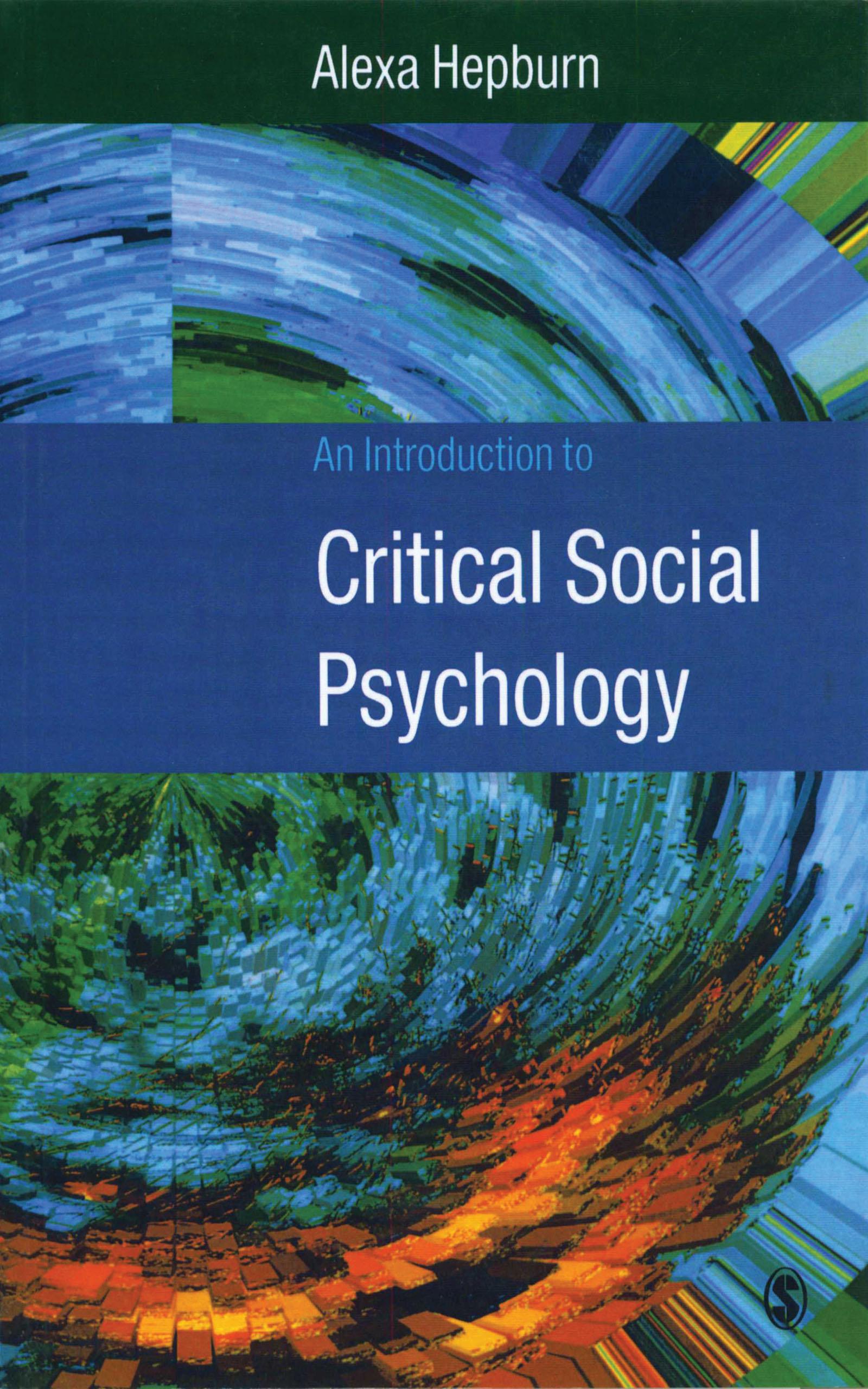
- Psychology in Society
′a very accessible introduction... lively and engaging.... Discussion questions are uncharacteristicaly thought-provoking, while practical exercises also seem better considered than one comes to expect from similar primers, suggesting a successful future as a core text in social psychology courses′
- The Psychologist
′Erudition, sagacity, patience and scholarship radiate from this book. This is an excellent introduction to the various strands of critical thinking to emanate primarily from England, and, to some extent, from continental Europe. Anyone interested in learning more about the discursive side of critical psychology will find in this book an excellent guide. I recommend this book to all psychologists interested in critical perspectives′
- Journal of Community and Applied Psychology
A critical approach depends on a range of often-implicit theories of society, knowledge, as well as the subject. This book shows the crucial role of these theories for directing critique at different parts of society, suggesting alternative ways of doing research, and effecting social change. It includes chapters from the perspectives of social cognition, Marxism, psychoanalysis, discourse and rhetoric, feminism, subjectivity and postmodernism. In each case, the strengths and weaknesses of each perspective are highlighted, the ideas are linked to real world issues by a range of practical exercises, and guidance is given to further reading.These chapters will cover the work of diverse thinkers from within social psychology, such as Billig, Gergen, Kitzinger, Parker, Potter, Shotter, Walkerdine and Wetherell, and from outside, such as Butler, Derrida, Foucault, Haraway, Lyotard, Marx and Rose.
An Introduction to Critical Social Psychology provides a systematic, integrated and accessible introduction to social psychology as a critical discipline. Consequently, it will be key reading for undergraduates and postgraduates studying Critical Social Psychology, and useful additional reading for postgraduates studying theoretical psychology and qualitative methods.
Zahle einfach mit Karte, Klarna, Apple Pay oder Google Pay. Nicht zufrieden? Du hast immer ein 14-tägiges Widerrufsrecht. Lies mehr in unseren AGB. Hast du Fragen, schreib uns eine E-Mail an hello@memmo.org.
Memmo macht das Lernen einfacher – wo auch immer du bist. Bei uns findest du deine Kursbücher und smarte Lerntools an einem Ort: Zusammenfassungen, Quizzes, Podcasts und Lernkarten. Und Ted, dein Lernbuddy, beantwortet alles, was du wissen möchtest. Über 50.000 Studierende lernen bereits hier – gemacht, damit du schneller lernst und weniger Stress hast.