
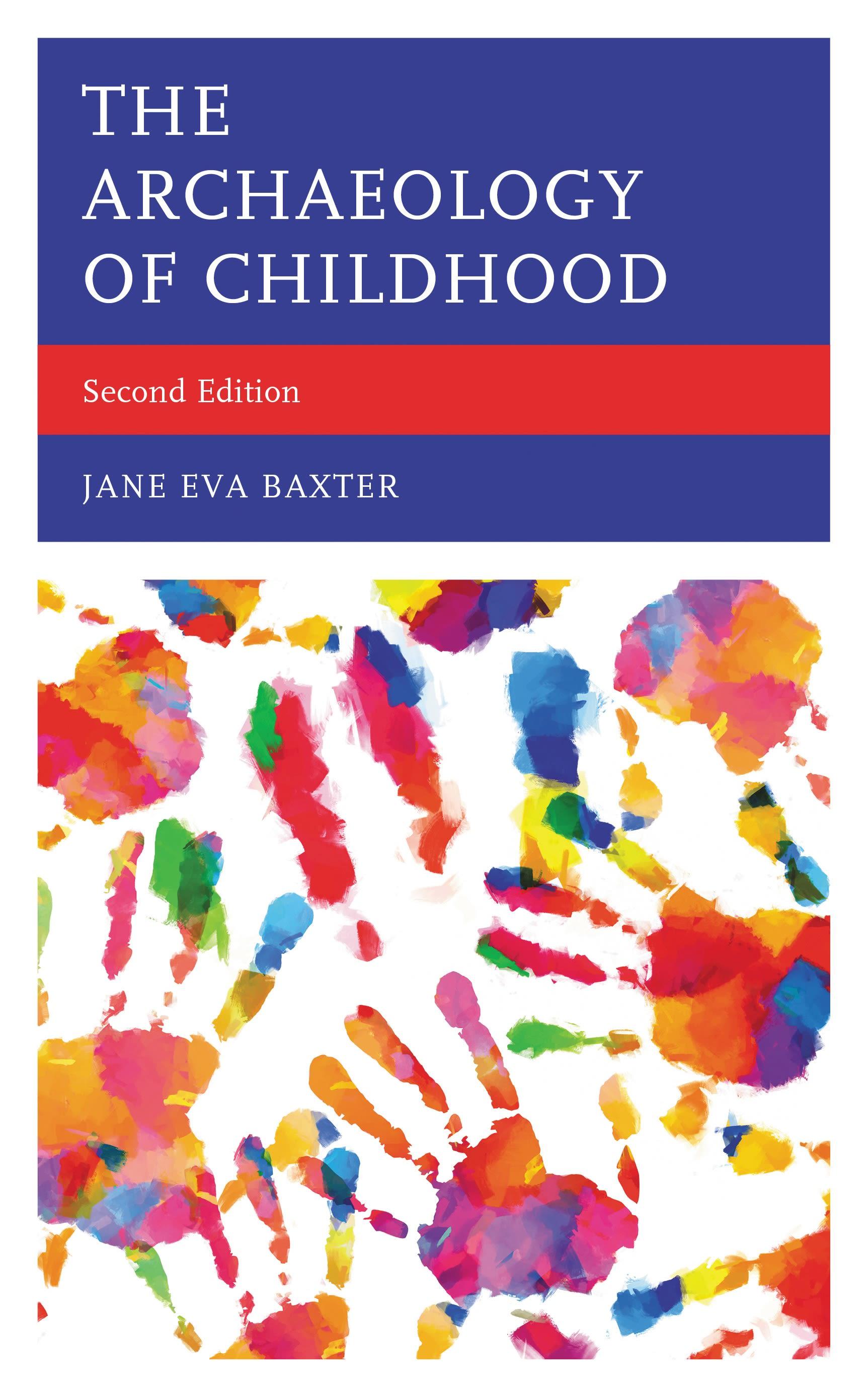
The first edition of The Archaeology of Childhood has been credited by many as launching an entire new area of scholarship in archaeology. This second edition, published 17 years later, retains the first edition’s emphasis on combining sources from archaeology, anthropology, environmental studies, psychology, and sociology, to create a rich interdisciplinary basis for studying childhood across time and across cultures.
The second edition is updated with archaeological studies about childhood that have been published in the past 20 years, and readers will see that the archaeology of childhood is a field with a relatively short history but a rich and varied scholarship. Archaeologists study children in the very recent past, as well as Neanderthal and early modern human children, and every period in between. These studies use artifacts, the built environment, spatial analyses, the artistic representations, skeletal remains, and mortuary assemblages to illuminate the lives of children, their families, and communities.
The book’s eight chapters cover:
1: The Archaeology of Childhood in Context
2: Childhood in Archaeology: Themes, Terms, and Foundations
3: The Cultural Creation of Childhood: The Idea of Socialization
4: Socialization and the Material Culture of Childhood
5: Socialization, Behavior, and the Spaces and Places of Childhood
6: Socialization, Symbols, and Artistic Representations of Children
7: Socialization, Childhood, and Mortuary Remains
8: Looking Back and Moving Forward
This book provides a comprehensive introduction to the major themes in the archaeological study of childhood and introduces the concept of socialization as a way of framing archaeological scholarship on children. Case studies and examples from around the globe are included, and the author’s expertise on childhood in 18th-20th century America is drawn upon to provide more familiar examples for readers allowing them to question their own assumptions and understandings of what it means to be a child.
Each chapter ends with discussion questions and learning activities.
The second edition is updated with archaeological studies about childhood that have been published in the past 20 years, and readers will see that the archaeology of childhood is a field with a relatively short history but a rich and varied scholarship. Archaeologists study children in the very recent past, as well as Neanderthal and early modern human children, and every period in between. These studies use artifacts, the built environment, spatial analyses, the artistic representations, skeletal remains, and mortuary assemblages to illuminate the lives of children, their families, and communities.
The book’s eight chapters cover:
1: The Archaeology of Childhood in Context
2: Childhood in Archaeology: Themes, Terms, and Foundations
3: The Cultural Creation of Childhood: The Idea of Socialization
4: Socialization and the Material Culture of Childhood
5: Socialization, Behavior, and the Spaces and Places of Childhood
6: Socialization, Symbols, and Artistic Representations of Children
7: Socialization, Childhood, and Mortuary Remains
8: Looking Back and Moving Forward
This book provides a comprehensive introduction to the major themes in the archaeological study of childhood and introduces the concept of socialization as a way of framing archaeological scholarship on children. Case studies and examples from around the globe are included, and the author’s expertise on childhood in 18th-20th century America is drawn upon to provide more familiar examples for readers allowing them to question their own assumptions and understandings of what it means to be a child.
Each chapter ends with discussion questions and learning activities.
Zahle einfach mit Karte, Klarna, Apple Pay oder Google Pay. Nicht zufrieden? Du hast immer ein 14-tägiges Widerrufsrecht. Lies mehr in unseren AGB. Hast du Fragen, schreib uns eine E-Mail an hello@memmo.org.
Memmo macht das Lernen einfacher – wo auch immer du bist. Bei uns findest du deine Kursbücher und smarte Lerntools an einem Ort: Zusammenfassungen, Quizzes, Podcasts und Lernkarten. Und Ted, dein Lernbuddy, beantwortet alles, was du wissen möchtest. Über 50.000 Studierende lernen bereits hier – gemacht, damit du schneller lernst und weniger Stress hast.