
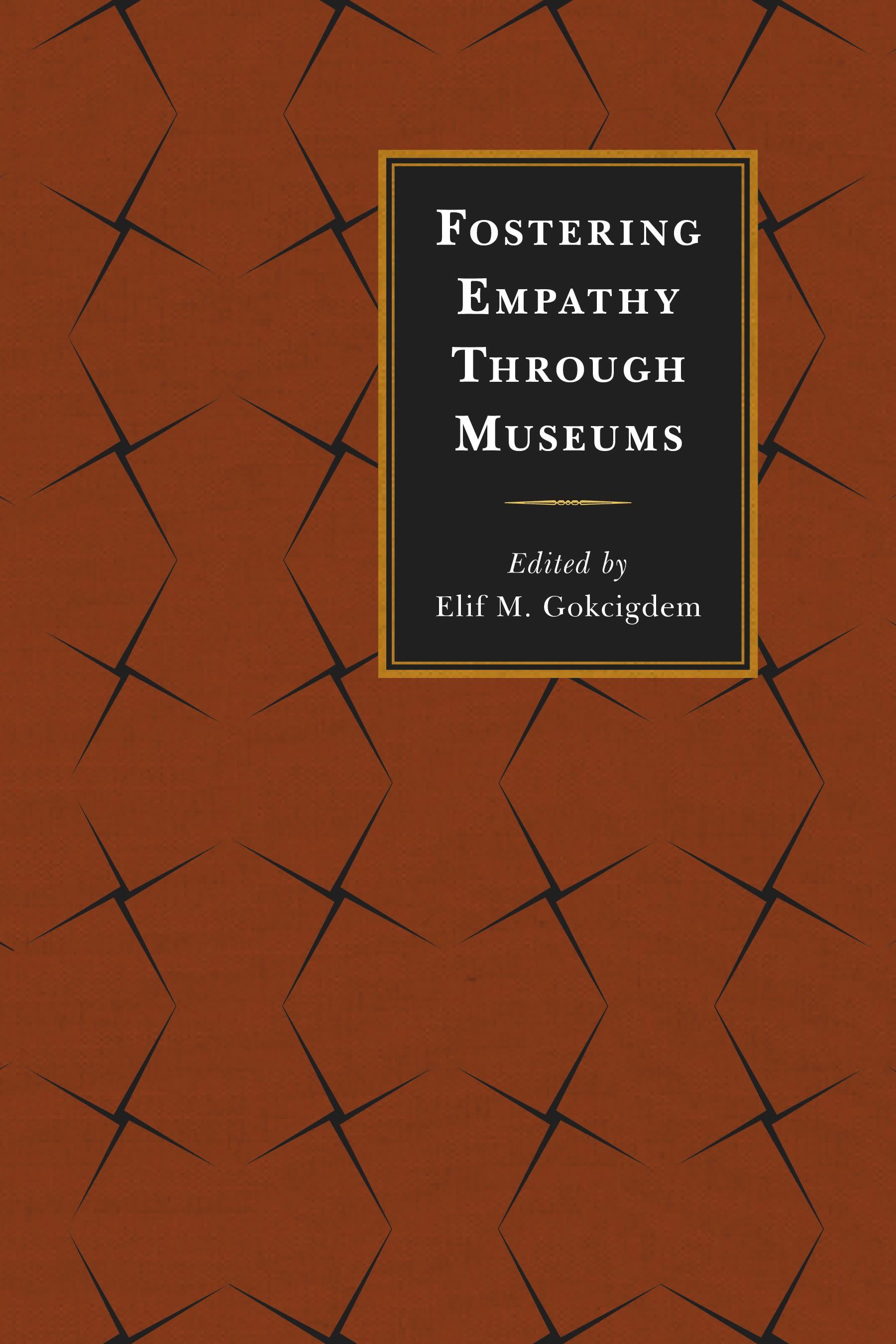
Fostering Empathy through Museums features fifteen case studies with clear take-away ideas, and lessons learned by vividly illustrating a spectrum of approaches in the way museums are currently employing empathy, a critical skill that is relevant to personal, institutional, economical, and societal progress.
The need is rapidly growing for empathy to serve as a lens through which we find our purpose and connection in a complex world. This demand brings with it an appetite to cultivate it through safe and trusted platforms. Museums are uniquely equipped to undertake this important mission. This book will help museum staff and leadership at all levels working at a variety of museums (from animal sanctuaries to art museums, from historic house museums to children's and science museums) to better understand the multitude of ways how empathy can be cultivated, and employed in museum setting.
Fostering Empathy through Museums will provide inspiration, examples, and lessons learned from a balanced spectrum of museums currently employing empathy in museum setting: as an educational tool to better connect their content with the audience, as an integral element of a museum's institutional values and behavior, and as a phenomenon that is worthy of exploration on its own and as an intentional outcome. This publication provides museum professionals as well as formal and informal learning educators to receive an overview of the variety of approaches to empathy in museums, and to create a shared language and methodologies that could enable them to utilize and nurture empathy as a "shared vision" that would serve not only their organizational mission, but also the greater good.
Empathy can be a tool, or an intentional outcome depending on the institution’s objectives. Regardless of the choice, the ideas presented in this book are intended to inform and inspire institutions to unlock exciting possibilities in the areas of improved visitor experience, creative community partnerships, and contribution to social progress by bringing empathy to public discourse through institutional strategies, exhibitions, experiences, and programs. The book also provides ideas for future strategies where empathy is considered as a "shared vision" by museums, and a product of a museum experience that might lead to positive social impact.
The need is rapidly growing for empathy to serve as a lens through which we find our purpose and connection in a complex world. This demand brings with it an appetite to cultivate it through safe and trusted platforms. Museums are uniquely equipped to undertake this important mission. This book will help museum staff and leadership at all levels working at a variety of museums (from animal sanctuaries to art museums, from historic house museums to children's and science museums) to better understand the multitude of ways how empathy can be cultivated, and employed in museum setting.
Fostering Empathy through Museums will provide inspiration, examples, and lessons learned from a balanced spectrum of museums currently employing empathy in museum setting: as an educational tool to better connect their content with the audience, as an integral element of a museum's institutional values and behavior, and as a phenomenon that is worthy of exploration on its own and as an intentional outcome. This publication provides museum professionals as well as formal and informal learning educators to receive an overview of the variety of approaches to empathy in museums, and to create a shared language and methodologies that could enable them to utilize and nurture empathy as a "shared vision" that would serve not only their organizational mission, but also the greater good.
Empathy can be a tool, or an intentional outcome depending on the institution’s objectives. Regardless of the choice, the ideas presented in this book are intended to inform and inspire institutions to unlock exciting possibilities in the areas of improved visitor experience, creative community partnerships, and contribution to social progress by bringing empathy to public discourse through institutional strategies, exhibitions, experiences, and programs. The book also provides ideas for future strategies where empathy is considered as a "shared vision" by museums, and a product of a museum experience that might lead to positive social impact.
Zahle einfach mit Karte, Klarna, Apple Pay oder Google Pay. Nicht zufrieden? Du hast immer ein 14-tägiges Widerrufsrecht. Lies mehr in unseren AGB. Hast du Fragen, schreib uns eine E-Mail an hello@memmo.org.
Memmo macht das Lernen einfacher – wo auch immer du bist. Bei uns findest du deine Kursbücher und smarte Lerntools an einem Ort: Zusammenfassungen, Quizzes, Podcasts und Lernkarten. Und Ted, dein Lernbuddy, beantwortet alles, was du wissen möchtest. Über 50.000 Studierende lernen bereits hier – gemacht, damit du schneller lernst und weniger Stress hast.