
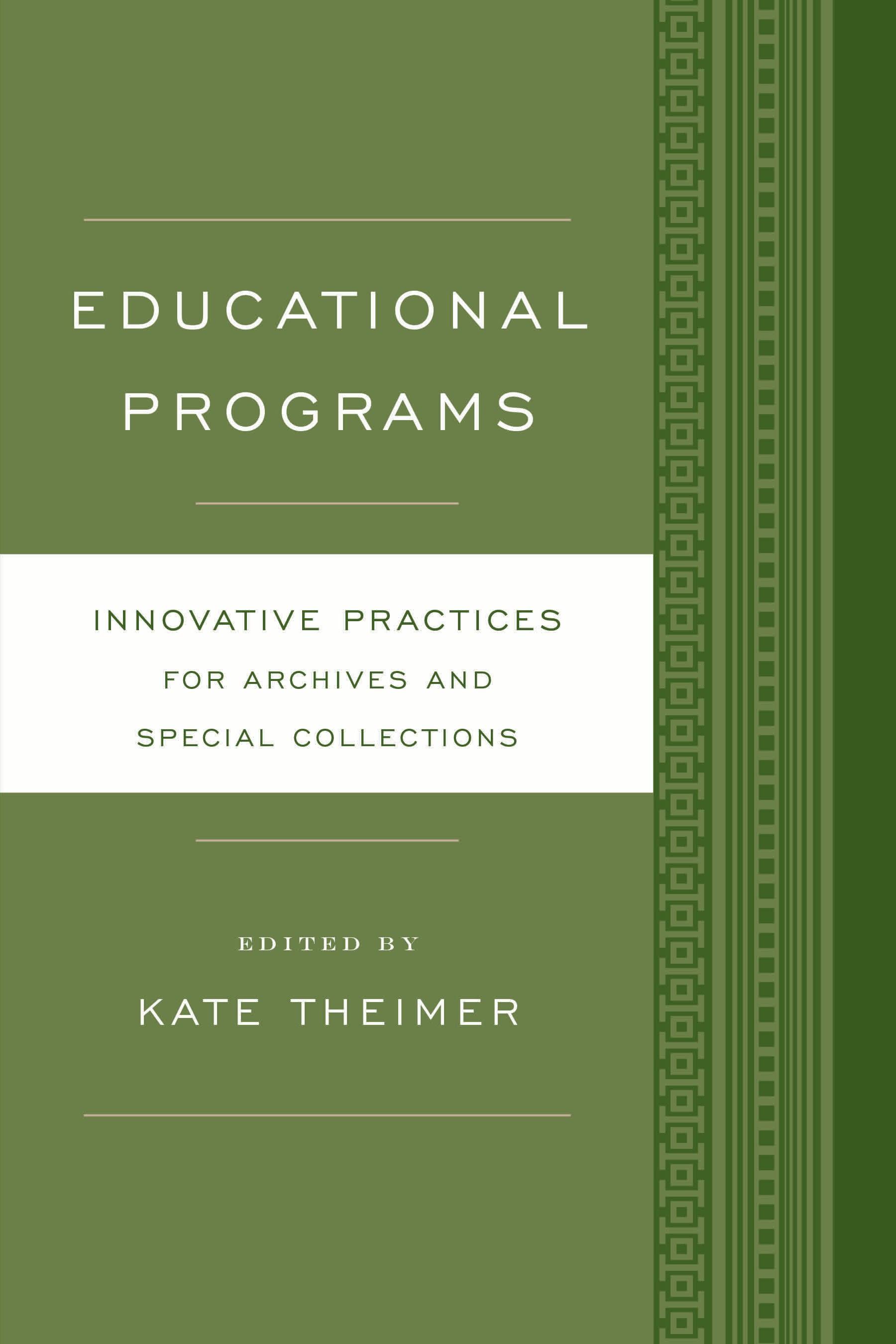
Educational Programs: Innovative Practices for Archives and Special Collections explores how archivists and special collections librarians in organizations of different sizes and types have approached the challenges in creating effective educational programs to prepare the next generation of researchers and advocates for archives.
The case studies featured are:
Tablet and Codex, Side by Side: Pairing Rare Books and Books in the Special Collections ClassroomFells, Fans and Fame: Acquiring a Collection of Personal Papers with the Goal of Engaging Primary School ChildrenStudent Curators in the Archives: Class-Curated Exhibits in Academic Special CollectionsA Win for All: Cultural Organizations Working With Colleges of Education The Archive as Theory and Reality: Engaging with Students in Cultural and Critical StudiesMake Way for Learning: Using Literary Papers to Engage Elementary School StudentsArchivists Teaching Teachers: The Archives Education Institute and K-12 OutreachAnimating Archives: Embedding Archival Materials (and Archivists) into Digital History Projects“A Certain Kind of Seduction”: Integrating Archival Research into a First-Year Writing CurriculumNot Just for Students: An Archives Workshop for FacultyWeb Archiving as Gateway: Teaching K-12 Students about Archival ConceptsEvocative Objects: Inspiring Art Students with ArchivesDocumenting and Sharing Instruction Practices: The story of TeachArchives.org
These case studies show a range of audiences and strategies, but all were selected because they demonstrate ideas that could be transferred into many other settings. They can serve as models, sources of inspiration, or starting points for new discussions. This volume will be useful to those working in archives and special collections as well as other cultural heritage organizations, and provides ideas ranging from those that require long-term planning and coordination to ones that could be more quickly implemented. The chapters also provide students and educators in archives, library, and public history graduate programs a resource for understanding the varieties of issues related to creating and implementing educational programs and how they can be addressed.
The case studies featured are:
Tablet and Codex, Side by Side: Pairing Rare Books and Books in the Special Collections ClassroomFells, Fans and Fame: Acquiring a Collection of Personal Papers with the Goal of Engaging Primary School ChildrenStudent Curators in the Archives: Class-Curated Exhibits in Academic Special CollectionsA Win for All: Cultural Organizations Working With Colleges of Education The Archive as Theory and Reality: Engaging with Students in Cultural and Critical StudiesMake Way for Learning: Using Literary Papers to Engage Elementary School StudentsArchivists Teaching Teachers: The Archives Education Institute and K-12 OutreachAnimating Archives: Embedding Archival Materials (and Archivists) into Digital History Projects“A Certain Kind of Seduction”: Integrating Archival Research into a First-Year Writing CurriculumNot Just for Students: An Archives Workshop for FacultyWeb Archiving as Gateway: Teaching K-12 Students about Archival ConceptsEvocative Objects: Inspiring Art Students with ArchivesDocumenting and Sharing Instruction Practices: The story of TeachArchives.org
These case studies show a range of audiences and strategies, but all were selected because they demonstrate ideas that could be transferred into many other settings. They can serve as models, sources of inspiration, or starting points for new discussions. This volume will be useful to those working in archives and special collections as well as other cultural heritage organizations, and provides ideas ranging from those that require long-term planning and coordination to ones that could be more quickly implemented. The chapters also provide students and educators in archives, library, and public history graduate programs a resource for understanding the varieties of issues related to creating and implementing educational programs and how they can be addressed.
Zahle einfach mit Karte, Klarna, Apple Pay oder Google Pay. Nicht zufrieden? Du hast immer ein 14-tägiges Widerrufsrecht. Lies mehr in unseren AGB. Hast du Fragen, schreib uns eine E-Mail an hello@memmo.org.
Memmo macht das Lernen einfacher – wo auch immer du bist. Bei uns findest du deine Kursbücher und smarte Lerntools an einem Ort: Zusammenfassungen, Quizzes, Podcasts und Lernkarten. Und Ted, dein Lernbuddy, beantwortet alles, was du wissen möchtest. Über 50.000 Studierende lernen bereits hier – gemacht, damit du schneller lernst und weniger Stress hast.