
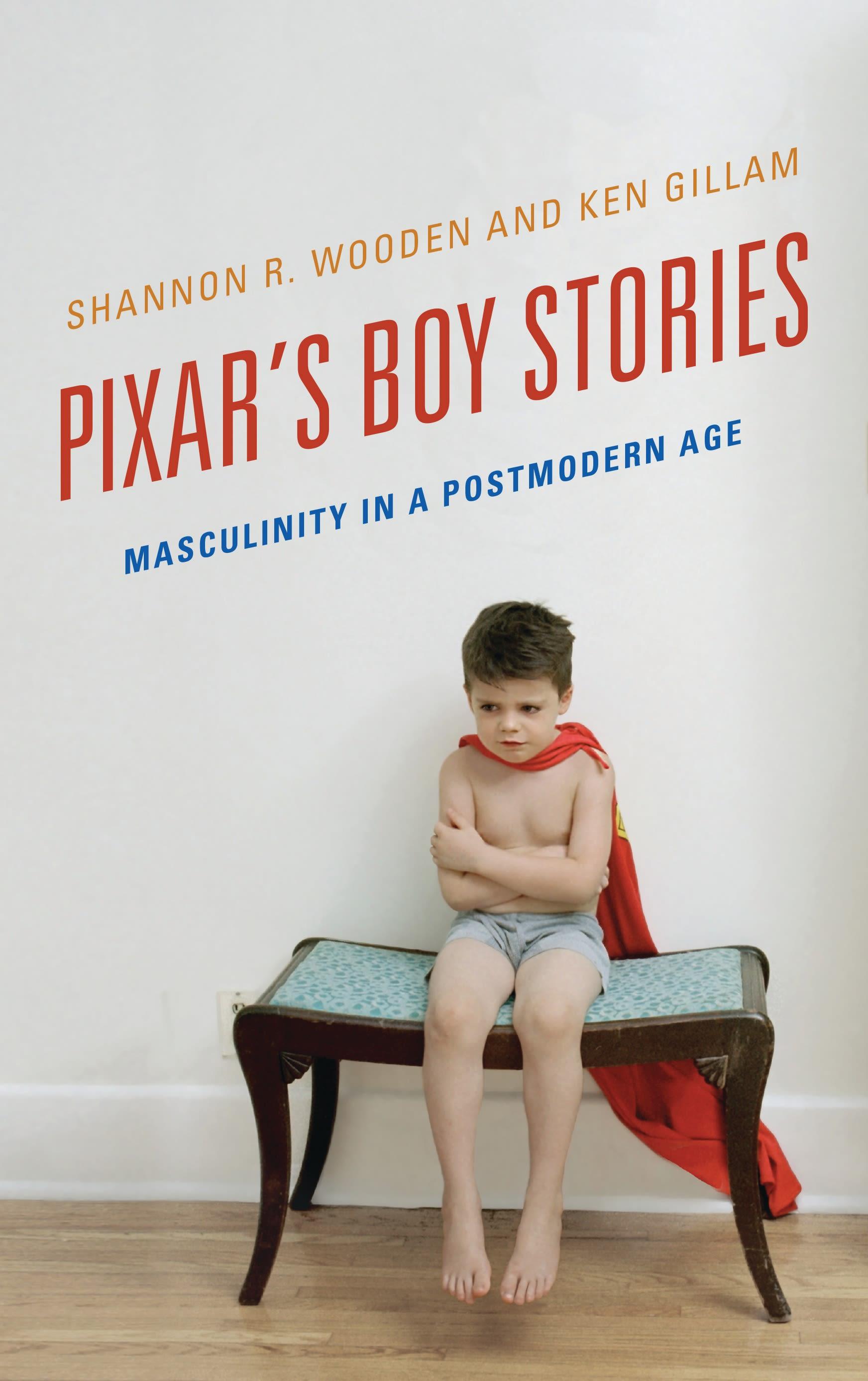
Since Toy Story, its first feature in 1995, Pixar Animation Studios has produced a string of commercial and critical successes including Monsters, Inc.; WALL-E; Finding Nemo; The Incredibles; Cars; and Up. In nearly all of these films, male characters are prominently featured, usually as protagonists. Despite obvious surface differences, these figures often follow similar narratives toward domestic fulfillment and civic engagement. However, these characters are also hypermasculine types whose paths lead to postmodern social roles more revelatory of the current “crisis” that sociologists and others have noted in boy culture.
In Pixar’s Boy Stories: Masculinity in a Postmodern Age, Shannon R. Wooden and Ken Gillam examine how boys become men and how men measure up in films produced by the animation giant. Offering counterintuitive readings of boy culture, this book describes how the films quietly but forcefully reiterate traditional masculine norms in terms of what they praise and what they condemn. Whether toys or ants, monsters or cars, Pixar’s males succeed or fail according to the “boy code,” the relentlessly policed gender standards rampant in American boyhood.
Structured thematically around major issues in contemporary boy culture, the book discusses conformity, hypermasculinity, socialhierarchies, disability, bullying, and an implicit critique of postmodern parenting. Unprecedented in its focus on Pixar and boys in its films, this book offers a valuable perspective to current conversations about gender and cinema. Providing a critical discourse about masculine roles in animated features, Pixar’s Boy Stories will be of interest to scholars of film, media, and gender studies and to parents.
In Pixar’s Boy Stories: Masculinity in a Postmodern Age, Shannon R. Wooden and Ken Gillam examine how boys become men and how men measure up in films produced by the animation giant. Offering counterintuitive readings of boy culture, this book describes how the films quietly but forcefully reiterate traditional masculine norms in terms of what they praise and what they condemn. Whether toys or ants, monsters or cars, Pixar’s males succeed or fail according to the “boy code,” the relentlessly policed gender standards rampant in American boyhood.
Structured thematically around major issues in contemporary boy culture, the book discusses conformity, hypermasculinity, socialhierarchies, disability, bullying, and an implicit critique of postmodern parenting. Unprecedented in its focus on Pixar and boys in its films, this book offers a valuable perspective to current conversations about gender and cinema. Providing a critical discourse about masculine roles in animated features, Pixar’s Boy Stories will be of interest to scholars of film, media, and gender studies and to parents.
Zahle einfach mit Karte, Klarna, Apple Pay oder Google Pay. Nicht zufrieden? Du hast immer ein 14-tägiges Widerrufsrecht. Lies mehr in unseren AGB. Hast du Fragen, schreib uns eine E-Mail an hello@memmo.org.
Memmo macht das Lernen einfacher – wo auch immer du bist. Bei uns findest du deine Kursbücher und smarte Lerntools an einem Ort: Zusammenfassungen, Quizzes, Podcasts und Lernkarten. Und Ted, dein Lernbuddy, beantwortet alles, was du wissen möchtest. Über 50.000 Studierende lernen bereits hier – gemacht, damit du schneller lernst und weniger Stress hast.