
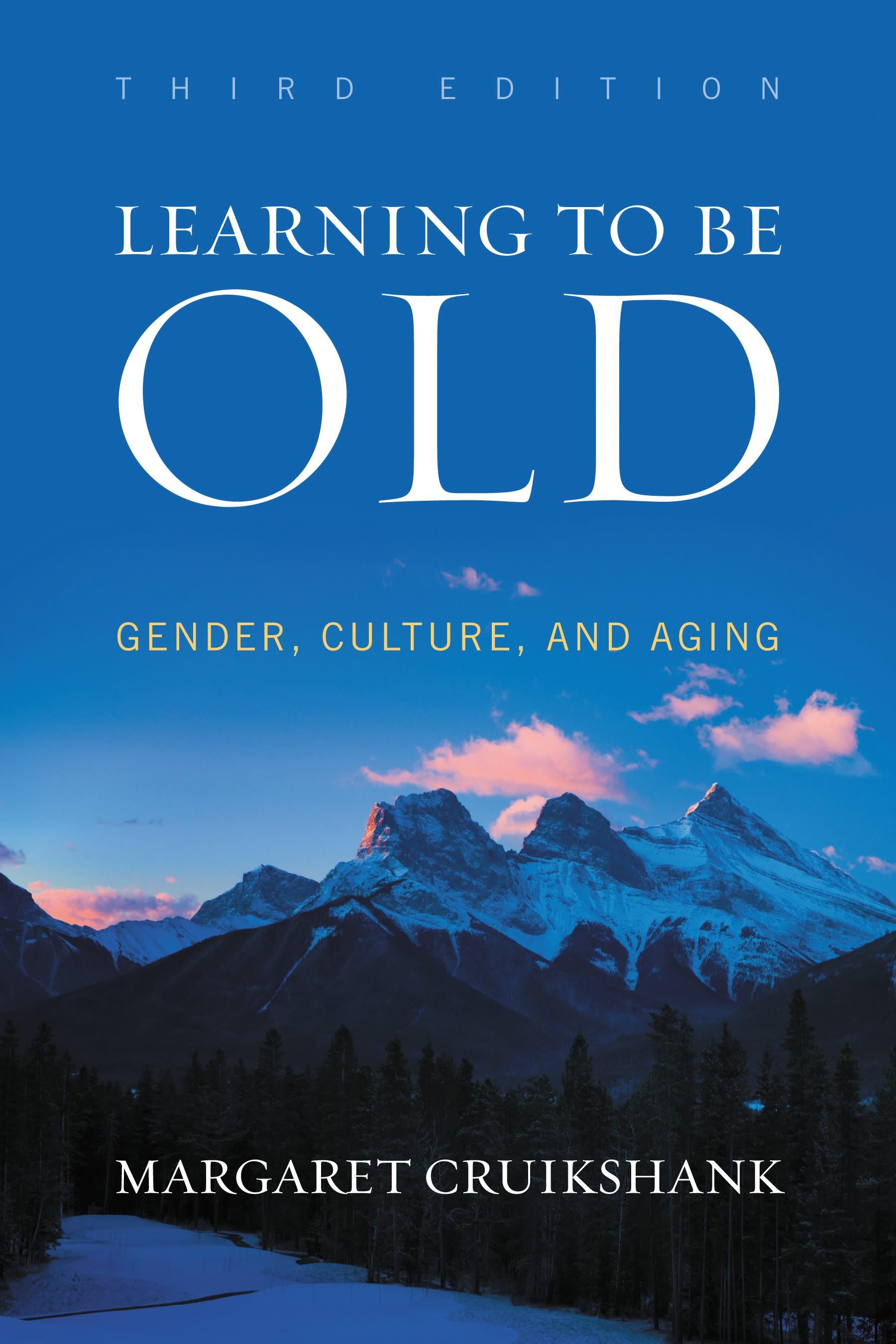
Margaret Cruikshank’s Learning to Be Old examines what it means to grow old in America today. The book questions social myths and fears about aging, sickness, and the other social roles of the elderly, the over-medicalization of many older people, and ageism. In this book, Cruikshank proposes alternatives to the ways aging is usually understood in both popular culture and mainstream gerontology. Learning to Be Old does not propose the ideas of “successful aging” or “productive aging,” but more the idea of “learning” how to age.
Featuring new research and analysis, the third edition of Learning to be Old demonstrates, more thoroughly than the previous editions, that aging is socially constructed. Among texts on aging the book is unique in its clear focus on the differences in aging for women and men, as well as for people in different socioeconomic groups. Cruikshank is able to put aging in a broad context that not only focuses on how aging affects women but men, as well. Key updates in the third edition include changes in the health care system, changes in how long older Americans are working especially given the impact of the recession, and new material on the brain and mind-body interconnections. Cruikshank impressively challenges conventional ideas about aging in this third edition of Learning to be Old. This will be a must-read for everyone interested in new ideas surrounding aging in America today.
Featuring new research and analysis, the third edition of Learning to be Old demonstrates, more thoroughly than the previous editions, that aging is socially constructed. Among texts on aging the book is unique in its clear focus on the differences in aging for women and men, as well as for people in different socioeconomic groups. Cruikshank is able to put aging in a broad context that not only focuses on how aging affects women but men, as well. Key updates in the third edition include changes in the health care system, changes in how long older Americans are working especially given the impact of the recession, and new material on the brain and mind-body interconnections. Cruikshank impressively challenges conventional ideas about aging in this third edition of Learning to be Old. This will be a must-read for everyone interested in new ideas surrounding aging in America today.
Zahle einfach mit Karte, Klarna, Apple Pay oder Google Pay. Nicht zufrieden? Du hast immer ein 14-tägiges Widerrufsrecht. Lies mehr in unseren AGB. Hast du Fragen, schreib uns eine E-Mail an hello@memmo.org.
Memmo macht das Lernen einfacher – wo auch immer du bist. Bei uns findest du deine Kursbücher und smarte Lerntools an einem Ort: Zusammenfassungen, Quizzes, Podcasts und Lernkarten. Und Ted, dein Lernbuddy, beantwortet alles, was du wissen möchtest. Über 50.000 Studierende lernen bereits hier – gemacht, damit du schneller lernst und weniger Stress hast.