
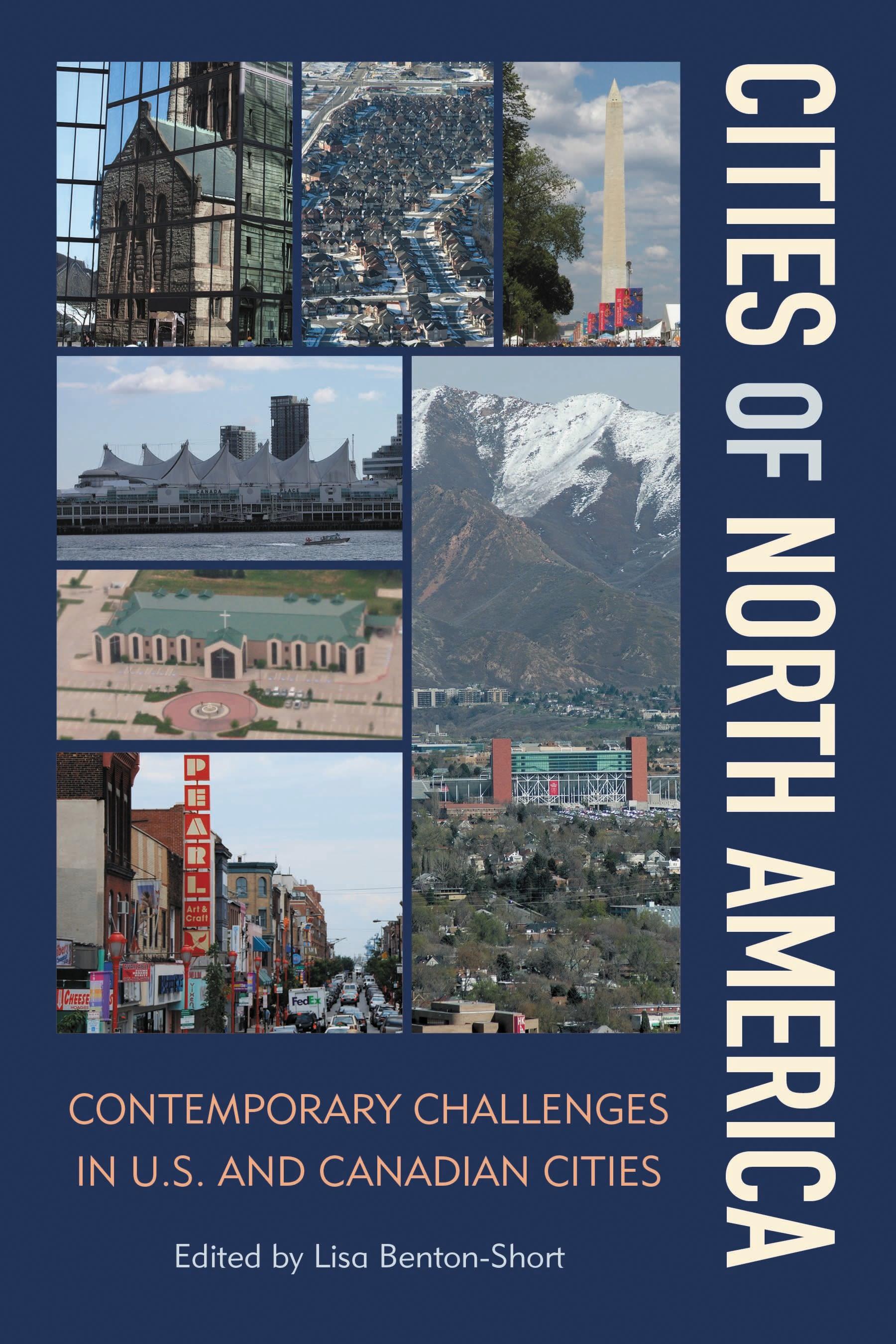
This timely textprovides a comprehensive overview of the dramatic and rapidly evolving issues confronting the cities of North America. Metropolitan areas throughout the United States and Canada face a range of dynamic and complex concerns—including the redistribution of economic activities, the continued decline of manufacturing, and a global growth in services. The contributors provide compelling examples: Inner cities have experienced both gentrification and continued areas of segregation and poverty. Downtown revitalization has created urban spectacles that include festivals, marketplaces, and sports stadiums. Older, inner-ring suburbs now confront decline and increased poverty, while the outer-ring suburbs and exurbs continue to expand, devouring green space.
The book explores how the combined processes of urbanization and globalization have added new responsibilities for city governments at the same time leaders are grappling with planning, economic development and finance, justice, equity, and social cohesion. Cities have become the stage upon which new forms of ethnic, racial, and sexual identities are constructed and reconstructed. They are also connected to wider ecological processes as urban spaces are compromised by manmade and natural disasters alike.
Introducing contemporary spatial arrangements and distributions of activities in metropolitan areas, this clear and accessible book covers economic, social, political, and ecological changes. It is also the only text to include the physical geography of urban areas. Bringing together leading geographers, it will be an ideal resource for courses on urban geography and geography of the city.
Contributions by: Matthew Anderson, Lisa Benton-Short, Geoff Buckley, Christopher DeSousa, Bernadette Hanlon, Amanda Huron, Yeong-Hyun Kim, Nathaniel M. Lewis, Robert Lewis, Deborah Martin, Lindsey Sutton, John Tiefenbacher, Thomas J. Vicino, Katie Wells, and David Wilson.
The book explores how the combined processes of urbanization and globalization have added new responsibilities for city governments at the same time leaders are grappling with planning, economic development and finance, justice, equity, and social cohesion. Cities have become the stage upon which new forms of ethnic, racial, and sexual identities are constructed and reconstructed. They are also connected to wider ecological processes as urban spaces are compromised by manmade and natural disasters alike.
Introducing contemporary spatial arrangements and distributions of activities in metropolitan areas, this clear and accessible book covers economic, social, political, and ecological changes. It is also the only text to include the physical geography of urban areas. Bringing together leading geographers, it will be an ideal resource for courses on urban geography and geography of the city.
Contributions by: Matthew Anderson, Lisa Benton-Short, Geoff Buckley, Christopher DeSousa, Bernadette Hanlon, Amanda Huron, Yeong-Hyun Kim, Nathaniel M. Lewis, Robert Lewis, Deborah Martin, Lindsey Sutton, John Tiefenbacher, Thomas J. Vicino, Katie Wells, and David Wilson.
Zahle einfach mit Karte, Klarna, Apple Pay oder Google Pay. Nicht zufrieden? Du hast immer ein 14-tägiges Widerrufsrecht. Lies mehr in unseren AGB. Hast du Fragen, schreib uns eine E-Mail an hello@memmo.org.
Memmo macht das Lernen einfacher – wo auch immer du bist. Bei uns findest du deine Kursbücher und smarte Lerntools an einem Ort: Zusammenfassungen, Quizzes, Podcasts und Lernkarten. Und Ted, dein Lernbuddy, beantwortet alles, was du wissen möchtest. Über 50.000 Studierende lernen bereits hier – gemacht, damit du schneller lernst und weniger Stress hast.